
What “Local” Actually Means
There's no single national definition of local food. Some shoppers mean the same county, others mean the same state, and the federal programs that define it tend to rely on distance or state lines. One example, as the Congressional Research Service explains, is a 2008 Farm Bill definition written for a USDA loan program: a food counts as locally or regionally produced if it travels under 400 miles (about 640 km) from where it was produced, or stays within the state where it was produced. That's a program rule, not the standard behind every “local” sign at the grocery store.
That makes a “local” label a little fuzzier than you'd hope. Check the sticker or sign for where the food was actually grown, and don't be shy about asking the farmer or the produce staff.
Local shopping still has real perks. You can chat with the people growing your food, support regional farms, and often bring home produce that's spent less time in transit. Those are good reasons to shop local, even when the climate math isn't a guaranteed win.
What Seasonal Means (and How It Differs)
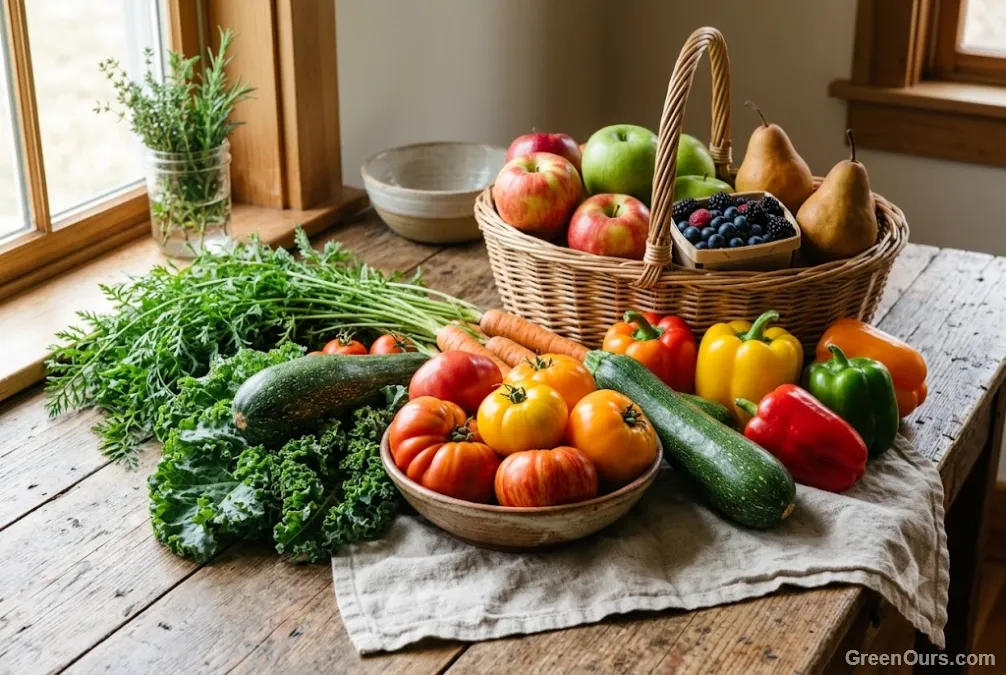
Seasonal food is produce harvested during its natural growing season in the place it's grown. In much of the US, tomatoes, cucumbers, and peppers peak in summer, while kale, spinach, and many root vegetables do well in cooler months.
Seasonal shopping has its own perks. You get variety through the year, crops that need less artificial heating or lighting, and, when something is abundant, often friendlier prices (though that varies by market).
Here's the thing, though: seasonal doesn't automatically mean local. A crop can be perfectly in season in another region and still travel a long way to reach your store.
That's why the local vs seasonal food question doesn't have a one-word answer. The two ideas describe different things, so it helps to line them up side by side.
| Local food | Seasonal food |
|---|---|
| Is about where it was grown | Is about when and under what conditions it was grown |
| Can still come from a heated greenhouse or long-term storage | Can come from your region or from another region that's in season |
| Supports regional farms and local food networks | Can reduce reliance on energy-intensive out-of-season growing |
The sweet spot is food that's both. When it isn't, you've got to look a little deeper.
Why Food Miles Only Tell Part of the Story
For many foods, how they're produced matters more than how far they travel, though the transport share depends on how researchers count it. Our World in Data cites estimates from different studies: Weber and Matthews (2008) found that food transport accounted for about 5% of the average US household's food emissions, while Sandström and colleagues (2018) estimated a 6% share for EU diets. A separate 2022 Nature Food study by Li and colleagues, summarized by the European Commission, used a global supply-chain approach covering transport from farms through processors to consumers. It estimated food-miles emissions at nearly 19% of food-system emissions, with fruit and vegetables contributing about 36% of those food-miles emissions.
That nearly 19% figure is a global food-system estimate, not an average US household footprint. Its broader supply-chain approach helps explain why it's higher than the 5% and 6% estimates, so the numbers aren't interchangeable. What they share is the takeaway: transport matters, especially for fresh produce, but it isn't the whole story, and the share shifts from crop to crop.
Which brings us back to that February tomato. A 2014 study in Agronomy for Sustainable Development compared tomatoes sold in Vienna supermarkets. Per kilogram of tomatoes, heated Austrian greenhouse fruit came to roughly 1.4 kg of CO2-equivalent, imported Spanish tomatoes to roughly 0.7 kg, and unheated organic Austrian tunnels to about 0.18 kg. Heating was the main hotspot for the greenhouses.
Honestly, those numbers surprise a lot of people. It's one study in one market, and an Austrian winter isn't an American one, so treat the figures as an illustration rather than a rule. The pattern is the useful bit: the imported tomatoes had a lower estimated footprint than the heated local ones, even after the journey.
How the Food Travels Counts Too
A half-empty van making a short run can burn more fuel per item than a full ship or train carrying a huge load. Air-freighted fresh produce tends to be one of the more emissions-intensive ways to move food, particularly compared with efficient sea freight.
So distance is a clue, not a verdict. It's worth asking how the food was grown before you ask how far it came.
Storage plays a part as well. Some “local” apples and potatoes spend months in cold storage before they reach you, and cooling takes energy too. How much depends on the crop and how long it's held, which is one more reason a fresh-picked in-season crop from a bit farther away can sometimes come out ahead.
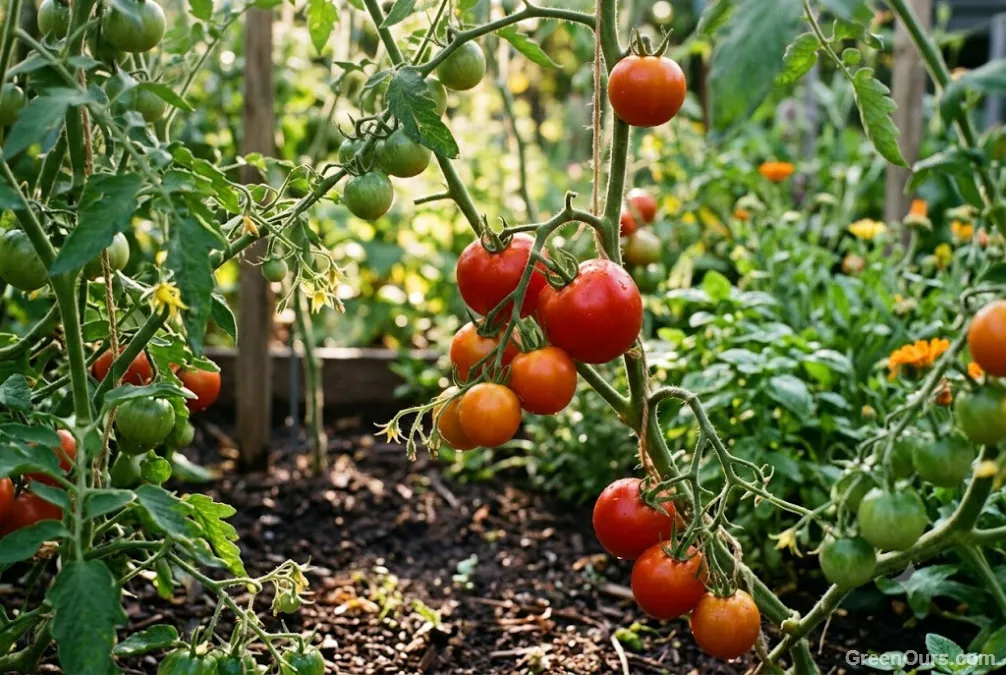
If a crop is out of season where you live, the “local” label doesn't tell you whether it was grown with heavy heating or lighting. Ask the grower or check the origin information.
When Imported Seasonal Produce Can Be the Better Pick
Imported doesn't automatically mean villain, as the tomato comparison showed. What matters is how the crop was grown and how it travelled.
Not everything gets a pass, of course. Here's a simple way to size up the situations you'll meet most often:
- Out-of-season greenhouse crops: ask whether heating or artificial lighting is involved. Labels like “greenhouse grown” or “hothouse” are a clue, though they don't say whether the greenhouse was heated.
- In-season produce from another region: grown outdoors in its natural season, it can be a reasonable choice even if it travels.
- Air-freighted fresh produce: this can have a high transport footprint. If a seasonal alternative is available, it's worth considering, although the full impact still depends on how both products were grown and handled. Labels rarely say how something travelled, so treat fragile, perishable items far from their natural season as a hint, not proof.
- Frozen or canned produce: handy when fresh is out of season, though the impact depends on processing, packaging, and transport.
The goal isn't to avoid every imported item. It's to decide based on the bigger picture rather than distance alone.
Fresh, Frozen, Canned, or Stored: What to Reach For
Once you're past peak season, the question isn't only where the food is from. It's also what form of it to buy, and the answer changes through the year.
Fresh and in season
This is the easy default, whether it's grown nearby or comes from a region that's in season.
Frozen and canned
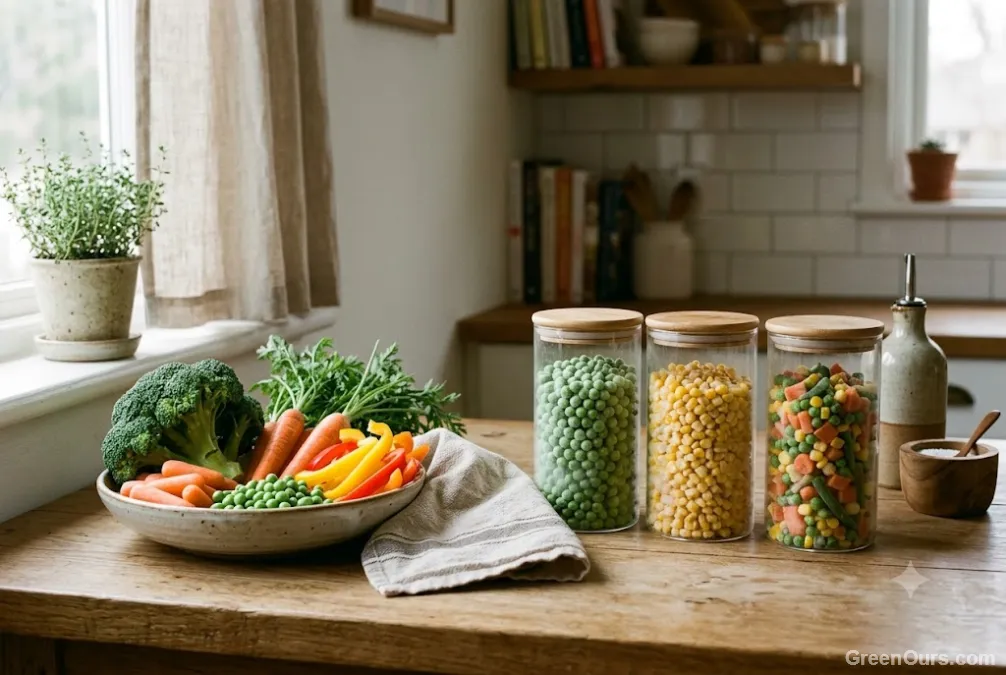
When fresh options are out of season, frozen vegetables are a sensible fallback, and they keep for months, so it's easier to use what you buy. Canned works too, especially for tomatoes, beans, and other things you'd cook anyway. Both take energy to process, package, and keep cold or shelf-stable, so they're a trade-off, not a free pass.
Stored crops
In cooler months, apples, potatoes, onions, carrots, cabbage, and winter squash are harvested in season and keep well in storage. In most cases that's a gentler route than heating a greenhouse to grow something out of season, though how long and how cold the crop is held both matter.
If you're craving something that's only available out of season, try a stored crop or a frozen version before reaching for the fresh one. And whichever you pick, eat it. A tomato that rots in the crisper has spent all its growing energy for nothing.
A Quick Way to Choose at the Store
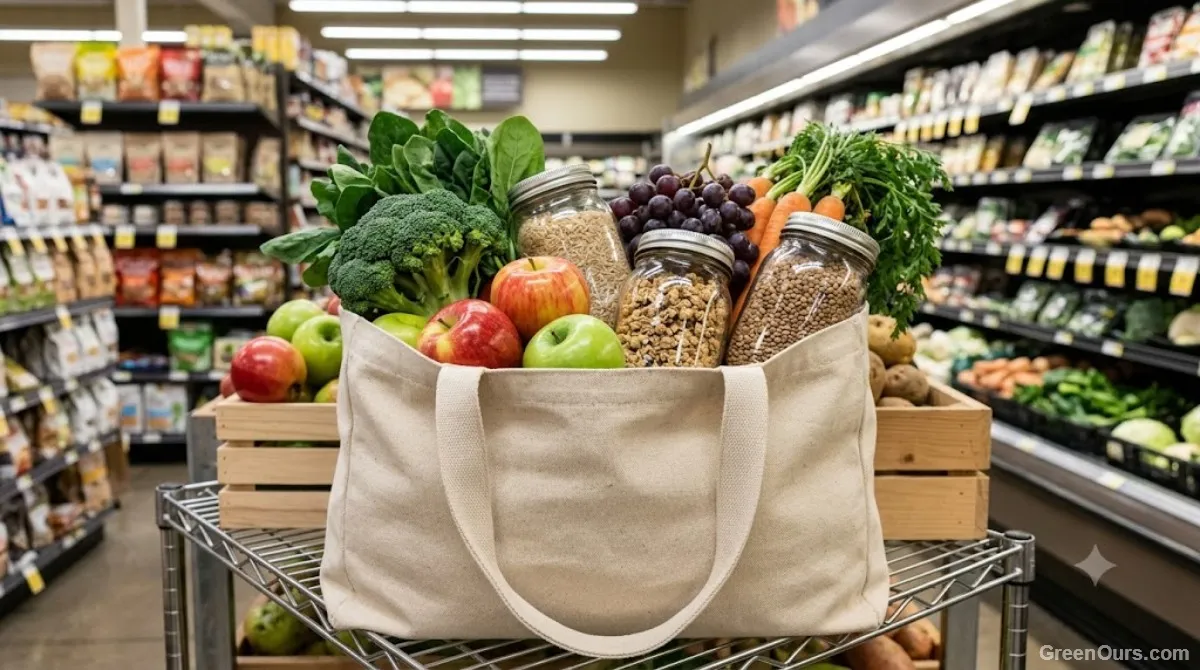
When you're standing in the produce aisle with a wobbly cart and about ninety seconds of patience, a cheat sheet beats a lecture. Run through this one.
| What you're looking at | A reasonable move |
|---|---|
| Local and in season | A strong pick |
| Local but out of season | Check for heating, lighting, or long storage |
| Imported but in season where it was grown | Often reasonable, especially if shipped efficiently |
| Fresh is out of season, but a frozen version is available | Often a sensible swap |
| Air-freighted or heavily refrigerated | Consider a seasonal alternative if one's available |
| Origin unclear | Look for more information rather than assuming local wins |
You don't need perfect information. Glancing at the origin sticker and asking “is this actually in season?” is already a solid start.
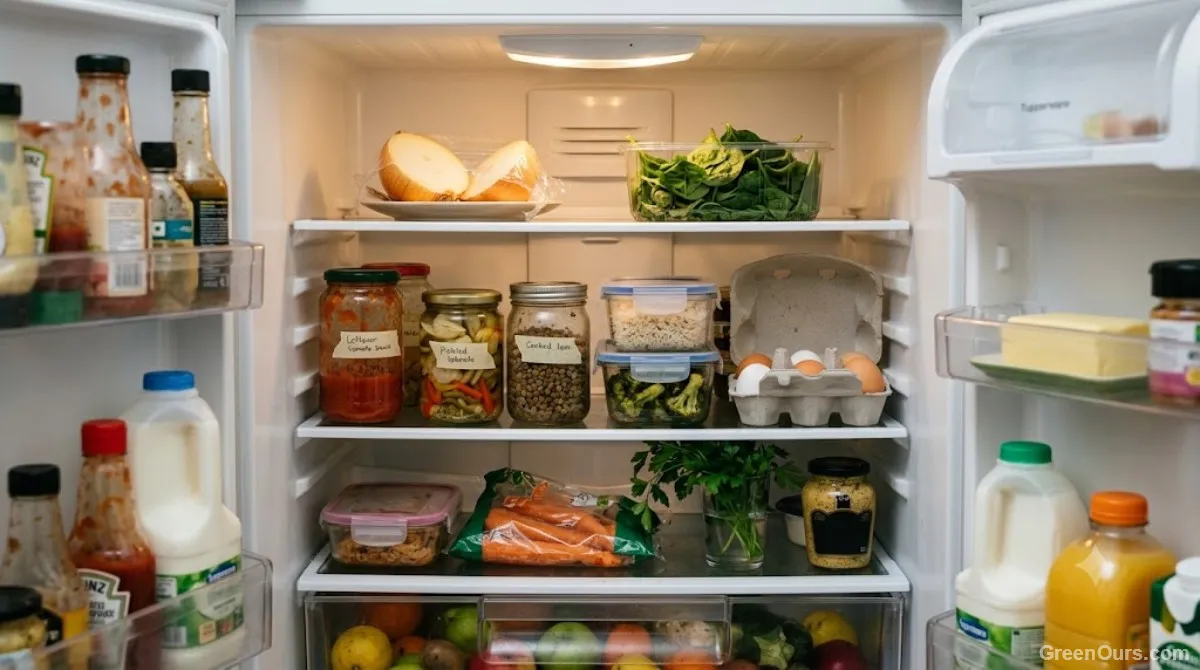
And once it's home, even the best seasonal haul does nothing if it wilts at the back of the fridge.
Shop Seasonally Without Overhauling Your Life
You don't need to memorize a produce calendar. Seasons differ from region to region, so a guide for one state or country won't match another, but a few small habits go a long way.
- Look up a seasonal produce guide for your region, such as the Seasonal Food Guide from FoodPrint, which shows what's in season for your location and time of year. Treat it as a starting point, since weather shifts harvest dates.
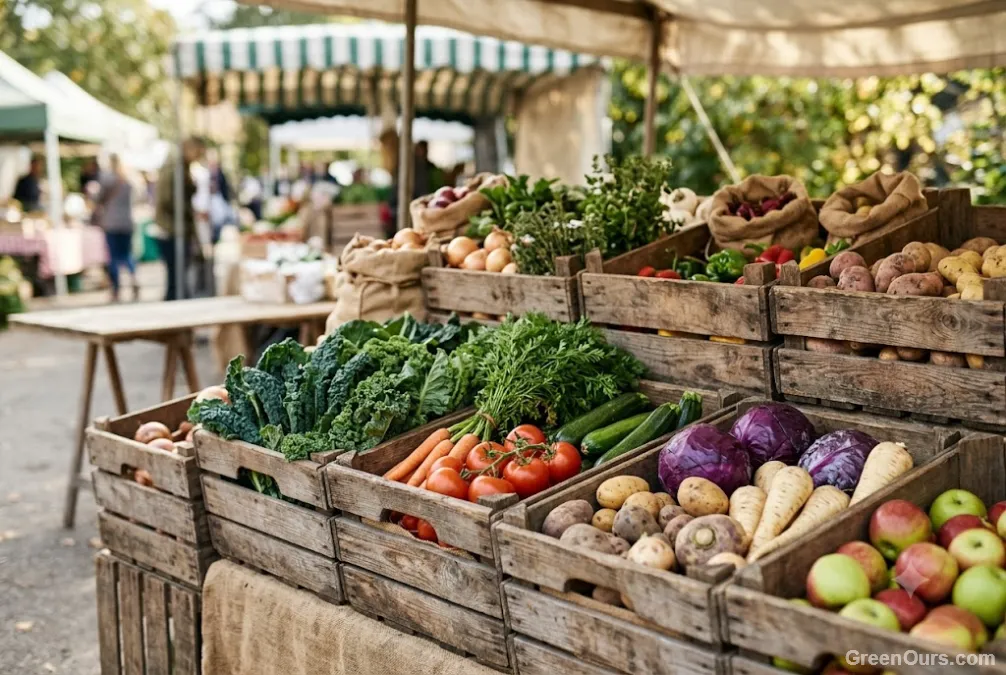
- Visit a farmers market or farm stand and ask growers how and when things were harvested.
- Read origin labels on stickers and signs, and ask when the source is unclear.
- Stay flexible: berries when they're abundant, apples and pears when they're not.
One more thing about farmers markets: your own trip counts. A twenty-minute drive for a single bunch of kale can quietly cancel out most of your good intentions.
Walking, cycling, or tacking the market onto a trip you're already making keeps the benefit from vanishing into a special drive.
What to Do Next
Next time you shop, pick one item you buy all year round and find out where it's grown and whether it's in season. That tiny bit of detective work will teach you more than any rule of thumb.
Found a seasonal swap you love? Keep exploring easy ways to waste less in your kitchen.