
Start With the Lesion, Not the Plant Species
Plenty of guides sort leaf spot by plant type — tomato leaf spot, rose leaf spot, hydrangea leaf spot. That's the wrong starting point. The lesion itself, not the host plant, tells you whether you're dealing with bacteria or fungus, and that distinction matters more than the species you're growing.
Bacteria and fungi infect leaf tissue through different mechanisms, and that difference shows up visually almost every time. Learn to read it once, and you can apply the same diagnostic process to nearly any plant in your yard.
The Visual Differences Between Bacterial and Fungal Lesions
Grab a hand lens or your phone's macro camera before you treat anything. The next thirty seconds of inspection will save you weeks of the wrong product.
Bacterial Leaf Spot Signatures
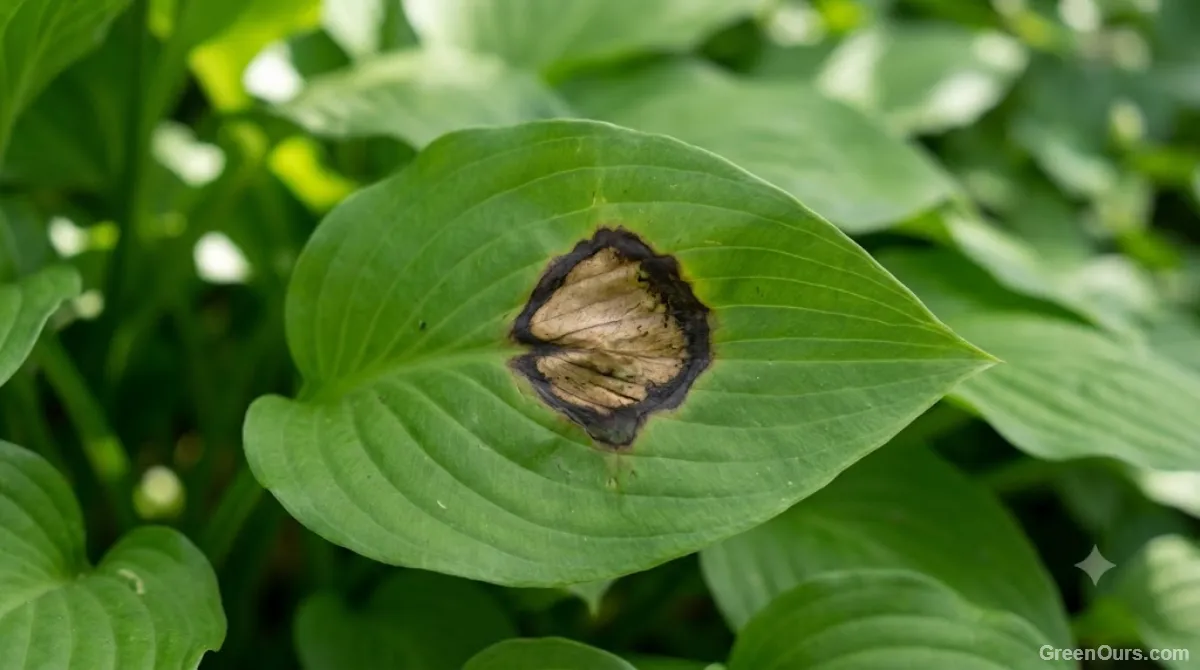
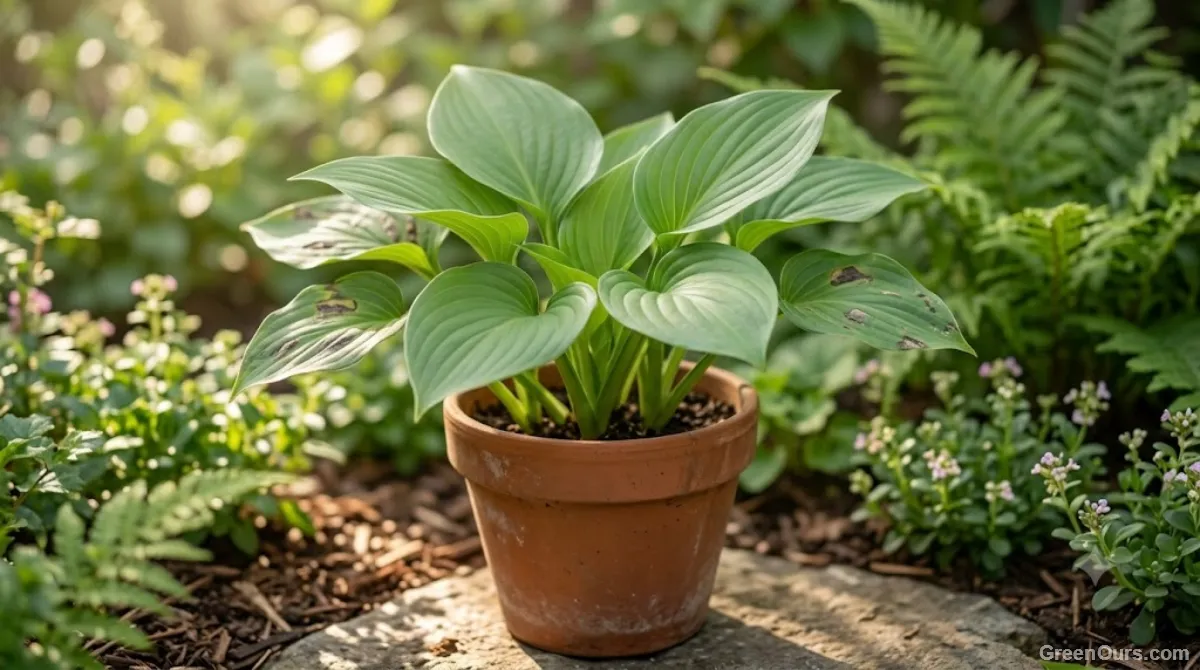
Bacterial lesions typically start as small, water-soaked spots — they look almost translucent, like the tissue has been bruised from underneath. As they mature, a yellow halo often forms around the darker center. Because bacteria move through the leaf's internal water channels, lesions frequently stay angular, bounded sharply by the leaf veins rather than spreading freely across the surface. In humid mornings, look closely at the underside of the leaf for a faint, sticky film — that's bacterial ooze, and it's one of the most reliable tells you'll find.
Fungal Leaf Spot Signatures
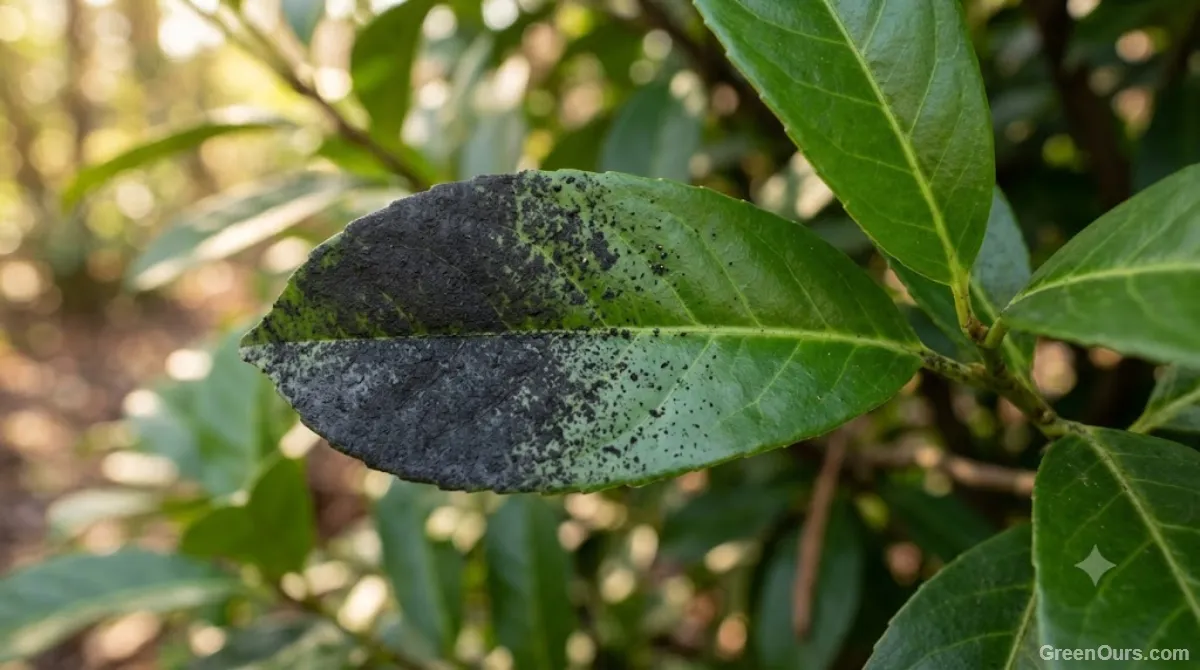
Fungal lesions tend to be rounder, with a tan or brown center and a more defined outer ring — some species produce a classic "target spot" pattern of concentric circles. Unlike bacterial spots, fungal lesions aren't confined by leaf veins; they spread across tissue in whatever direction moisture and time allow. In humid or still air, check the lesion center for fine fuzzy growth or tiny black speckles. Those specks are fungal fruiting bodies, and their presence is close to a confirmed diagnosis on its own.
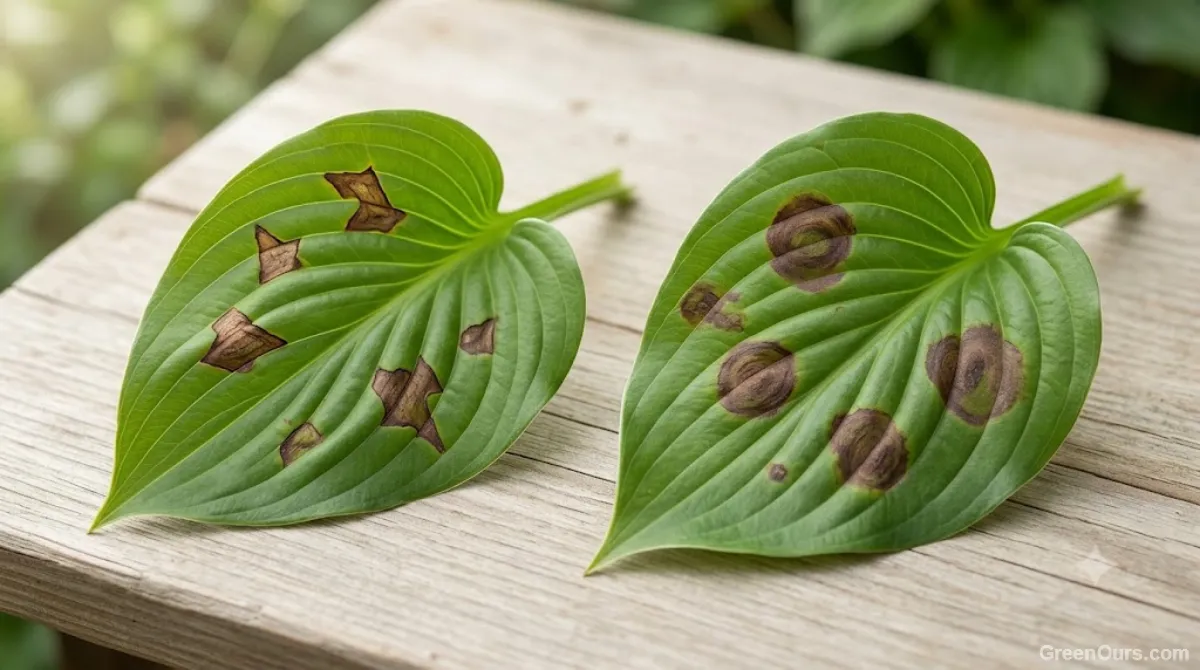
Hold the leaf up to natural light. Bacterial spots often look angular and vein-bound, almost like a stained-glass pattern. Fungal spots ignore those boundaries and blur outward across the leaf.
Environmental Triggers: Why Timing Points to the Cause
Weather conditions in the days before symptoms appear are one of the most underused diagnostic tools available. Bacteria need a film of water to enter the leaf through stomata or small wounds, so outbreaks cluster after heavy rain, splashing irrigation, or several days above 75°F with high humidity. Overhead sprinklers running in the evening are a near-perfect setup for bacterial spread.
Fungal spores also need moisture to germinate, but many common leaf-spot fungi tolerate a wider temperature range, from the mid-60s to low 80s, and thrive wherever airflow is poor and leaves stay wet for extended stretches — dense plantings, shaded corners, or gardens where foliage never fully dries between waterings.
Treatment: When Pruning Is Enough and When You Need a Product
Whichever pathogen you're dealing with, the first three steps are identical:
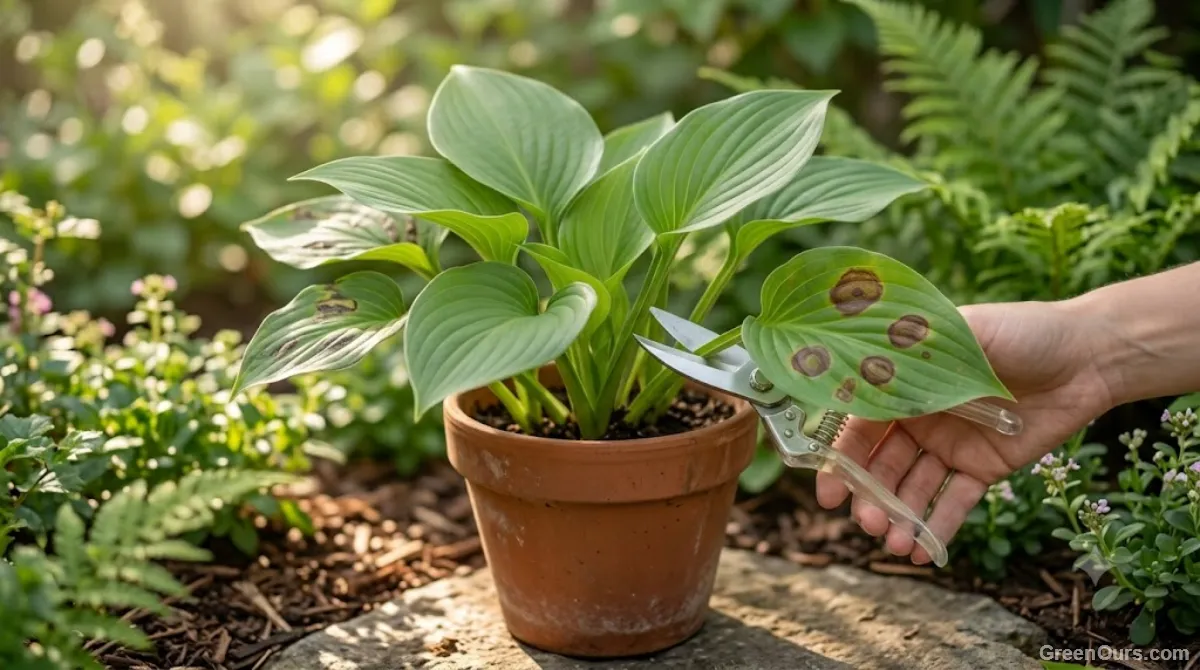
- Remove infected leaves immediately. Cut several inches below the visible lesion using shears sterilized in a 10% bleach solution or 70% isopropyl alcohol between every cut.
- Bag and discard the clippings. Do not add infected material to a home compost pile — most backyard compost setups don't reach temperatures high enough to kill either pathogen reliably.
- Improve airflow around the remaining plant by thinning dense interior growth and increasing spacing between plants where possible.
- If lesions show fungal signs — fuzzy growth, fruiting bodies, target rings — apply a copper-based or chlorothalonil fungicide per the label, repeating every 7 to 14 days through wet weather.
- If lesions show bacterial signs — water-soaked margins, angular shape, ooze — skip the fungicide. Copper bactericides can slow bacterial spread if applied preventively, but sanitation and cultural control do the real work once an infection is established.
Why Fungicides Fail Against Bacterial Infections
Most fungicides work by disrupting fungal cell membranes or interfering with spore germination — mechanisms specific to fungal biology. Bacteria don't share those cell structures, so standard fungicides have no meaningful effect on them. Copper-based products are the exception; they carry some bactericidal action by disrupting bacterial cell walls directly, which is why copper shows up as a preventive option for both pathogen types. But copper suppresses bacterial spread rather than curing infected tissue, so it only works applied ahead of an outbreak, not after lesions are already established.
Preventing Reinfection
Sanitation Between Every Cut
A single unsterilized cut can move bacteria or fungal spores from an infected leaf straight to healthy tissue. Keep a small container of rubbing alcohol or diluted bleach next to you whenever you're pruning diseased material, and wipe the blade between each cut, not just at the start and end of the session.
Watering Habits That Actually Change the Outcome
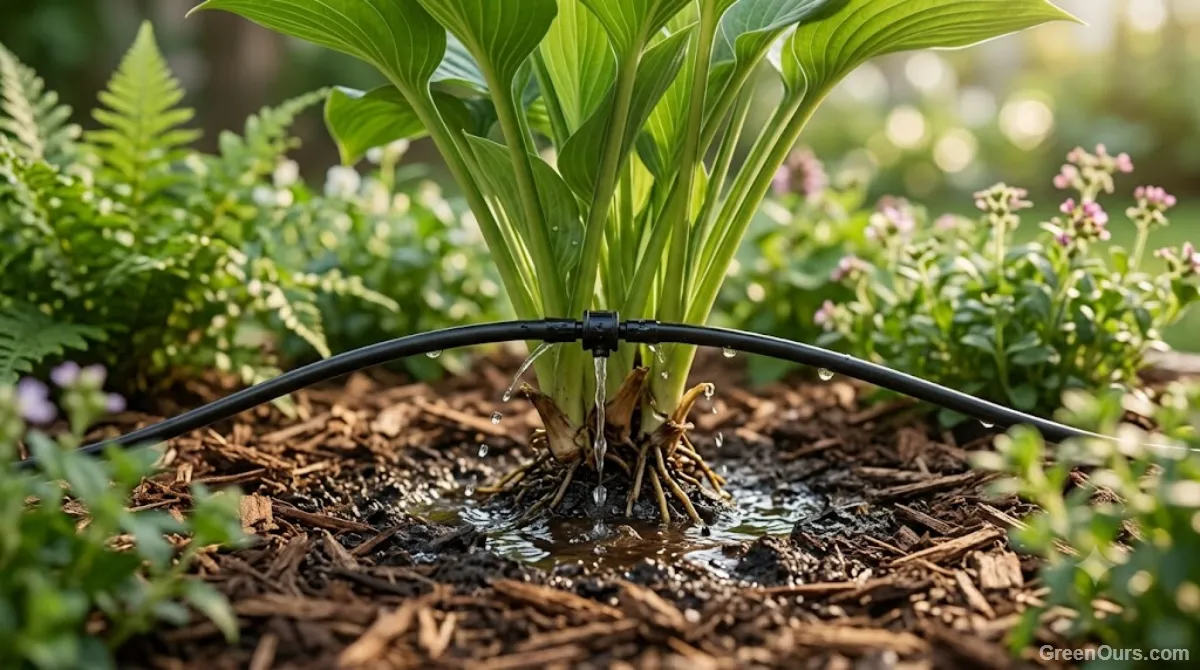
Both pathogens depend on prolonged leaf wetness to establish. Water at the soil line rather than overhead, and water early in the day so any incidental moisture on the foliage has hours to dry before evening. Drip irrigation and soaker hoses remove the problem almost entirely.
When to Seek Further Help
If lesions keep spreading despite consistent sanitation and correct treatment, or if you're managing a large planting where losses would be costly, send a sample to your local agricultural extension office. Extension labs can run a definitive test rather than a visual estimate, and that matters most when symptoms don't cleanly match either profile — some leaf-spot outbreaks turn out to be an entirely different pathogen once tested.
What to Do Next
Get the diagnosis right and everything downstream gets easier — the right product, the right timing, the right expectations for recovery. Skip that step and you're just cycling through treatments and hoping one of them happens to match the problem.
Read our latest pest and disease diagnostics for more plant problems solved.