
The Wipe Test: Your First Diagnostic Step
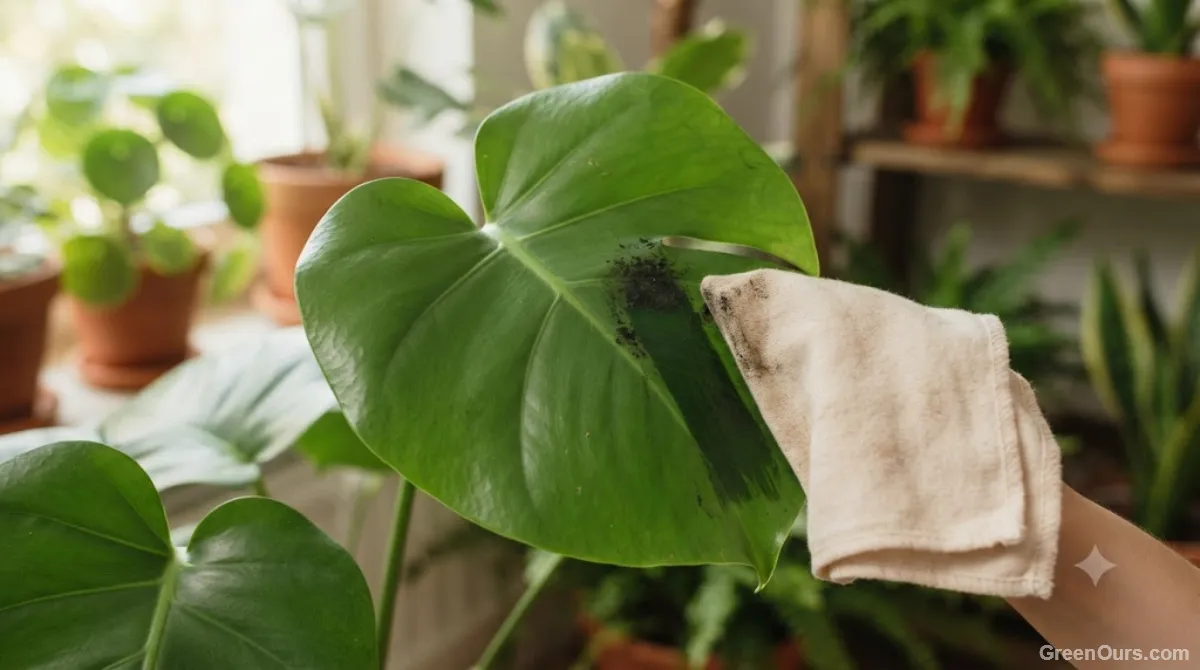
Wipe a clean, dry cloth or your fingertip across three or four affected leaves, choosing spots from different areas of the plant, not just one cluster. Note two things: how easily the mark lifts, and what's left behind on the cloth. This quick check is how you confirm whether you're actually dealing with black spots on plant leaves that wipe off, rather than a fixed disease lesion.
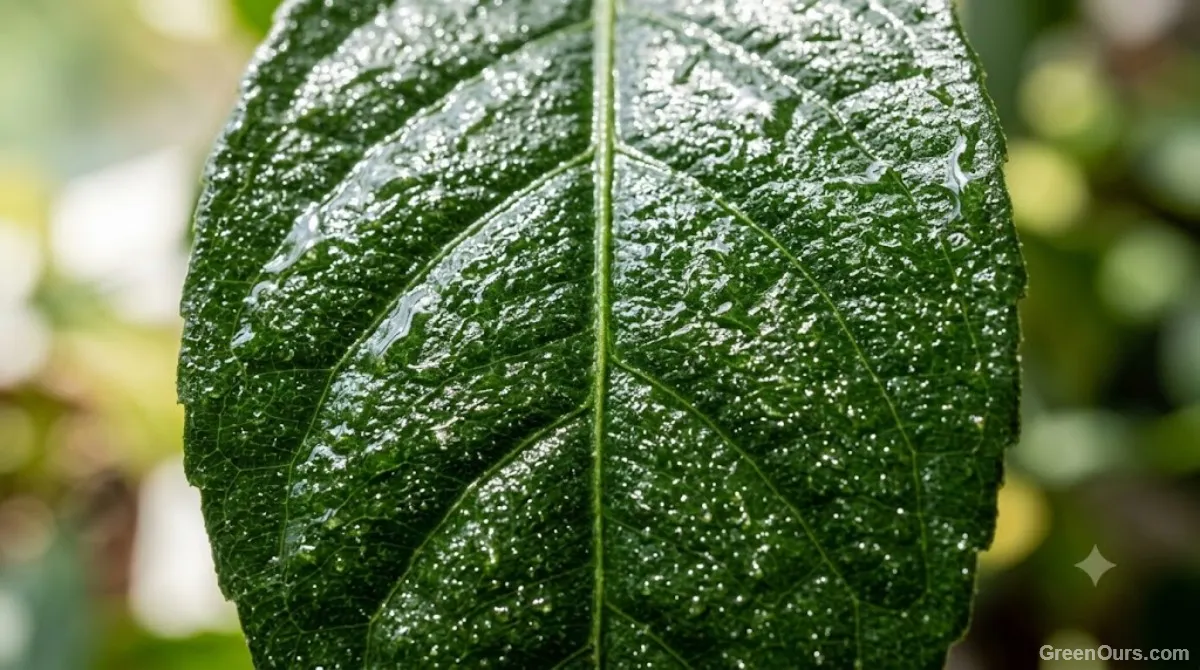
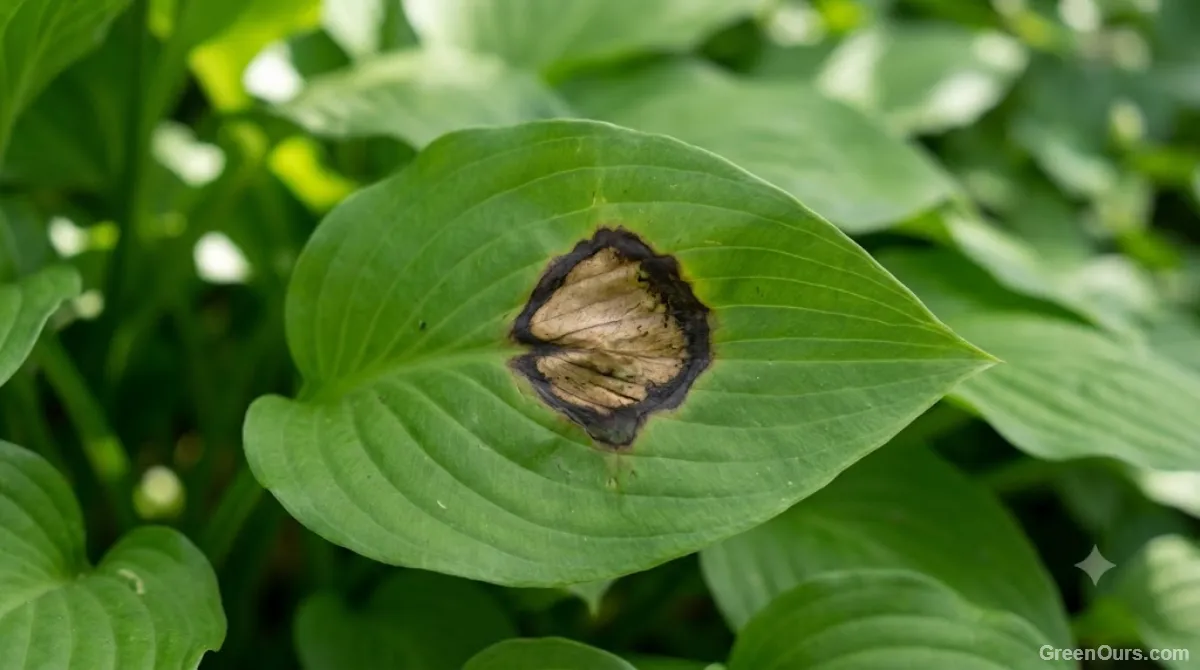
A fine black powder that smudges off in one pass points to sooty mold. A tacky residue that feels sticky before you even touch it, and smears into a shiny film, points to honeydew that hasn't fully molded over yet. A mark that doesn't budge, or that leaves a rough, slightly sunken scar once you rub it, points to a true leaf disease.
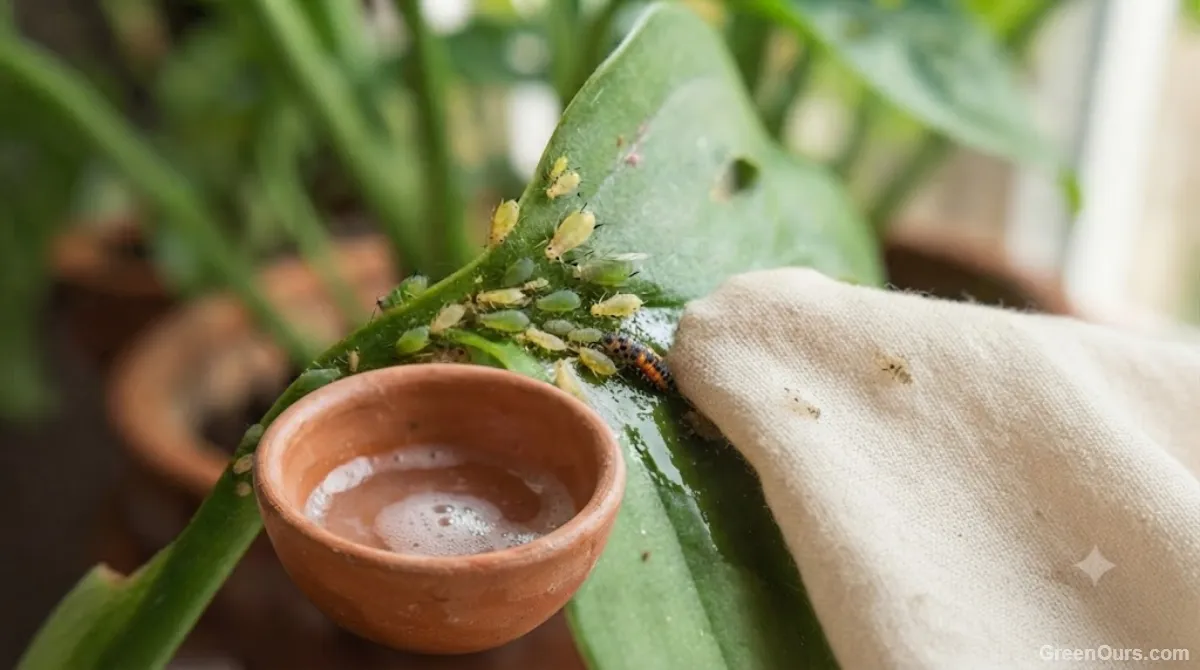
While you're at it, check the leaf undersides and the stem joints just above the affected leaves. Sooty mold and honeydew both originate from insects feeding higher up on the plant, then dripping down. If you see ants moving along the stems, that's a strong secondary signal — ants farm the insects that produce honeydew and will defend them from predators.
Test more than one leaf before you draw a conclusion. A single spot can mislead you — a fresh insect deposit next to an old, healed disease lesion will give you two different readings on the same plant. Sooty mold and honeydew typically cover multiple adjacent leaves in a rough gradient, heaviest near the infestation and fading outward, while a fungal disease usually shows isolated spots scattered without that pattern.
Three Likely Causes, Ranked by Frequency
Once you've run the wipe test, narrow it down. These three causes account for nearly every case of black residue that isn't a permanent lesion.
1. Sooty Mold
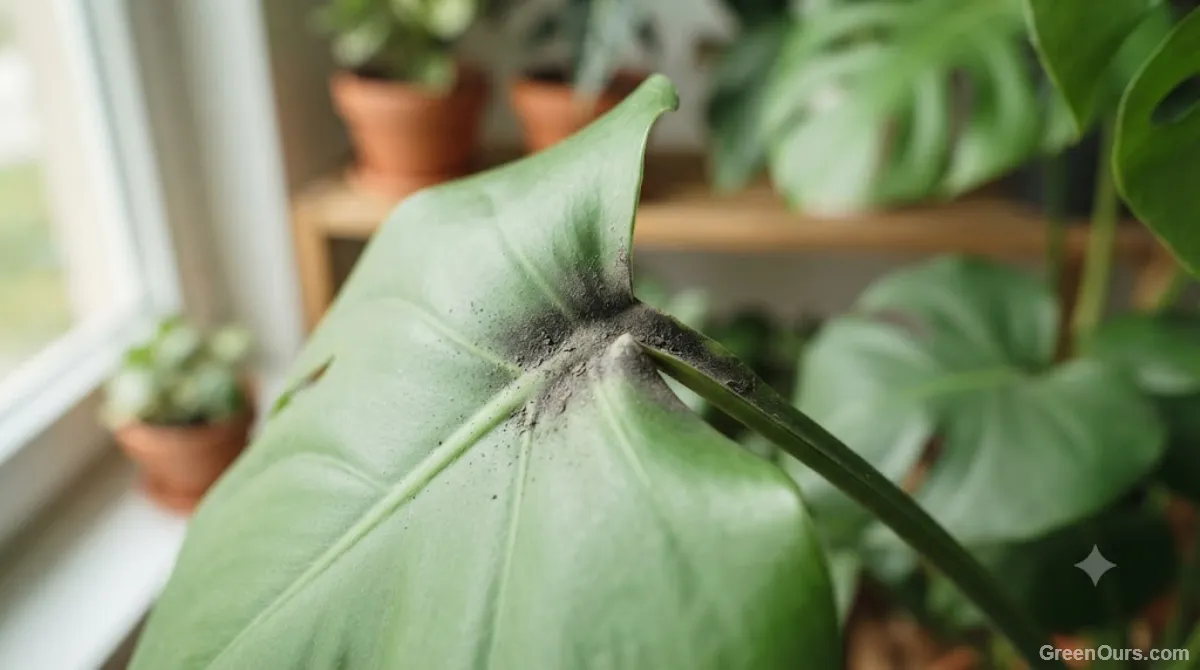
Sooty mold is a fungus in the genus Capnodium, and it doesn't feed on the leaf at all. It feeds on honeydew, the sugary excretion left behind by aphids, scale, whiteflies, or mealybugs. The mold forms a thin black layer across the honeydew, thickest near where insects cluster — usually leaf undersides, stem joints, and the tops of leaves directly beneath an infested branch. It washes off completely with plain water and a soft cloth in one pass, because it never penetrated the leaf surface. Citrus, gardenias, crepe myrtles, and hibiscus are especially prone, since they're common hosts for the scale insects and aphids that produce the honeydew sooty mold needs to grow. Left alone, a heavy coating can block enough light to measurably slow photosynthesis, even though the mold itself never enters the plant.
2. Pest Honeydew Residue
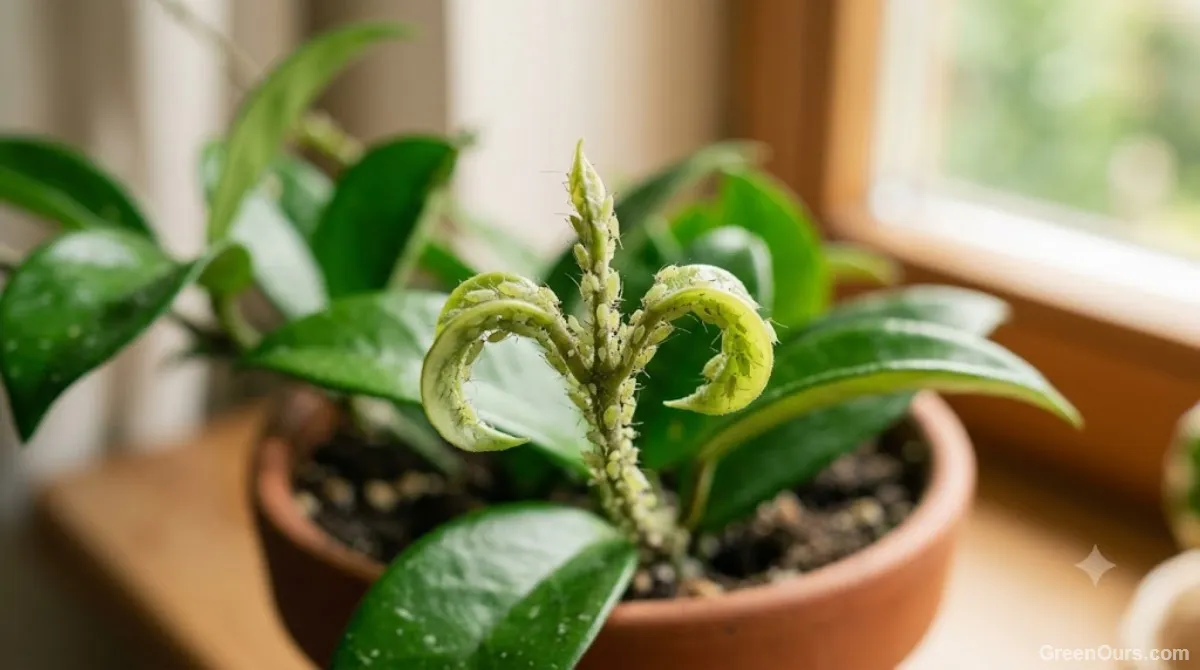
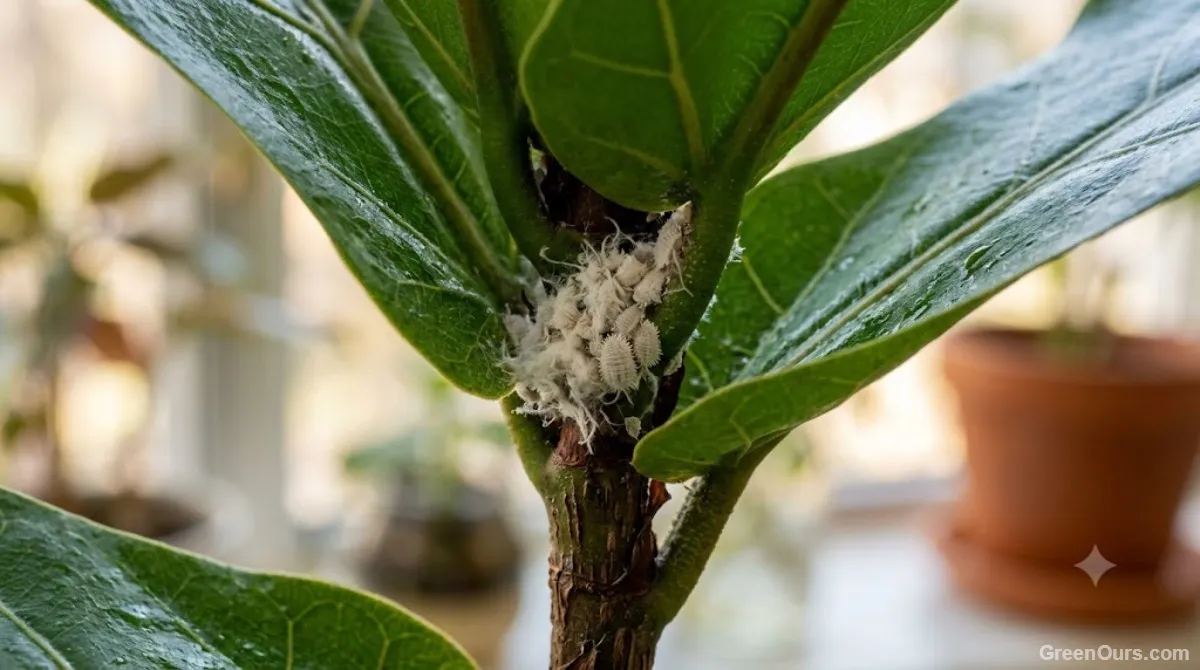
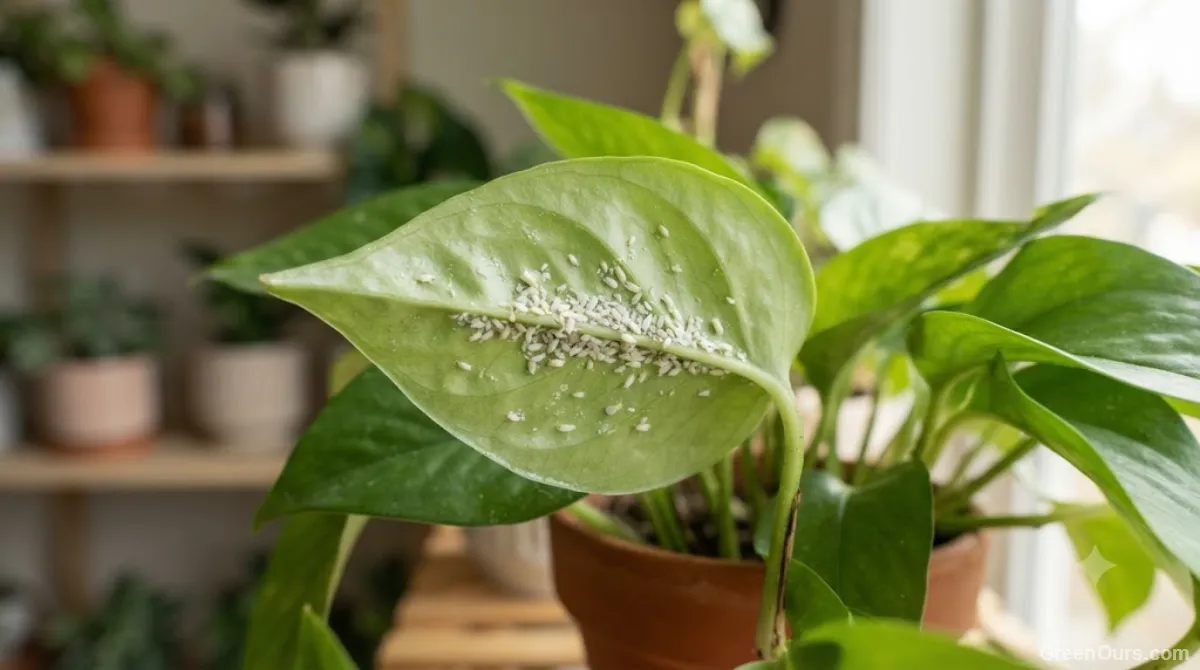
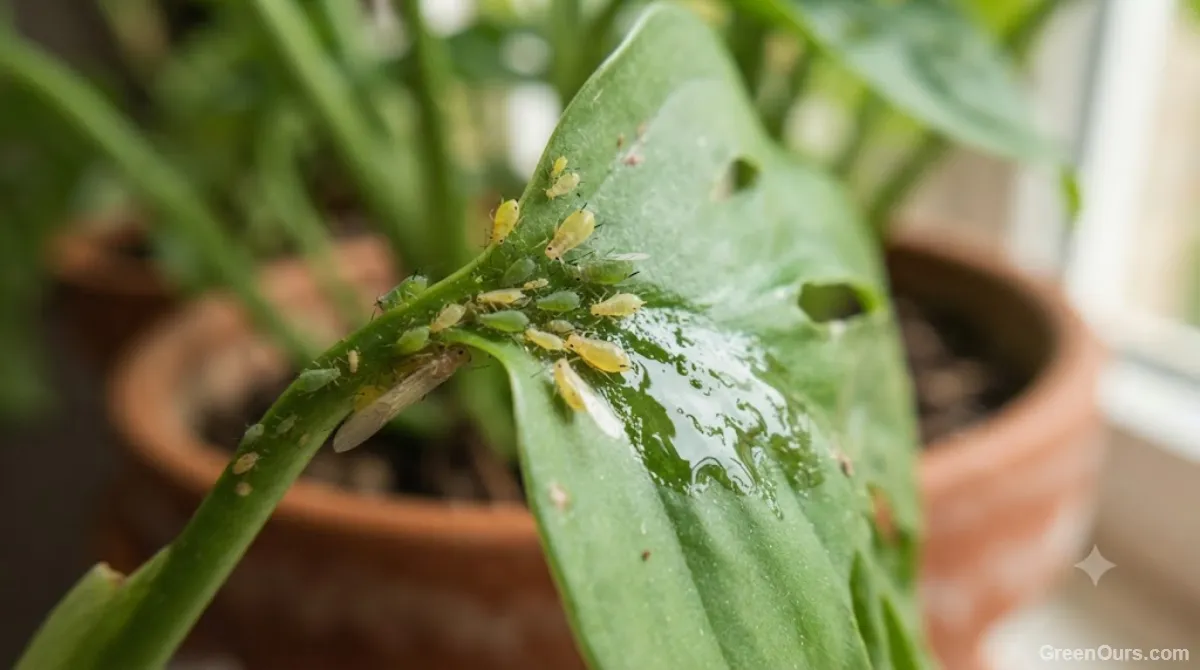
Before mold has time to colonize, honeydew looks clear to light amber and feels tacky rather than powdery. This is the earliest stage, and it's the easiest one to fix, because you're treating the insects directly rather than cleaning up after a fungus has already established. Ants trailing along stems are your clearest sign that this is active, not leftover from a past infestation. Turn the leaf over and look closely — aphids cluster in soft-bodied groups along new growth, scale insects look like flat, waxy bumps that don't move, and whiteflies scatter into a small white cloud when you brush the foliage. Each pest produces honeydew at a different rate, but a heavy infestation of any of them can coat a leaf within a week.
3. Fungal or Bacterial Leaf Spot Disease
This is the one that doesn't wipe off. Black spot disease on roses, for example, is caused by the fungus Diplocarpon rosae, and it produces circular lesions 3 to 10 millimeters across, often ringed with a yellow halo, with a texture that feels slightly sunken rather than sitting on the surface. Unlike sooty mold, true leaf spot disease shows up on leaf tops that insects never touch, and its distribution across the plant tends to look more random rather than concentrated near feeding sites. Roses, hydrangeas, and tomatoes are frequent hosts for their own leaf spot pathogens, each with slightly different lesion shapes and colors, which is why a definitive diagnosis sometimes needs more than a visual check.
Diagnostic shortcut: check the leaf undersides and stem joints first. Sooty mold and honeydew concentrate exactly where insects feed and excrete. True fungal leaf spot appears more randomly across the whole plant, including leaf tops that pests never reach.
Treatment: Step by Step
- Wash sooty mold and honeydew off with lukewarm water and a soft cloth or soft-bristle brush. For a heavier coating, mix 1 teaspoon of mild dish soap into 1 liter of water and wipe each leaf, top and bottom, then rinse with plain water.
- Identify and treat the pest source directly. Check stems and leaf undersides for aphids, scale, whiteflies, or mealybugs, then apply insecticidal soap or horticultural oil every 7 days for three applications to break the feeding cycle. Spray in the early morning or evening to avoid leaf burn from oils applied in direct sun, and make sure you coat the undersides of leaves, not just the tops, since that's where most of these pests feed.
- For confirmed fungal leaf spot, remove and discard affected leaves rather than composting them. Fungal spores can survive in home compost piles that never reach an internal temperature of 55°C (131°F). Bag diseased leaves in plastic before disposal if you're worried about spreading spores across the yard.
- Apply a copper-based or sulfur-based fungicide labeled for the specific disease you've identified, following the label's reapplication interval — typically every 7 to 14 days until new growth comes in clean.
Preventing It From Coming Back
Control the Insect Source
Quarantine new plants for two weeks before placing them near others, and check weekly for early signs of aphids or scale — a trail of ants on the stems is often your first warning, well before you'd notice the honeydew itself. Yellow sticky traps placed near new growth can catch winged aphids and whiteflies early, giving you a warning sign before honeydew ever shows up on the leaves.
Improve Airflow and Watering Habits
Prune dense growth back by 20 to 30% where branches touch or overlap, and water at the soil line instead of overhead. Fungal spores typically need at least 4 hours of continuous leaf wetness to germinate, so wet foliage overnight is exactly the condition that lets disease take hold. A simple moisture meter or even a finger test at 5cm depth tells you when soil is actually dry, which cuts down on the overwatering that keeps humidity high around the foliage.
When the Spots Don't Wipe Off
If a confirmed fungal or bacterial infection keeps spreading despite treatment, or covers more than 20% of the plant's foliage, stop guessing. Bring a sample to a local extension office or a certified arborist for lab identification. Some leaf spot diseases look nearly identical to each other under normal light and require a microscope or culture to tell apart, and treating the wrong pathogen wastes another treatment cycle you don't need to lose. Bring more than one affected leaf if you can — a range of lesion ages helps a lab technician narrow down the pathogen faster than a single sample.
What to Do Next
Most black spots that wipe off resolve within one to two weeks once you treat the insects behind them, not the residue itself. The ones that don't wipe off take longer and need a targeted fungicide, not a guess. Run the test first. It tells you which timeline you're actually on.
Read our latest pest and disease diagnostics for more plant problems solved.