
What Does Leafminer Damage Look Like?
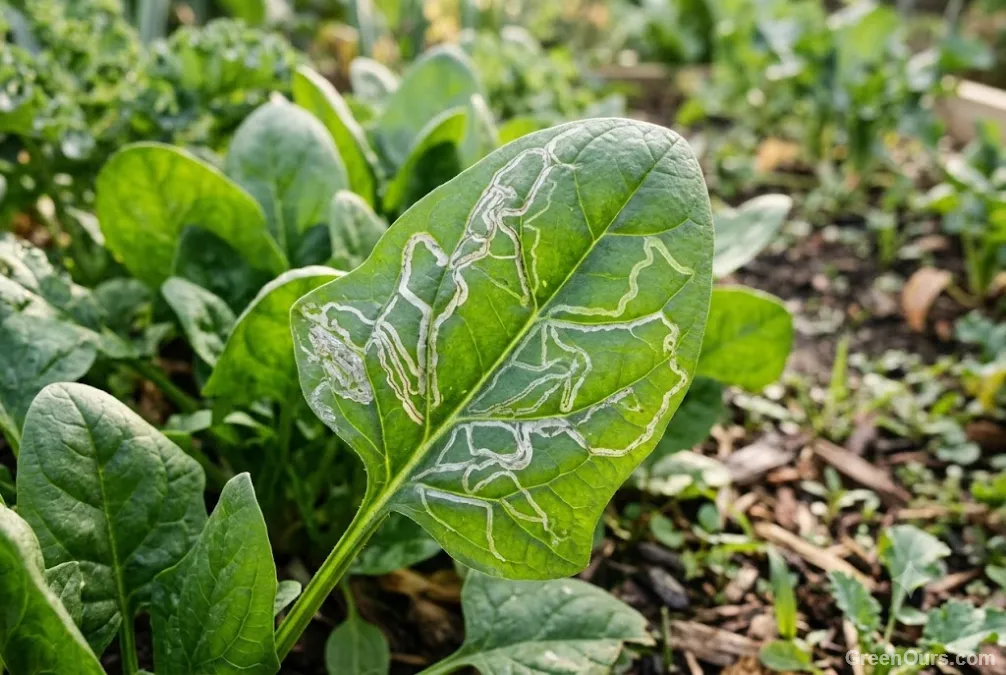
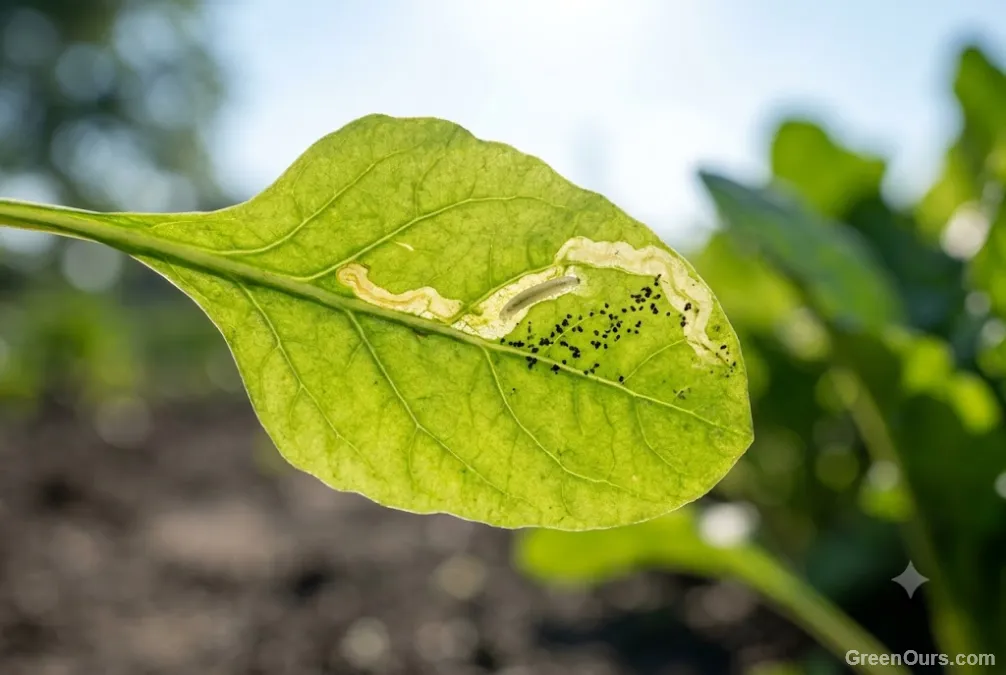
Leafminer damage shows up as pale, winding trails or blotches inside the leaf. The larvae make them by feeding between the upper and lower leaf layers. Look for three patterns, because they point to different leafminer types.
- Serpentine mines: thin, winding trails that usually widen as the larva grows.
- Blotch mines: narrow at first, then an irregular, papery patch.
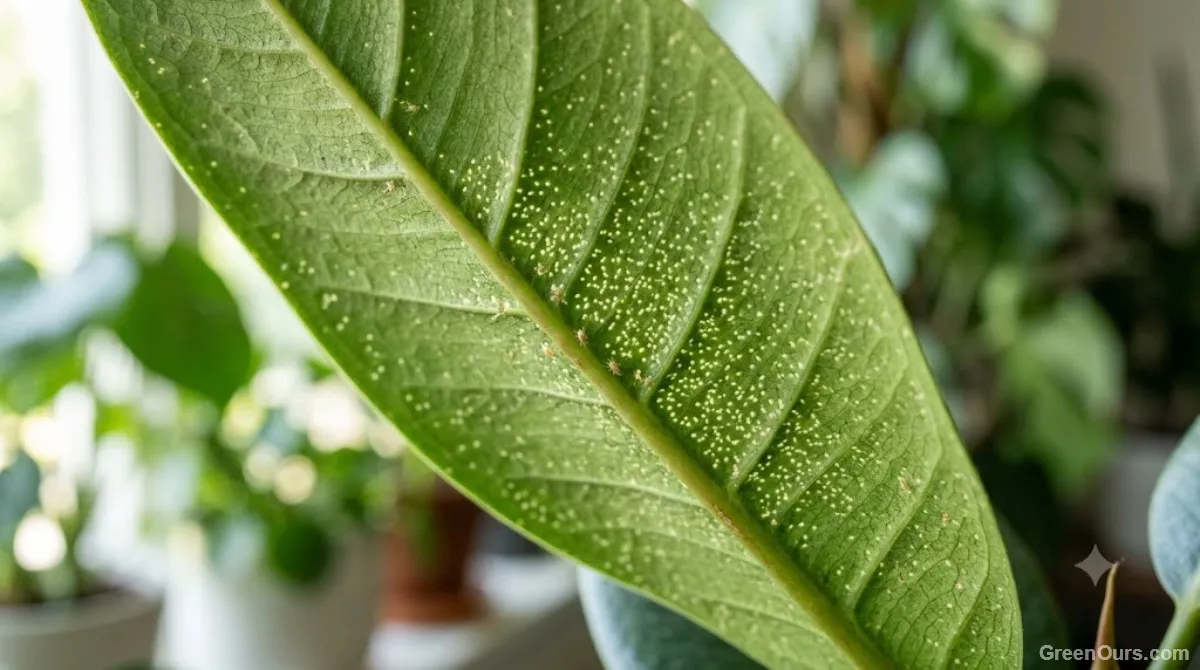
- Puncture dots: tiny pale marks where adult females pierced the leaf to feed or lay eggs.
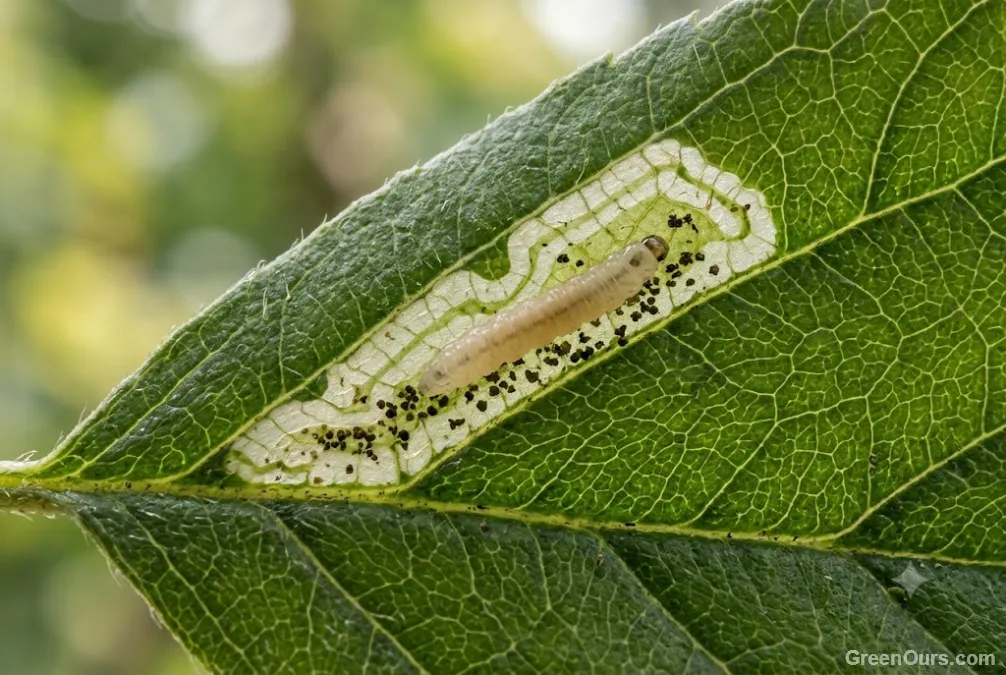
Mines sit just under the leaf surface, so they read white, gray, or paler than healthy tissue. Hold the leaf up to the light. A legless, whitish larva may be visible inside, along with dark specks of frass (insect droppings).
A widening trail can show which way the larva was feeding, but old mines may be empty and dry. Look for a live larva or fresh, pale tissue rather than judging by trail width alone.
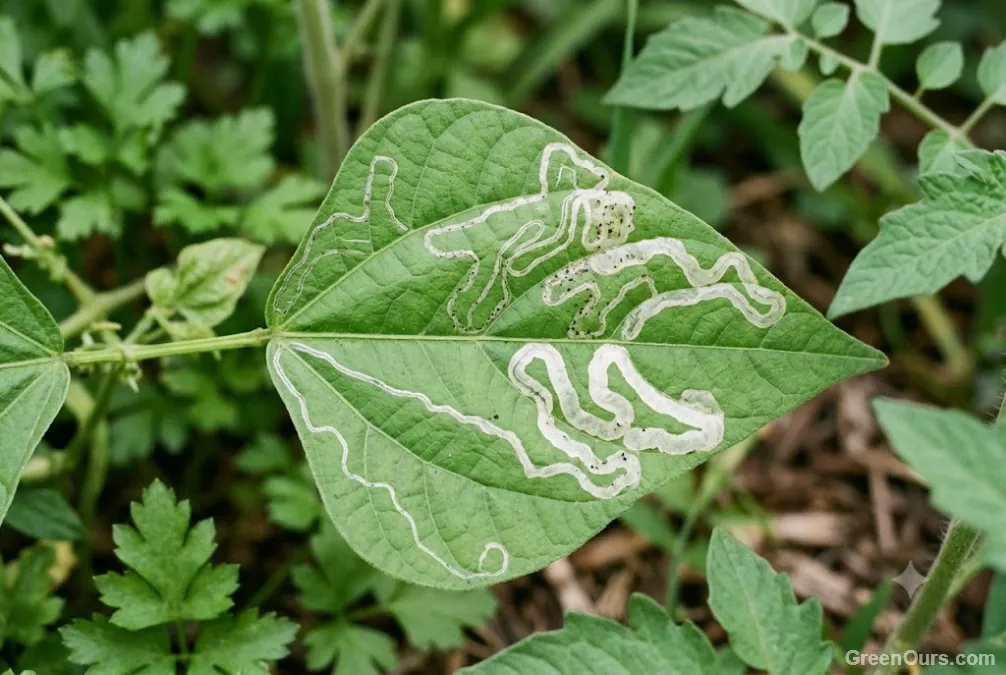
Important: Leaf damage alone doesn't confirm leafminers. Other insects, diseases, and plant-care problems can look similar, so look for a tunnel or blotch between the leaf surfaces first. Don't diagnose from the adult fly, which is small and rarely noticed.
What Are Leafminers?
"Leafminer" describes a feeding habit, not one species. The larvae of several insects, mostly small flies, live and feed between the two surfaces of a leaf. In vegetable gardens the usual suspects are the serpentine and vegetable leafminers (Liriomyza species), the spinach leafminer (Pegomya hyoscyami), and the allium leafminer. Boxwood, holly, and birch each have their own species too.
The cycle is simple. An adult female punctures a leaf and lays an egg, the larva feeds inside the leaf, then it pupates. Many species drop to the soil to pupate and overwinter there, while others pupate in or on the plant, so don't assume one pattern fits every species. In warm weather a generation can take roughly three to four weeks, which is why populations build through the season.
Which Plants Do Leafminers Attack?
No single species attacks everything. Host plant and mine shape narrow the possibilities, but they don't confirm the species.
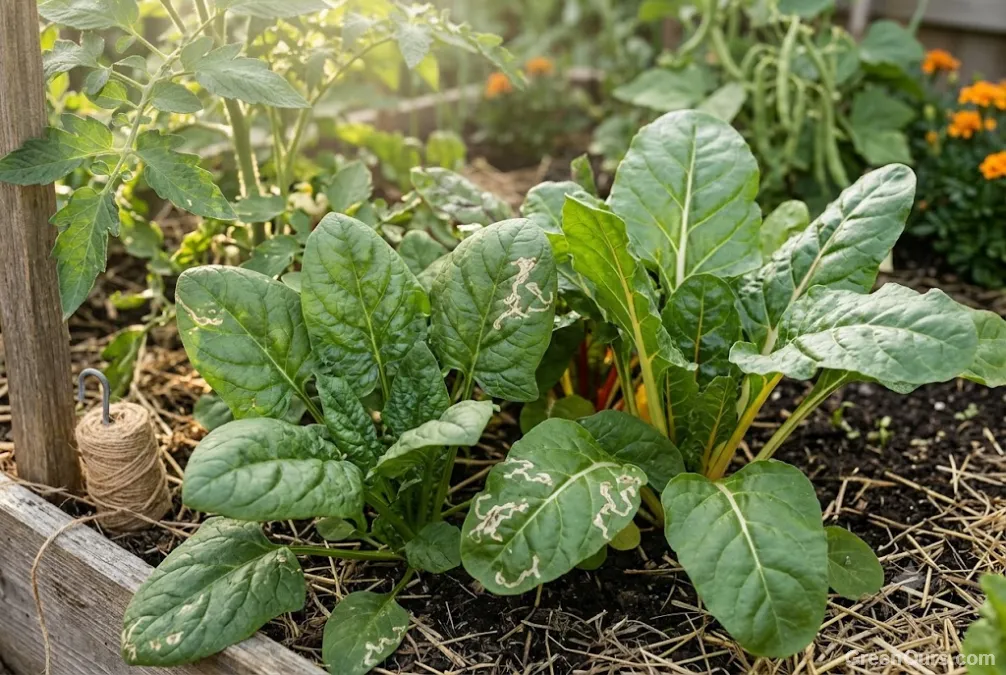
Spinach, Swiss chard, beets
Blotch mines from spinach and beet leafminers
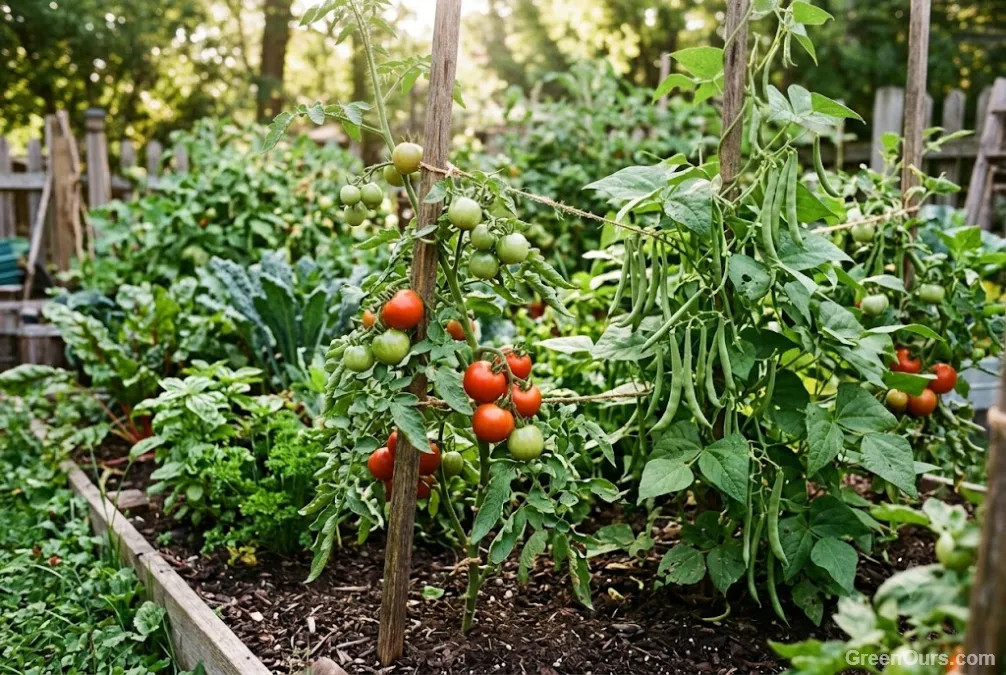
Tomatoes, beans, peas, squash
Winding mines from serpentine and vegetable leafminers, which also visit cabbage-family crops. How common they are varies by crop and region
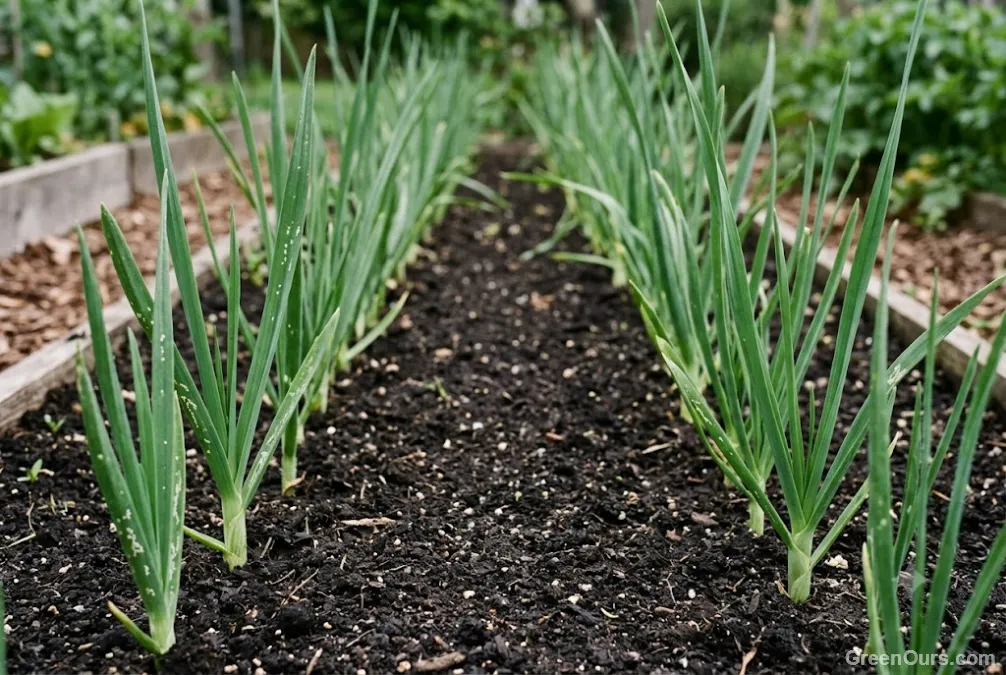
Onions, garlic, leeks, chives
Rows of small white dots, then mines, from the allium leafminer where it occurs
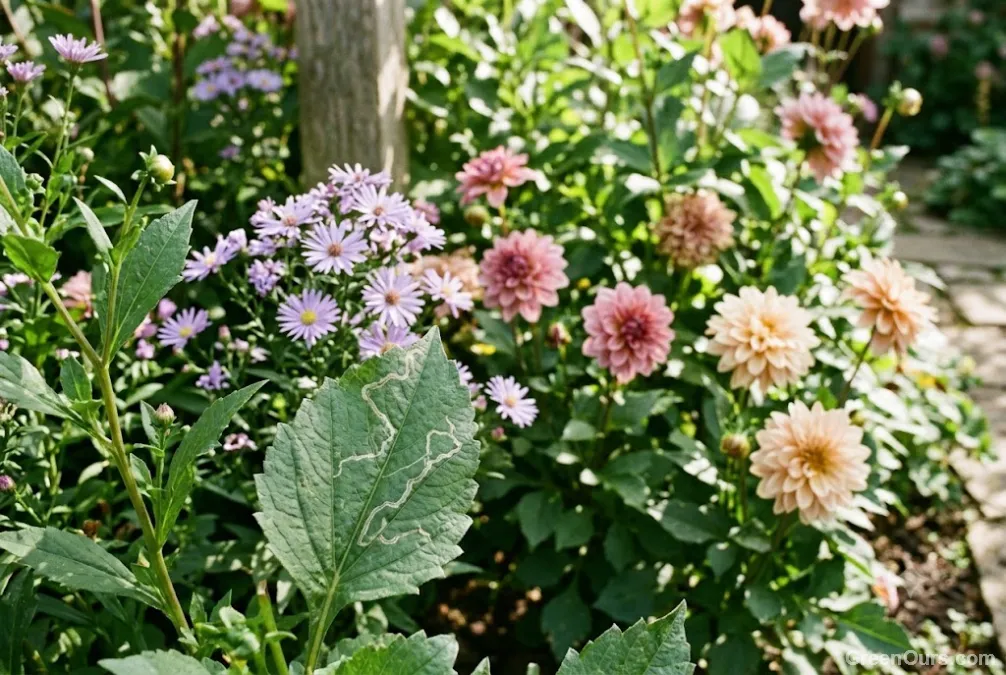
Asters, begonias, dahlias, impatiens, marigolds, petunias
Winding mines on many flowering plants
Weeds such as lambsquarters can host the spinach and beet leafminers, and the spinach leafminer may also feed on peppers. Not every crop on these lists is hit equally in every region, and activity and severity vary by species and location, so if the crop or the pest is unfamiliar, check with your local extension service.
Leafminers vs. Other Causes of Leaf Damage
Pale marks on a leaf don't always mean leafminers. Sort the likely cause by pattern, not by color.
| What you see | What it may indicate |
|---|---|
| Winding pale trail inside the leaf | Serpentine leafminer |
| Irregular pale or translucent blotch | Blotch-type leafminer, such as the spinach leafminer |
| Straight rows of small white dots on onion-family leaves | Possible allium leafminer activity |
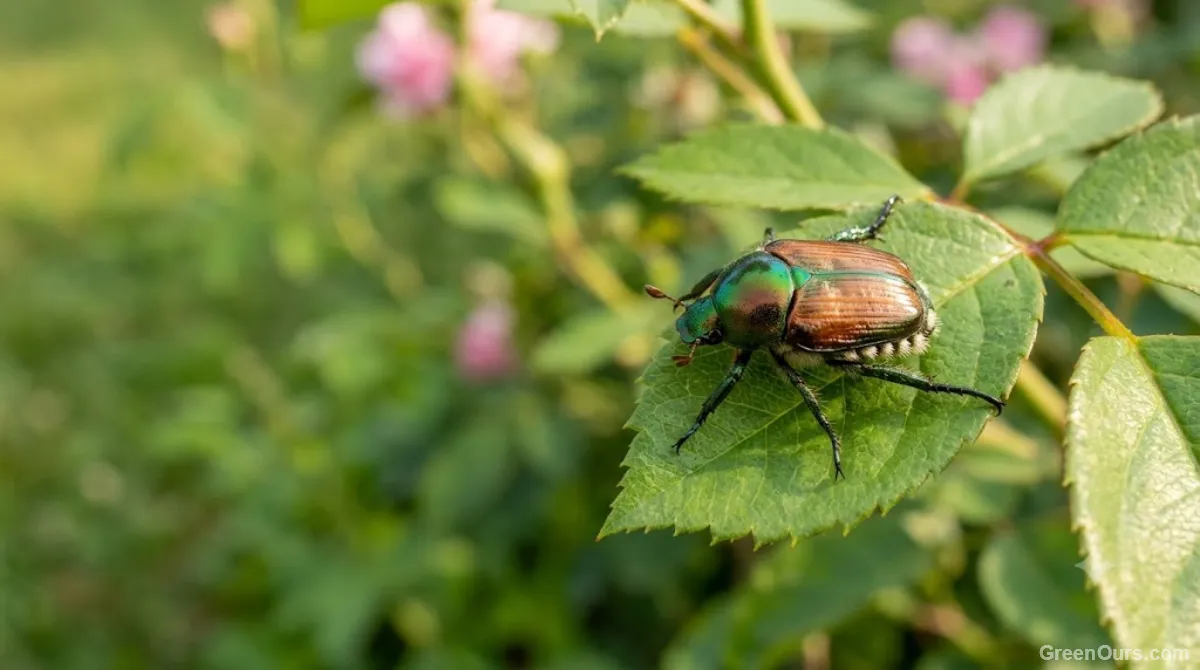
| Holes or ragged, skeletonized tissue | Chewing insects such as beetles |
| Fine stippling with no tunnels | Spider mites or other sap-feeding insects |
| Even yellowing with no mines | Nutrient, watering, or root problems |
These are clues, not a diagnosis. Different pests and plant disorders overlap, and one leaf can have more than one problem. Treat each row as a lead to confirm by inspection, not a verdict.
Run one quick test. Hold the leaf to the light and look for a tunnel or blotch between the two surfaces. Surface chewing and stippling aren't leafminer work. If you do find a mine, check newer leaves for fresh, pale tunnels, because old mines dry out and turn brown.
How to Get Rid of Leafminers
Start with your eyes and a pair of scissors. Spray last, because larvae sit inside the leaf and many contact sprays don't reach them.
- Inspect for mines, not just insects.
Check both leaf surfaces and hold suspect leaves to the light. Look for a tunnel or blotch with a larva or dark frass inside before you act.
- Remove confirmed, actively mined leaves.
Prioritize seedlings and edible greens, and cut leaves with fresh mines or a visible larva. Leave enough healthy foliage for the plant to keep growing.
- Dispose of the clippings.
Bag them and put them in the trash. Don't leave them beside susceptible plants or add them to a cold compost pile, where larvae and pupae may survive.
- Cover susceptible crops early.
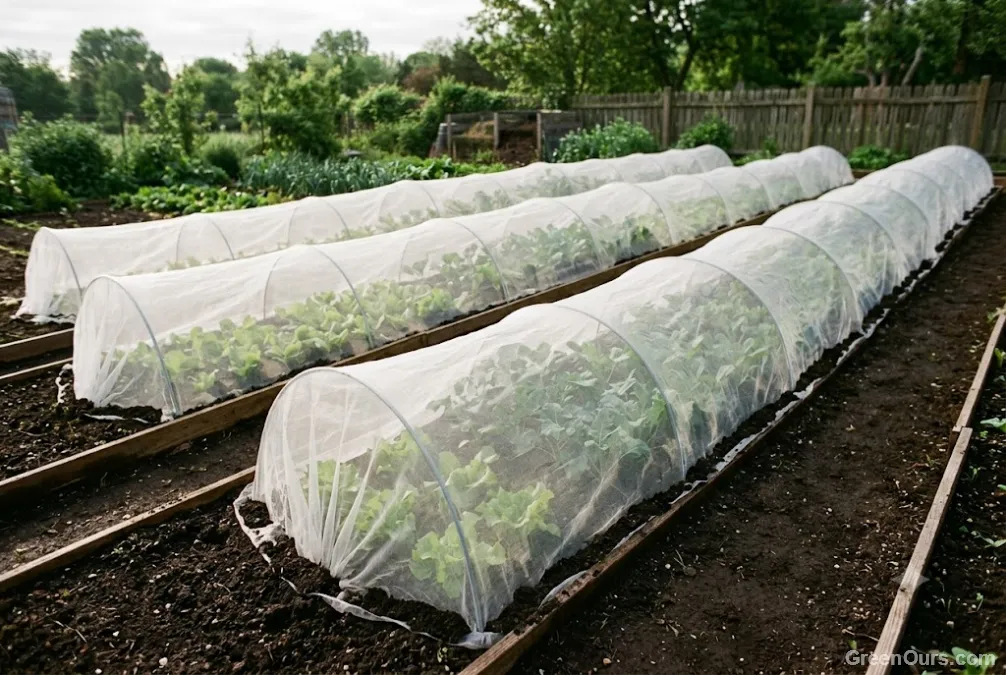
Fine-mesh row covers keep egg-laying females off the plants. Install them at planting, before adults arrive, over clean soil, and seal the edges. If leafminers hit that bed last season, pupae left in the soil may emerge under the cover, so clear debris first and follow your local extension's guidance for your pest.
- Protect natural enemies.
Parasitic wasps often keep leafminers in check, and insecticides aimed at other pests can kill them and trigger a secondary leafminer outbreak.
- Treat only when you must.
If the crop justifies it, use a product labeled for that plant and that pest, and follow the label exactly.
Don't treat neem oil, spinosad, or any other product as a universal fix. Larvae inside leaf tissue are protected, resistance has been documented where vegetables are grown intensively, and some products harm beneficial insects. Oils and soaps can also burn foliage in hot weather.
When Should You Worry About Leafminers?
Severity depends on the plant and its age. Established plants usually tolerate mining, and heavy infestations rarely kill a host, though they can slow growth and cause early leaf drop.
- A few mines on a healthy mature plant: monitor weekly. Remove leaves only if the damage bothers you.
- Many mines on young plants: act now. Most feeding hits the first true leaves, and seedlings have little foliage to spare.
- Mines on edible leaves such as spinach and chard: act early. The leaves are the crop, and mined ones are often unusable.
- Allium crops: check your state extension's allium leafminer guidance before choosing a treatment or harvest timing.
Same insect, different stakes. Spinach leafminers on beet leaves rarely call for treatment if you're harvesting the roots. On spinach, they can ruin the harvest.
How to Prevent Leafminers
Prevention is mostly timing and hygiene. Cover susceptible crops at planting, before adults begin laying eggs. A cover added after eggs are laid only protects the larvae.
- Inspect seedlings and transplants before they go into the bed, and reject any with mines.
- Check new leaves weekly, especially on seedlings.
- Pull weeds that host leafminers, such as lambsquarters and pigweed.
- Clear crop debris after harvest.
- Move susceptible crops to a different bed each year.
- Skip unnecessary broad-spectrum sprays so parasitic wasps stay in the garden.
- If infestations return every year, check local extension guidance before tilling. Pupation sites differ by species, and cultivation can disturb soil structure and beneficial organisms. Where it's recommended, it's done shallowly after harvest or in early spring.
FAQs
Can leafminers kill a plant?
Rarely, on established plants. Seedlings and heavily mined leafy crops take the real hit, through slowed growth, leaf drop, or a lost harvest.
Can you eat vegetables with leafminer damage?
Insect damage alone doesn't automatically make a plant unsafe to eat, but mined leaves are often unappealing or unusable. Discard badly damaged or spoiled leaves and wash produce under running water. If you used a treatment, follow the product label's restrictions and preharvest interval.
Do leafminers spread from plant to plant?
Yes. Adult flies move between suitable hosts and lay eggs on them. Larvae mostly stay inside the leaf where they hatched.
Will spraying the leaves kill leafminers?
Often not. Larvae inside the leaf are shielded from many contact sprays, and results vary by species and product.
Should I remove every leaf with a mine?
No. Remove the worst leaves and keep enough healthy foliage for the plant to keep growing.
Sources
These extension and IPM pages informed the identification, life-cycle, and management advice above.
- Vegetable Leafminers, UC IPM (University of California): damage, natural enemies, and how insecticides aimed at other pests can trigger leafminer outbreaks.
- Leafminers on Vegetables, University of Maryland Extension: leafminer types, hosts, life cycle, and cultural controls.
- Leafminers in Home Gardens, University of Minnesota Extension: spinach and vegetable leafminers, sanitation, and row covers.
- Leafminers of Vegetable Crops, Utah State University Extension: host crops, row covers, and conserving natural enemies.
- Leaf Mining Flies, Colorado State University: management and documented insecticide resistance.
What to Do Next
Pick one leaf today. Hold it to the light, find the larva or the frass, and confirm the pattern before you buy anything.
Then match the response to the plant: scissors for a few mines, a fine-mesh cover for next season's spinach, and nothing at all for a mature tomato with a few pale trails. Check the new growth again in a week. If mines are still spreading across fresh leaves, that's your cue to step up.
Check one leaf today. Diagnose before you treat.