
Why a New Spot Feels Like a Small Emergency to Your Plant
Plants don't experience a move the way we do. They can't see the whole room or understand that this new corner is still, in the big picture, a safe and comfortable home. All a plant has to go on is what's immediately around it: the amount of light hitting its leaves, the temperature of the air, the humidity, the draft from a nearby door. Change several of those at once, and the plant responds by pulling back.
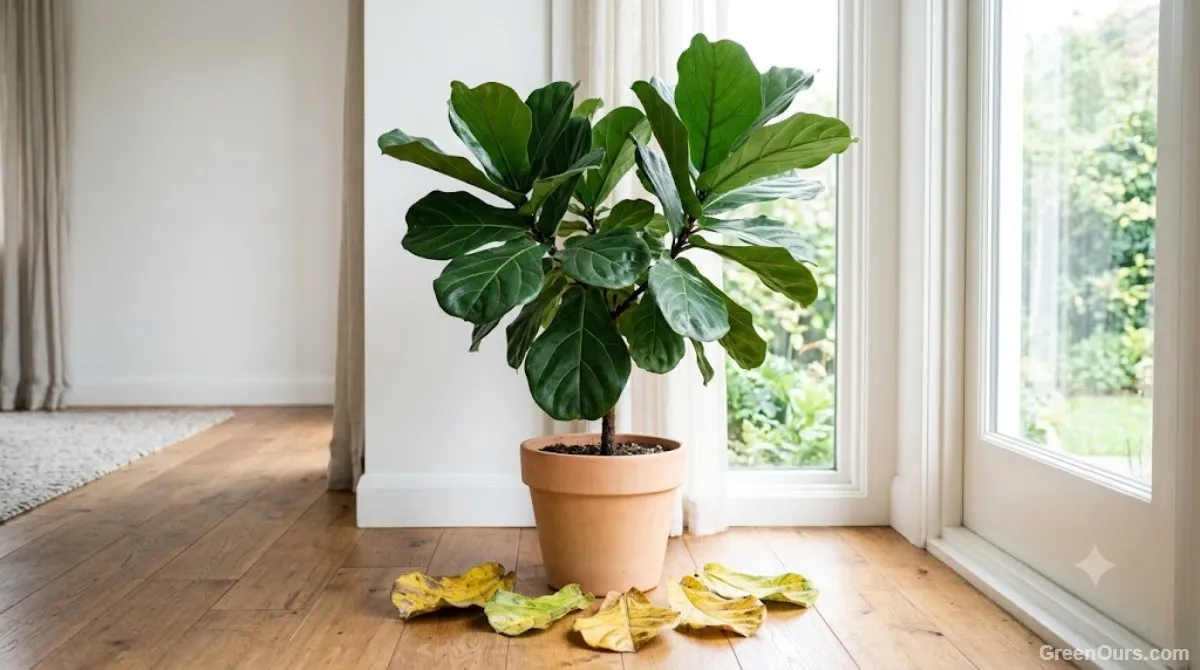
Leaf drop is often that pullback in action. Rather than trying to support every leaf it grew under the old conditions, the plant sheds the ones that cost more energy than they're worth in the new spot, usually the oldest or lowest leaves first. Often, that's a plant being efficient rather than failing.
When a handful of leaves drop right after a move, your plant may simply be redirecting its energy toward its roots and healthiest growth instead of keeping every leaf going. If the loss stays modest and new growth appears, that's usually a sign of adjustment rather than giving up.
The Three Conditions Most Likely to Have Changed
Light
Even a few feet can mean a big difference in light. A spot that looks equally bright to your eyes might deliver far less usable light to a plant, especially if it's now farther from a window or facing a different direction. Plants that suddenly get less light than they're used to will often drop a few leaves while they adjust their energy use downward.
Temperature and Drafts
Spots near doors, vents, or exterior walls run warmer or cooler than the rest of a room, and drafts add stress on top of that. A plant that's spent months in a stable pocket of air can react to a sudden draft or temperature swing the same way it reacts to a light change: by dropping leaves it can no longer support comfortably.
Airflow and Humidity
Rooms breathe differently depending on where the air conditioning vent is, whether a ceiling fan runs, or how close a window stays cracked open. A plant moved into a drier or breezier pocket of air will often lose moisture through its leaves faster than its roots can replace it, and a few leaves may yellow and drop as a result.
Normal Adjustment vs. a Bigger Problem
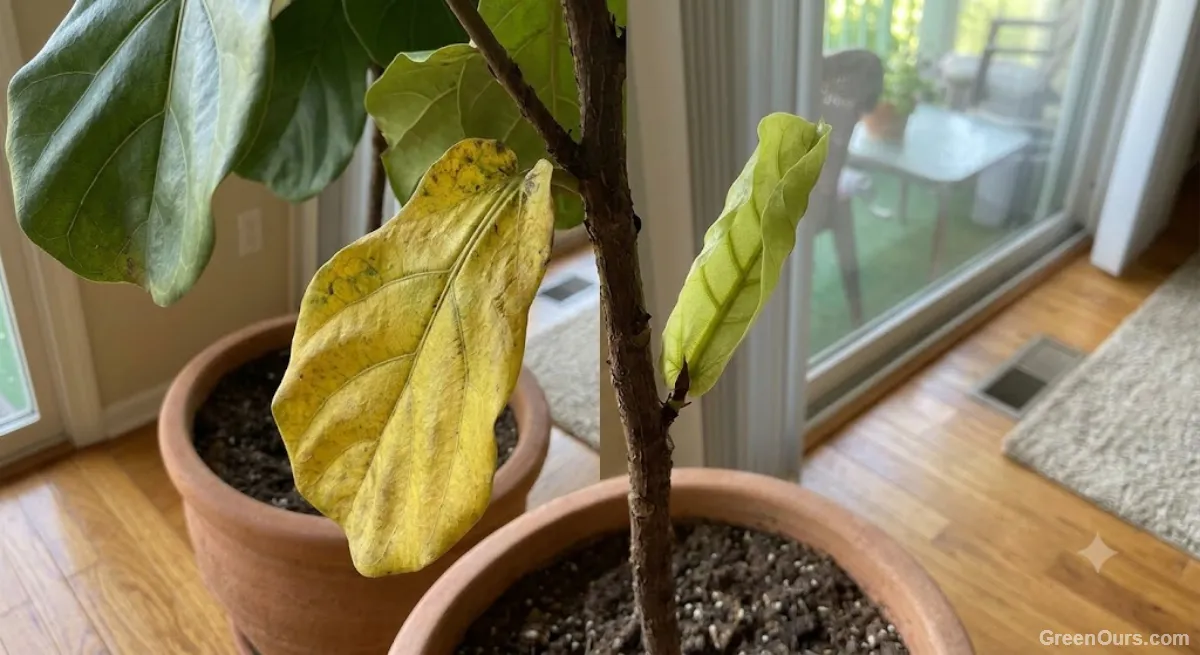
A few yellowing or dropped leaves, especially older leaves near the base, are often normal settling-in behavior. Some plants settle within a couple of weeks, while others take several, depending on the species, the season, the condition of the roots, and how big the change was. You may see new growth appearing at the same time older leaves are falling.
What's worth paying closer attention to is rapid, widespread leaf loss across the whole plant, leaves that turn mushy or dark rather than yellow and papery, or a stem that feels soft near the soil line. Those symptoms usually point to a watering issue or root problem rather than simple relocation stress, and they're worth investigating on their own.
Match What You See to the Likely Cause
Use this table as a starting point. It lists common triggers rather than guaranteed causes, and more than one can overlap.
| What you see after the move | More likely cause | What to check |
|---|---|---|
| Older leaves yellow gradually | Adjustment to lower light | How bright the new spot really is |
| Many leaves drop quickly | A big change in light, temperature, or watering | Compare the old and new spot: light, temperature, drafts |
| Leaves turn crispy | Dry air, too much direct light, or underwatering | Soil moisture, nearby vents, sun exposure |
| Leaves turn soft, mushy, or dark | Excess moisture or a root problem | How wet the soil stays and whether the pot drains |
| Stem feels soft near the soil line | Possible rot | Stem base and roots |
| New leaves look healthy | Normal adjustment is more likely | Keep care steady and keep watching |
Helping Your Plant Settle Into Its New Home
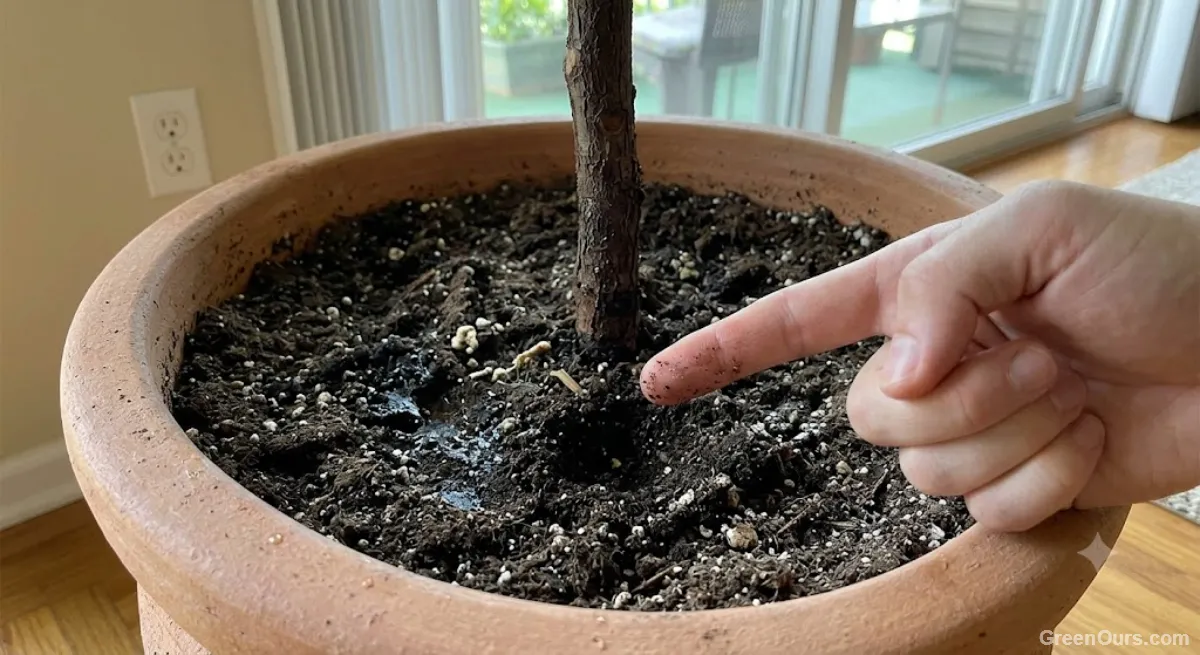
The most useful thing you can do after a move is very little, at least at first. Keep watering in step with the soil rather than adding extra water to make up for dropped leaves. Check before each watering, because a new spot can dry the pot faster or slower than the old one, and extra moisture on top of relocation stress is one of the fastest ways to turn a temporary problem into a root issue.
Give the plant a few weeks in its new spot before making any judgments about whether it likes it there. Hold off on repotting or fertilizing during this window too. Both ask the plant to do more work exactly when its energy is already going toward adjusting, and neither will speed up the process.
If the new spot is noticeably drier than the old one, grouping the plant with a few others can help buffer the change a little. A tray of pebbles and water adds only a modest amount of humidity, so treat it as a small bonus rather than a fix.
Mistakes That Make Recovery Slower
A few habits tend to prolong the adjustment period rather than shorten it:
- Watering more often in response to dropped leaves, which treats a light or temperature issue as though it were a thirst issue
- Moving the plant again right away, hoping to find the "right" spot faster, which resets the adjustment clock
- Fertilizing during this window, which pushes new growth the plant isn't ready to support yet
- Placing the plant somewhere dramatically different from its old spot, such as deep shade after months in bright light, which gives it a much bigger gap to close
Moving Plants More Gently Next Time
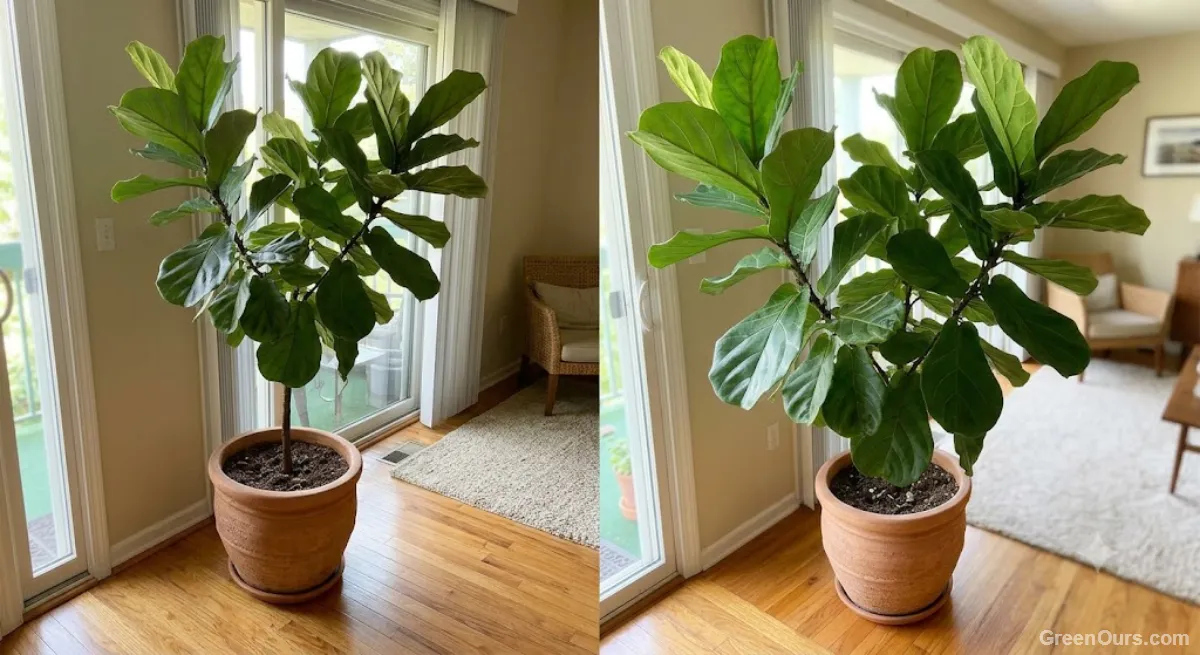
You can't always avoid moving a plant, but you can soften the change. If the new spot is much dimmer or brighter than the old one, try moving the plant partway first, or shift it a little at a time over several days. Match the new spot's light as closely as you can, and keep the plant away from vents and doors.
The same gentle approach helps when you bring home a new plant.
Before you move a plant, spend a day watching the new spot. Notice how bright it gets in the morning and afternoon, and whether a vent or door changes the airflow.
Where to Start
If you only do one thing this week, compare the old spot and the new spot: how bright each is, how warm, and whether there's a draft. That comparison usually points to what changed.
A few fallen leaves don't have to be the end of the story. Give your plant the time it needs and keep your care steady. If the conditions suit it, new growth may start filling in where those old leaves used to be, a good sign that it's found its footing in the new spot.
Ready to give your plant a steady few weeks? Keep its routine simple and look for new growth each week.