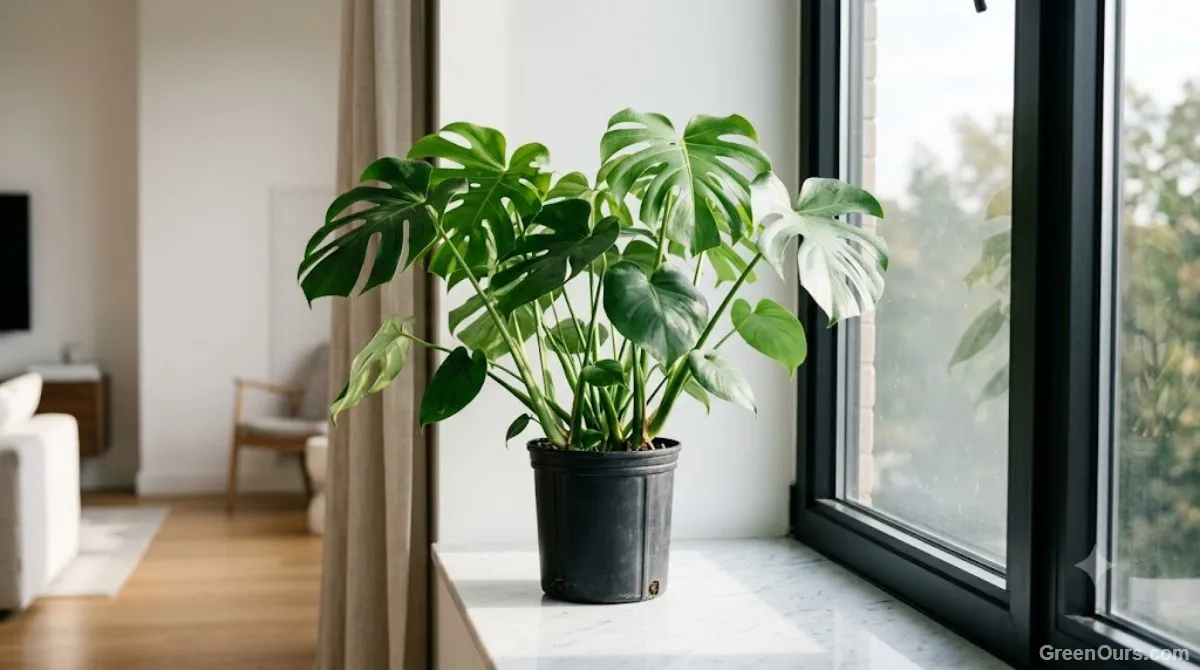

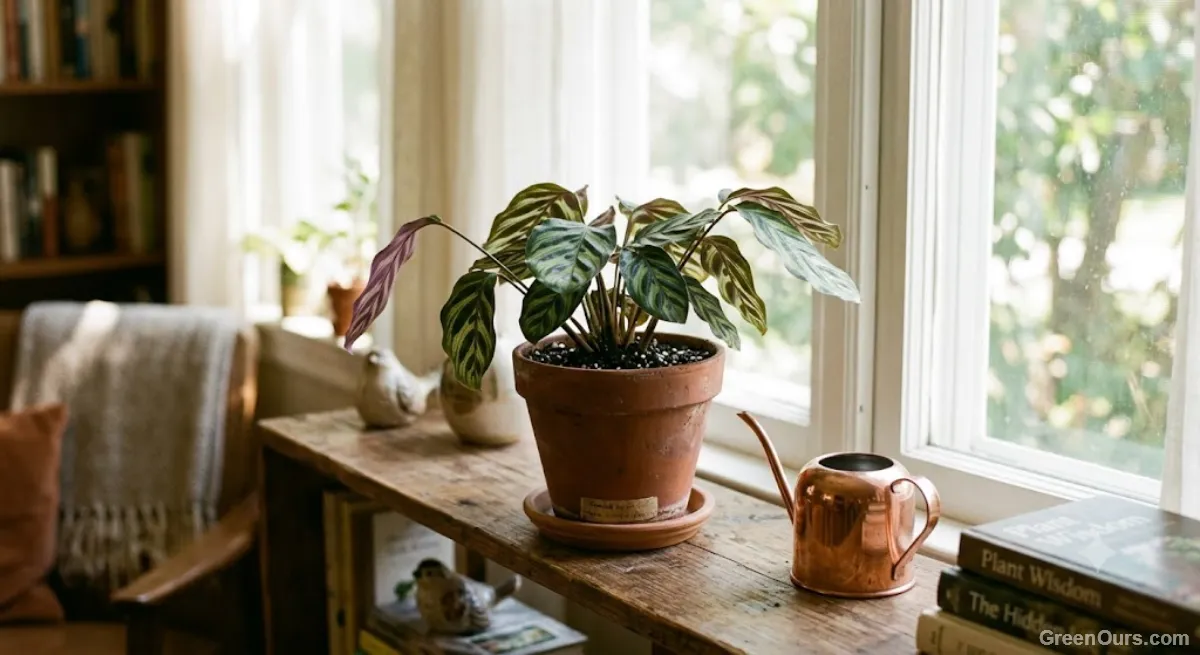
The First Day: Give It a Calm Landing
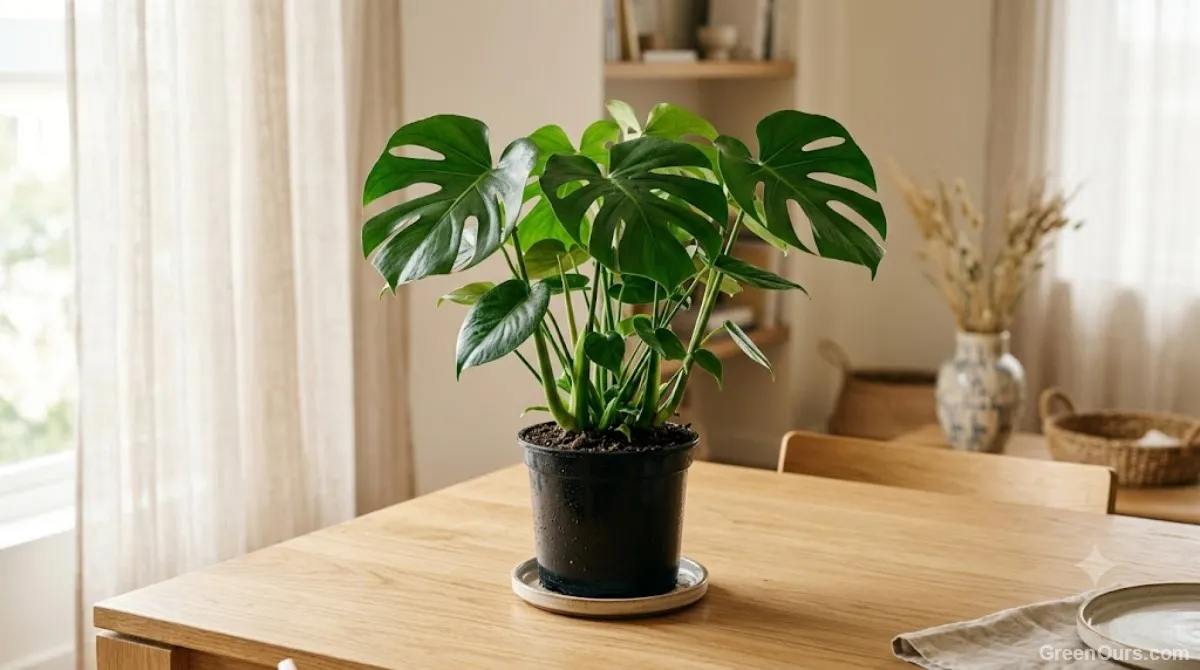
Set the plant somewhere with bright, indirect light, away from direct sun, drafts, and heating or air-conditioning vents. Its roots have just been disturbed, so it's not at its best at handling extra stress, and a steady spot beats a perfect one.
The question that matters most today is whether to water again. If you watered thoroughly while repotting, don't water again just because the plant looks droopy. If the mix was already damp, or your plant likes to dry out between waterings, let the soil, not the leaves alone, tell you when it's time.
Then comes the hardest part: stepping back. Resist the urge to check on it every hour.
What's Normal, Week by Week
Every plant recovers at its own pace, and season, species, and how much the roots were disturbed all change the timeline. Use this as a rough guide rather than a schedule.
| When | What you might see | What to do |
|---|---|---|
| Days 1 to 3 | Some drooping, or a plant that seems to be on pause | Keep it in bright, indirect light and leave it alone. Check the soil before watering instead of watering because of the droop. |
| Days 4 to 7 | A few older leaves may yellow, and growth still looks paused | Water when the soil has dried down, and keep the plant in the same spot. |
| Week 2 | Less drooping, leaves firming up, and for some plants a first new leaf | Keep the routine steady. Wait for new growth before fertilizing, then follow the label. |
If the plant still hasn't started to recover after two to three weeks, that's when it's worth looking more closely at the roots, pot size, drainage, or soil.
A little droop is often a plant adjusting rather than a sign you did something wrong. Change one thing at a time so you can tell what actually helps.
Watering After Repotting: Let the Soil Decide
After the watering you gave it at repotting, go back to checking the soil before every watering rather than watering because a leaf looks sad. A drooping leaf after repotting is more often a sign of root disturbance than thirst, and extra water on top of stressed roots is a quick way to add a second problem.
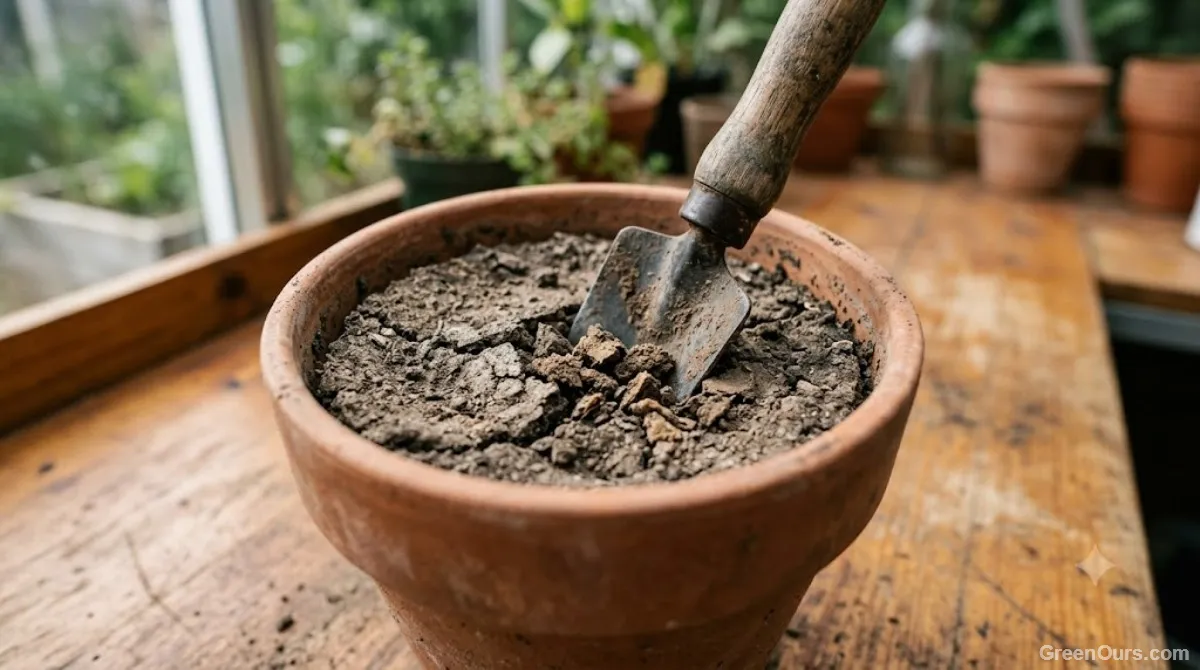
The new pot may also dry at a different pace from the old one. A pot with a lot more mix around a small root ball can stay damp longer, while a pot packed with roots can dry faster. For most houseplants, push a finger an inch or two (2.5 to 5 cm) into the soil and water when it feels dry at that depth. Dry-loving plants can wait until it's dry deeper down.
What to Skip for Now
A freshly repotted plant is busy growing new roots. A few things can wait:
- Fertilizer. Hold off for several weeks, or until you see new growth, since fresh potting mix often contains some nutrients already and disturbed roots are easy to overwhelm.
- Moving the plant around. Each new spot changes the light and air it has to adapt to, so pick one good place and leave it.
- Repotting again. If the pot feels wrong, wait and watch before making another change.
- Heavy pruning. Trim clearly dead or rotting material, but leave healthy growth alone.
- Watering because of droop. Check the soil first.
Some Plants Sulk More Than Others
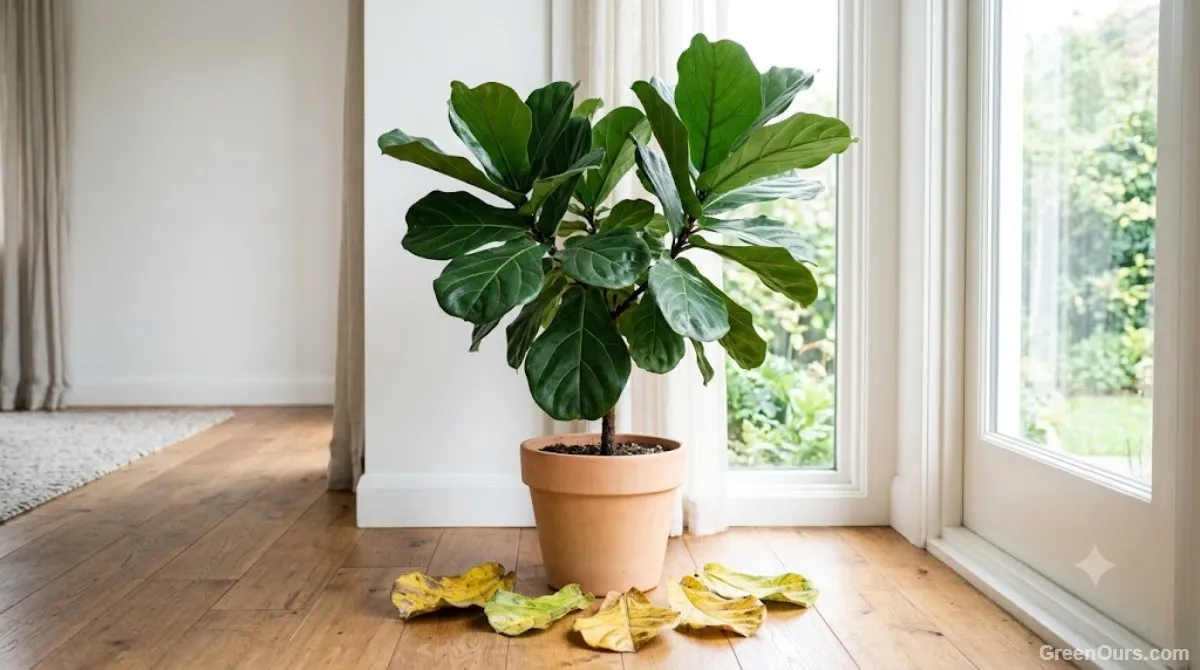
Not every plant reacts to repotting the same way. Succulents, snake plants, and ZZ plants often barely seem to notice. Plants with finer roots or fussier habits, such as fiddle leaf figs, ferns, and prayer plants, can sulk for longer, with droopier leaves and slower restarts.
If yours is one of the sensitive types, it doesn't mean anything went wrong. Give it extra patience, keep the light and watering steady, and resist the urge to fix a slow recovery with extra care.
Normal Adjustment vs. a Real Problem
Timing varies with the plant, the season, and how much the roots were disturbed, so treat these as guides rather than rules.
Usually Normal
- Mild drooping in the first few days
- A few older leaves yellowing
- Paused growth for a couple of weeks
Worth a Closer Look
- Leaves dropping rapidly across the whole plant
- Black or mushy stems
- A sour smell from the soil
- Soil that stays wet for many days
- A plant that keeps getting worse after two to three weeks
Check These First
If a plant is declining after repotting, look at three things: whether the new pot is much bigger than it needed to be, whether water actually drains from the bottom, and whether the soil is staying wet for days. Those are common repotting-related causes, and each is fixable.
Where to Start
If you only do one thing today, make sure water drains freely from the bottom of the pot and park the plant in bright, indirect light. Then check the soil in a few days instead of watering by the droop.
Repotting stirs a plant up, and a quiet week or two afterward is part of the deal. Give it steady light, steady care, and a little patience, and you'll probably spot a new leaf before you expect to. What will you look for first?
Just repotted something? Check the drainage and pick a calm spot for it today.