
The Tea Bag Problem Nobody Warns You About
Tea bags feel like the most natural compost candidate in your kitchen. They're small, they're already damp, and they're packed with used leaves that plants would love. That's exactly why so many of us never question them the way we'd question, say, a yogurt container.
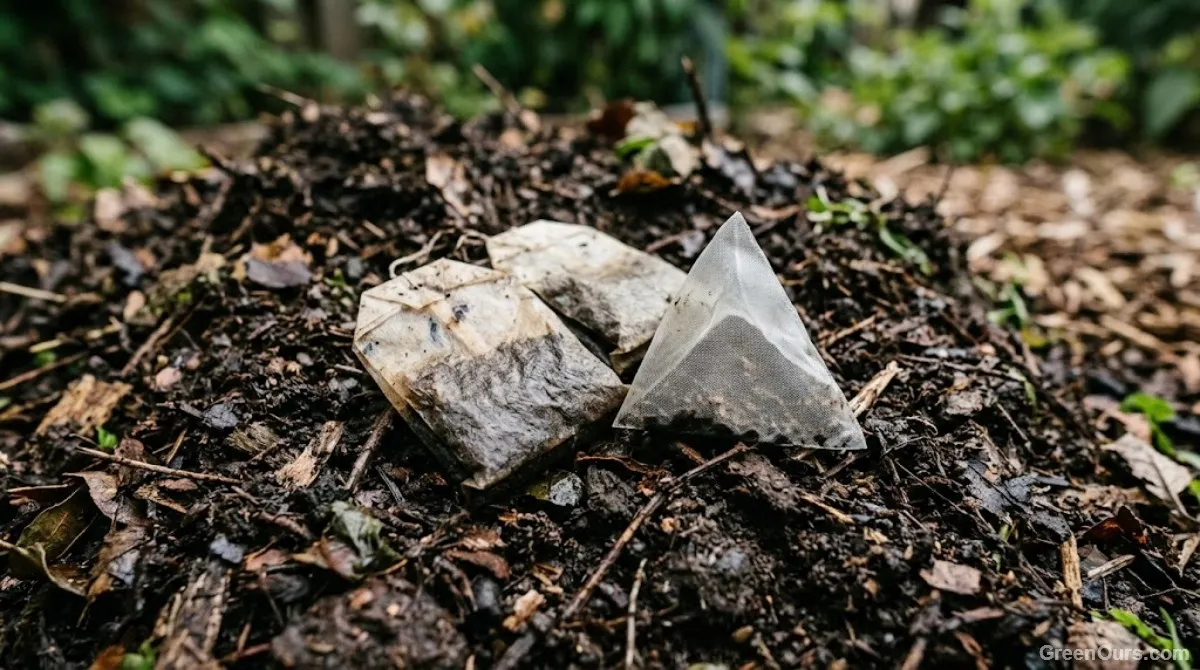
But a lot of mainstream tea bags are heat-sealed using a thin layer of polypropylene, a plastic that keeps the bag from falling apart in hot water. It's a smart bit of engineering for your cup. It's a genuine problem for your compost, because polypropylene doesn't break down on any timeline that matters to a home gardener. It just breaks into smaller and smaller pieces, eventually working its way into your soil as microplastic.
Manufacturers didn't add that plastic to annoy you — it's there because paper alone tends to disintegrate too fast in near-boiling water, leaving you with tea leaves floating loose in your cup. Polypropylene solves a real brewing problem. It just doesn't dissolve, shrink, or feed your soil the way paper does, so what's convenient at the kettle becomes a nuisance at the compost bin.
What's Actually Inside a Tea Bag
Once you start looking, tea bags fall into a few rough categories, and they behave very differently once they hit your bin.
Paper and Genuinely Compostable Bags
Some bags are made from unbleached paper fiber or plant-based materials like PLA, a corn-starch derived plastic that's designed to break down under composting conditions. These will soften and disintegrate over weeks to a few months, especially if you tear them open first.
The Hidden Plastic Seal
This is the sneaky one. A bag can look and feel like paper, be labeled with reassuring, earthy branding, and still be sealed with a small amount of polypropylene along the edge. You won't see it. You'll just notice, months later, that a papery little rectangle is still sitting in your compost, refusing to disappear.
Silky Pyramid Bags
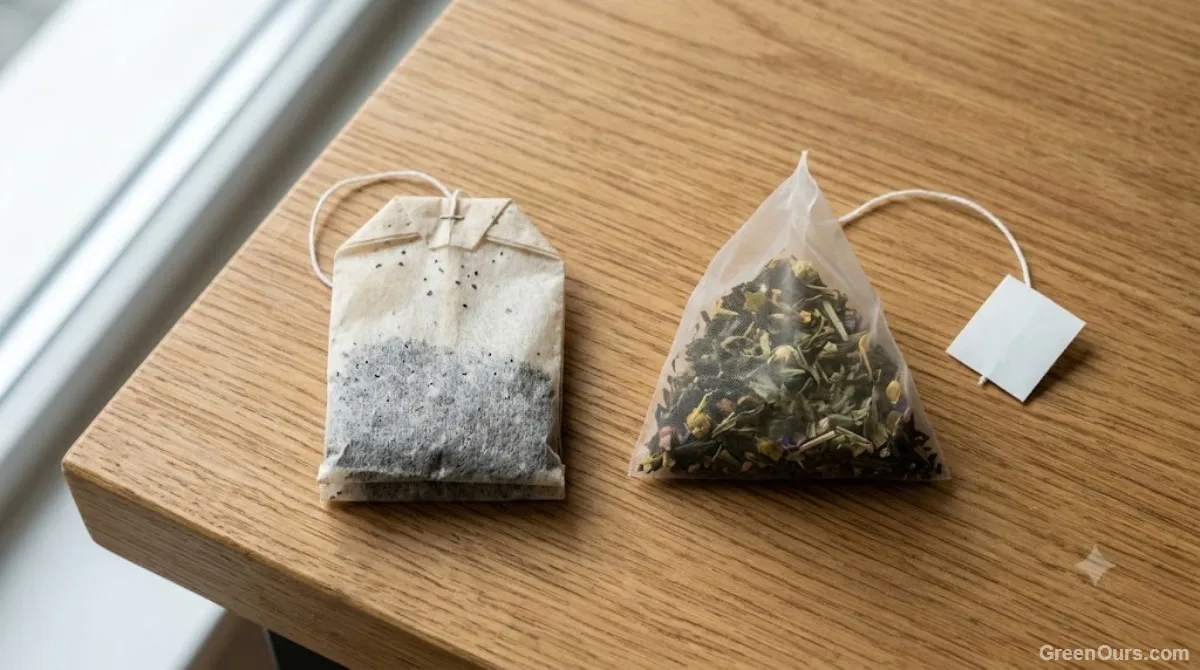
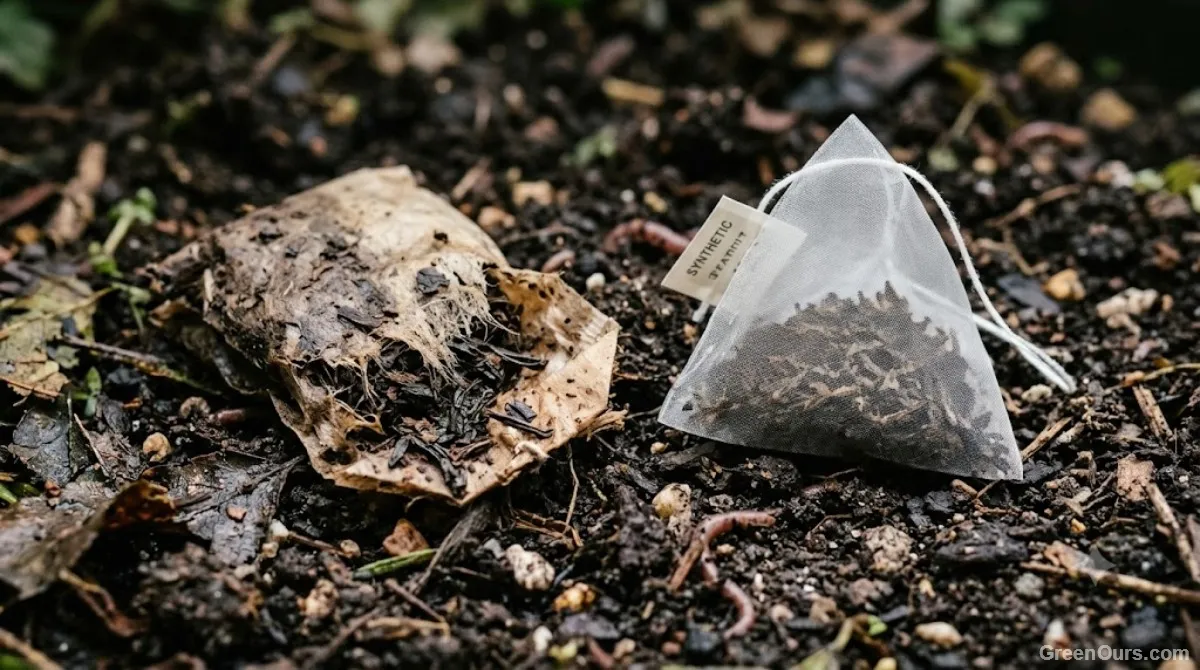
Those elegant mesh pyramid bags that whole-leaf tea often comes in are usually made from nylon or a plastic mesh, sometimes marketed as "silky" or "biodegradable nylon." In practice, most of these do not break down in a home compost pile within any reasonable timeframe. If a bag holds its shape in your hand like fabric, be suspicious.
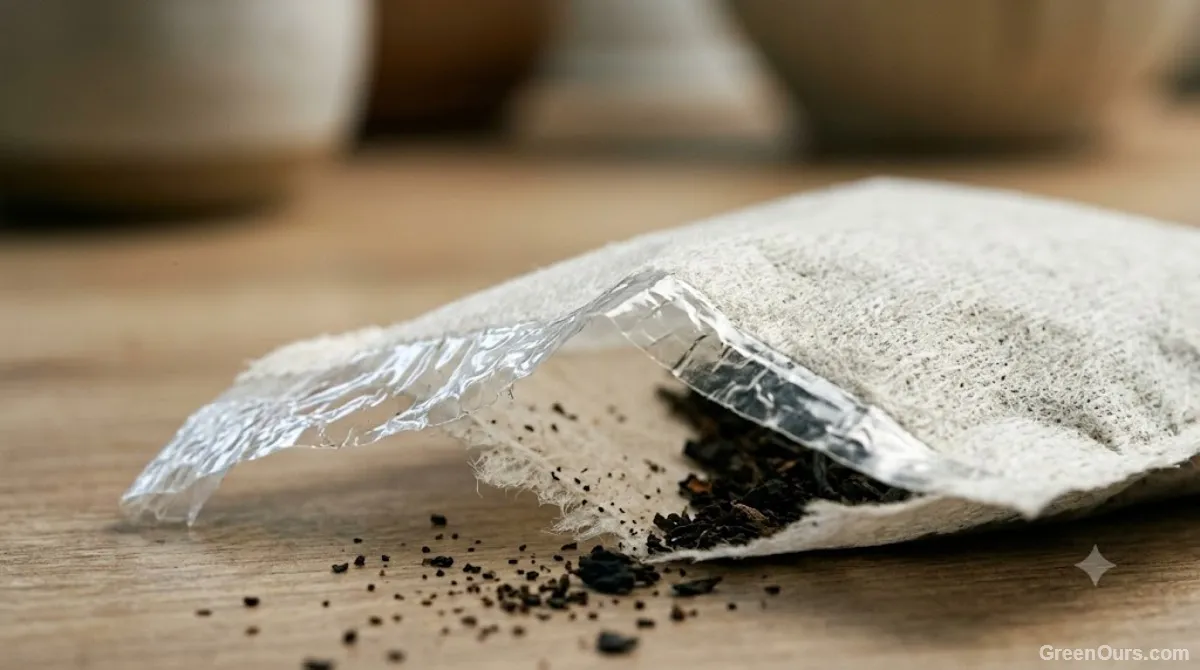
If a used tea bag still looks and feels exactly the same after two or three months in your compost, that's your answer. Real paper softens, thins, and starts to fall apart. Plastic doesn't.
How to Tell If You Can Compost Tea Bags
So can you compost tea bags without becoming a label detective every time you shop? Mostly, yes — you just need a couple of habits that make the guessing game unnecessary.
You don't need to memorize brand names, because manufacturers change materials without much notice. Instead, get into the habit of checking a few things every time you buy a new box.
Look at the packaging for a specific claim, like "plastic-free" or "home compostable," rather than vague words like "natural" or "biodegradable," which aren't regulated the same way and can still describe a plastic-lined bag. Feel the bag itself — a slightly rough, matte paper texture is a better sign than a smooth, silky one. And check the string and tag, too. Some strings are cotton, others are a thin plastic filament, and the little staple that holds the tag on is almost always metal, which won't compost either.
The Quick Test: What Happens After a Few Months
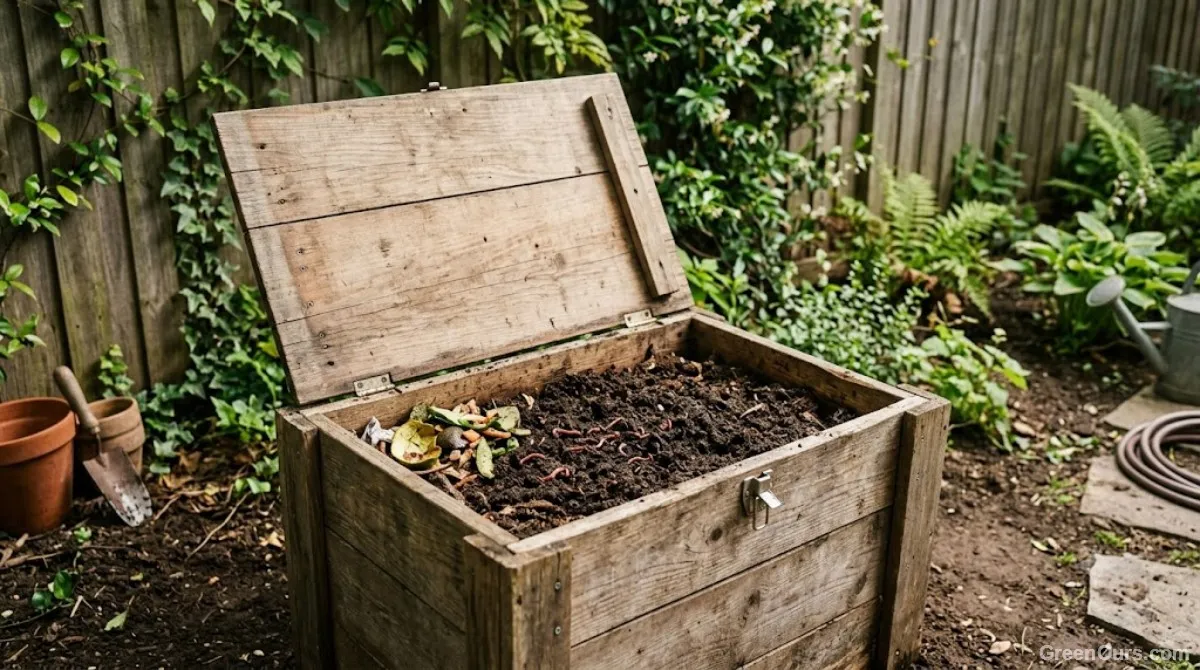
If you're genuinely unsure about a brand you already have, run your own test instead of guessing. Tear open a used bag, empty the leaves into your compost as normal, and bury the empty bag itself somewhere you'll remember, like a small marked corner of the pile. Check back in eight to twelve weeks.
A compostable bag will have visibly thinned, discolored, and started breaking apart at the edges. A plastic-sealed or nylon bag will look almost exactly like it did the day you buried it, maybe a little dirtier, but structurally the same. Once you've run this test on your usual brand, you'll know for good — no more guessing every time you make a cup.
This one test is worth doing even if you're fairly confident about your usual brand, because manufacturers do sometimes reformulate packaging without changing the label much. A five-minute check every year or so is cheap insurance against months of invisible plastic sitting in your pile.
Loose Leaf Tea and Easy Swaps
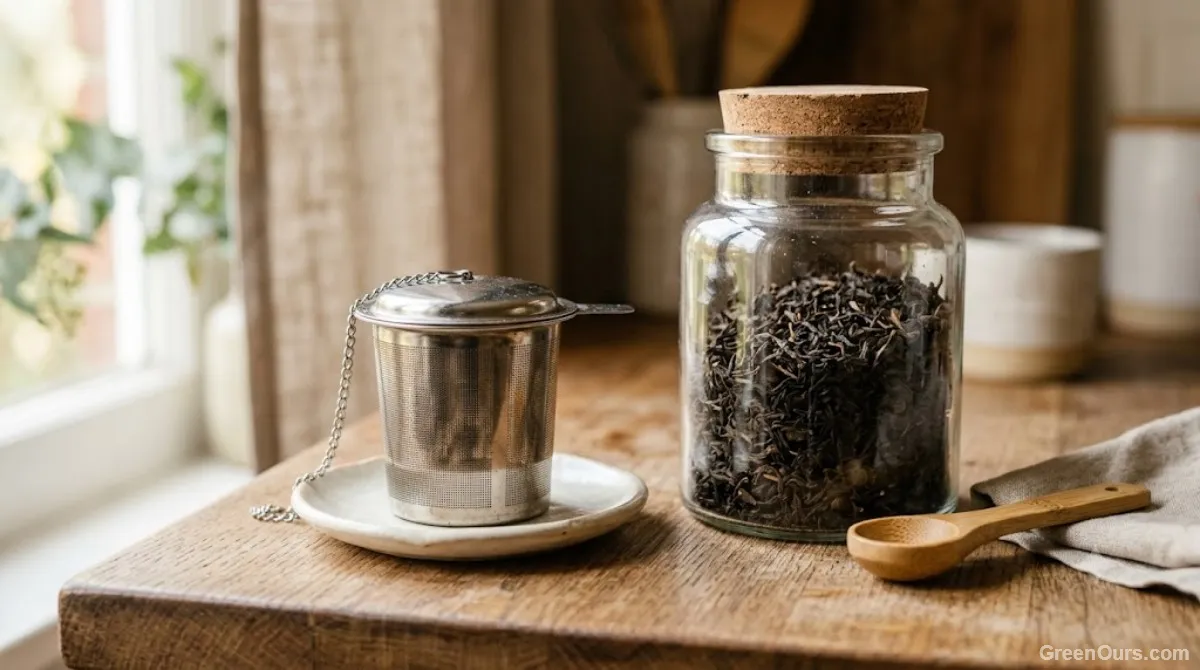
If this whole thing sounds exhausting, there's a simpler way out: skip the bag altogether. Loose leaf tea in a small metal infuser or strainer sidesteps the entire question, and the spent leaves go straight into your compost or worm bin with zero mystery material to worry about. It's a small shift, and it doesn't require replacing your whole kitchen setup, just swapping one habit for a slightly different one.
What to Do With Bags You're Not Sure About
If you've got a box of tea bags at home and no idea what they're made of, you don't have to throw the whole box out or stop composting entirely. Tear each bag open before it goes in your bin, compost the leaves, and put the empty pouch in your regular trash if you're not confident it's plastic-free. That way you're still capturing the compostable part — the leaves — without gambling on the wrapper.
Explore more small swaps that make composting easier.
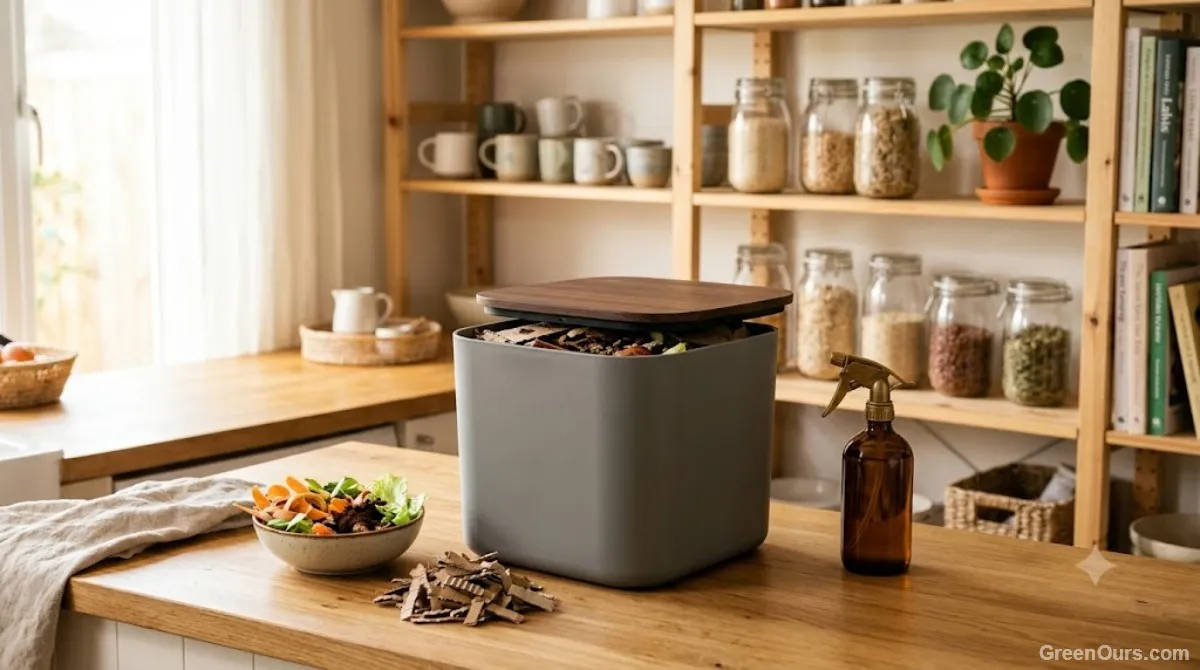
See how to store kitchen scraps for compost without the smellNone of this means you did composting wrong for years, by the way. Most of us picked up the habit before anyone explained the fine print on tea bag packaging, and the industry hasn't exactly made it easy to tell. Now that you know what to look for, it's just one more small check that becomes automatic, the same way reading a nutrition label eventually does. Your compost — and whatever eventually grows in it — will be better for it. It's a small correction, not a failure — the kind of thing every home composter eventually catches once they start paying attention.