
Why I Even Bothered Switching
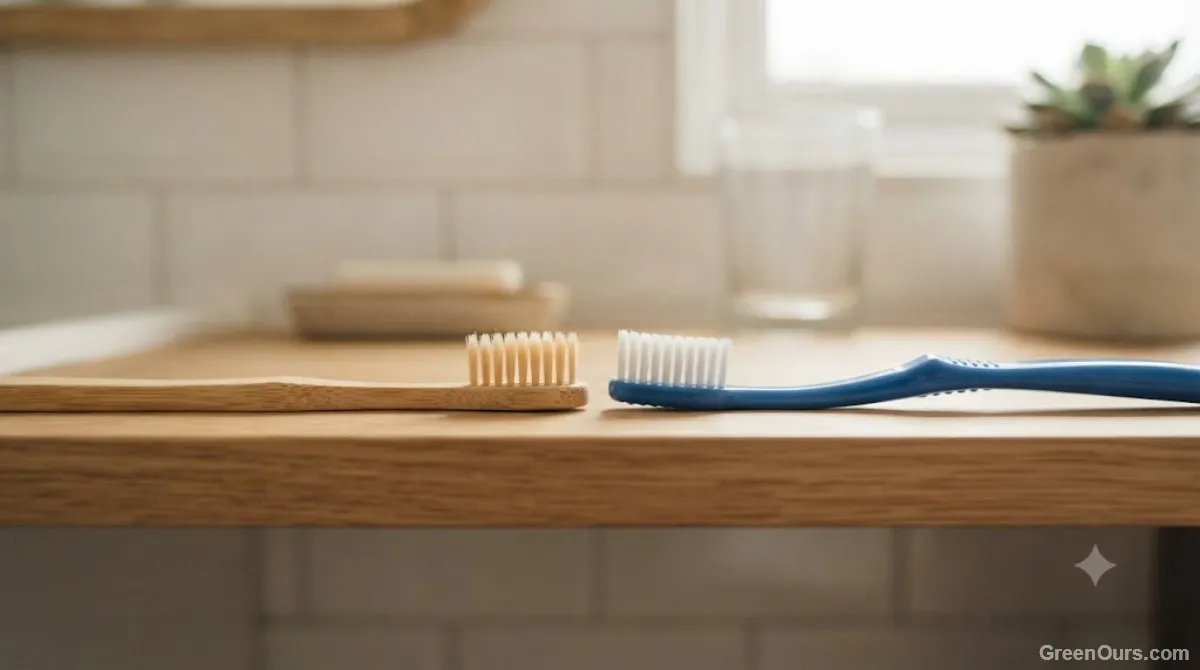
I didn't swap my dish brush because of some grand zero-waste awakening. It was smaller and dumber than that: I noticed how often I was tossing plastic-bristled brushes in the trash, usually because the bristles had gone limp or the head had cracked at the base. Three, maybe four times a year, one would go in the bin, and it never once occurred to me that was a pattern worth questioning until I actually counted.
Most municipal recycling programs I've come across won't take plastic brushes — bristles and handle are typically different plastic types fused together, which trips up a lot of multi-material items, though the details vary by product and by local program. Either way, every brush I'd ever owned had gone straight to landfill. That's the part that finally got me to try something with a compostable head and a handle that wasn't destined to outlive me by five hundred years.
The switch that actually matters isn't the brush itself — it's picking one with a replaceable head, so you're not throwing out a perfectly good handle every time the bristles wear down.
What "Eco-Friendly" Actually Means for a Dish Brush
This category is messier than it looks. "Eco-friendly dish brush" usually means one of a few different things, and they're not interchangeable.
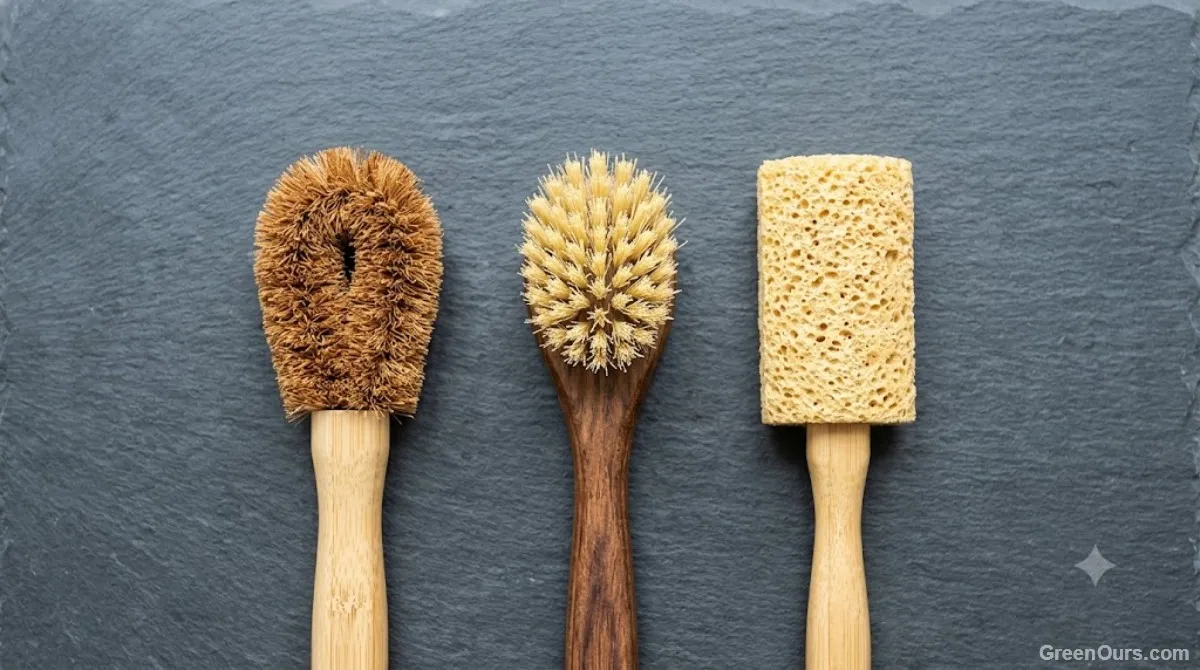
Coconut Fiber Bristles
These are stiff, scrubby, and genuinely good at getting baked-on food off cast iron and stubborn pans. They're a byproduct of coconut processing, so nothing extra is grown just to make them.
Sisal or Plant-Fiber Bristles
Softer than coconut fiber, gentler on nonstick surfaces, but they wear down faster if you're scrubbing anything with real texture.
Beechwood or Bamboo Handles
Untreated wood, compostable at the end of its life, but only if it's actually untreated — some are coated with sealants that quietly undo the compostable part.
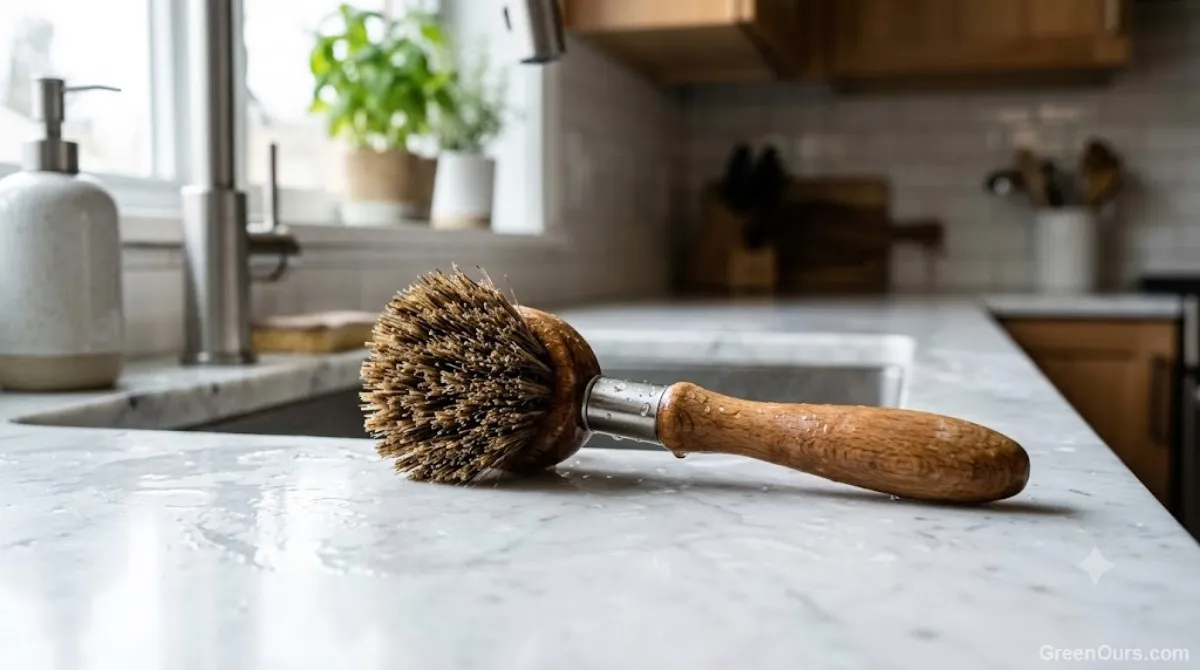
Mine was a coconut-fiber head on a beechwood handle with a replaceable brush top, which turned out to matter a lot more than I expected once I got to the durability question.
Durability: Did Mine Actually Outlast Plastic?
Roughly, yes, but not in the way I assumed. My old plastic brushes didn't really break so much as go limp — the bristles would splay outward and stop making real contact with the pan, so I'd keep using a brush that wasn't actually cleaning anything.
The coconut-fiber head didn't do that. It stayed rigid the entire time I used it, which honestly surprised me since I was rougher on it than I probably should have been. What did happen was the bristle tips wore down and got noticeably shorter, and a few strands worked loose over time. It didn't go soft and useless the way plastic did — it just slowly got smaller.
The Maintenance Reality Nobody Mentions
Here's what nobody tells you when they're selling you on the eco-friendly swap: these brushes are pickier about how you treat them. Leave a plastic brush sitting in a puddle of dishwater and it doesn't care. Leave a wooden-handled brush like that regularly, and the handle will start to feel soft and eventually crack near the base where it meets the head.
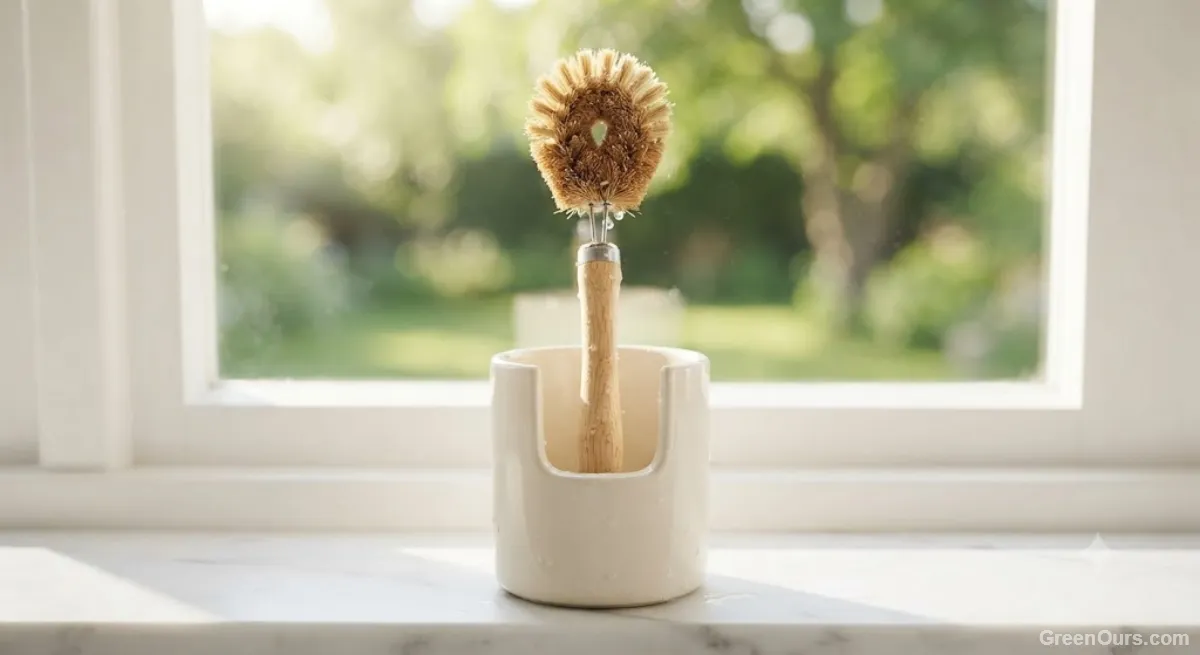
I learned this the annoying way, with a handle that developed a hairline split after a few months of resting flat in a wet sink caddy instead of standing upright. Once I switched to letting it air-dry bristle-up in a cup, that problem stopped completely. It's a small habit change, but it's a real one, not optional the way it is with plastic.
The Hygiene Question I Actually Worried About
This was my biggest hesitation before switching, and I don't think it gets talked about honestly enough. Natural fiber bristles tend to be more porous than most plastic ones, which means they can hold onto moisture and food particles more easily if they're not drying properly between uses.
In practice, the deciding factor wasn't the material at all — it was airflow. A brush that dries fully between uses is far less likely to hold onto odor or buildup, whatever it's made of, though natural fibers seem to need that airflow a bit more consistently than plastic does. A brush that sits damp in a closed caddy gets funky no matter what it's made of. Once I started propping mine bristle-side up where air could actually reach it, the smell issue I'd been bracing for never really showed up.
Cost Per Use: Doing the Actual Math
My eco-friendly brush cost more upfront than a plastic one, which is the objection I hear most. But replaceable-head versions change the math, because you're only buying a new head, not a whole new brush with handle included every time. Over a year of replacing just the head a couple of times, the total cost landed close to what I used to spend replacing full plastic brushes on the same schedule.
It's not a dramatic savings story. It's closer to a wash financially, with the actual upside being less packaging and less plastic waste for roughly the same money.
Eco-Friendly vs. Plastic: The Quick Comparison
If you just want the short version before you decide, here's how they actually stack up based on what I've lived through with both.
| Factor | Eco-Friendly (Fiber + Wood) | Plastic |
|---|---|---|
| Upfront price | Higher per brush | Lower per brush |
| Replaceable head | Common on many models | Rare — usually a full replacement |
| How it wears out | Bristles shorten gradually | Bristles go limp, stop cleaning well |
| Cast iron / heavy scrubbing | Coconut fiber holds up well | Varies a lot by bristle stiffness |
| Drying requirements | Needs upright, airy storage | Low-maintenance either way |
| End-of-life | Compostable if untreated wood and natural fiber | Usually landfill — mixed plastics are rarely accepted for recycling |
| Recurring cost over a year | Comparable once you're just replacing heads | Comparable if replaced on the same schedule |
None of that makes plastic the villain or the eco version a miracle fix — it's mostly a trade of a bit more upkeep for a bit less waste.
Who These Are Actually Worth It For
If you're someone who already lets dishes air-dry properly and doesn't mind a slightly more deliberate care routine, I think these are genuinely worth trying. If you tend to toss things in a junk drawer wet and forget about them, you'll probably be frustrated by how much faster a wooden handle shows that neglect compared to plastic.
They're also a better fit if cast iron or heavily baked-on messes are a regular part of your kitchen life — coconut fiber handles that kind of scrubbing better than most plastic bristles I've tried.
I'm not going back to plastic dish brushes, but I'll admit that's partly because I've built the drying habit that makes the natural version work. If you're not ready for that small extra step, this particular swap might frustrate you more than it helps — and that's a fair reason to start somewhere else instead.
More honest kitchen swap reviews:
Compostable Sponge vs. Cellulose Sponge