
Why Food Disappears Into the Back of the Pantry
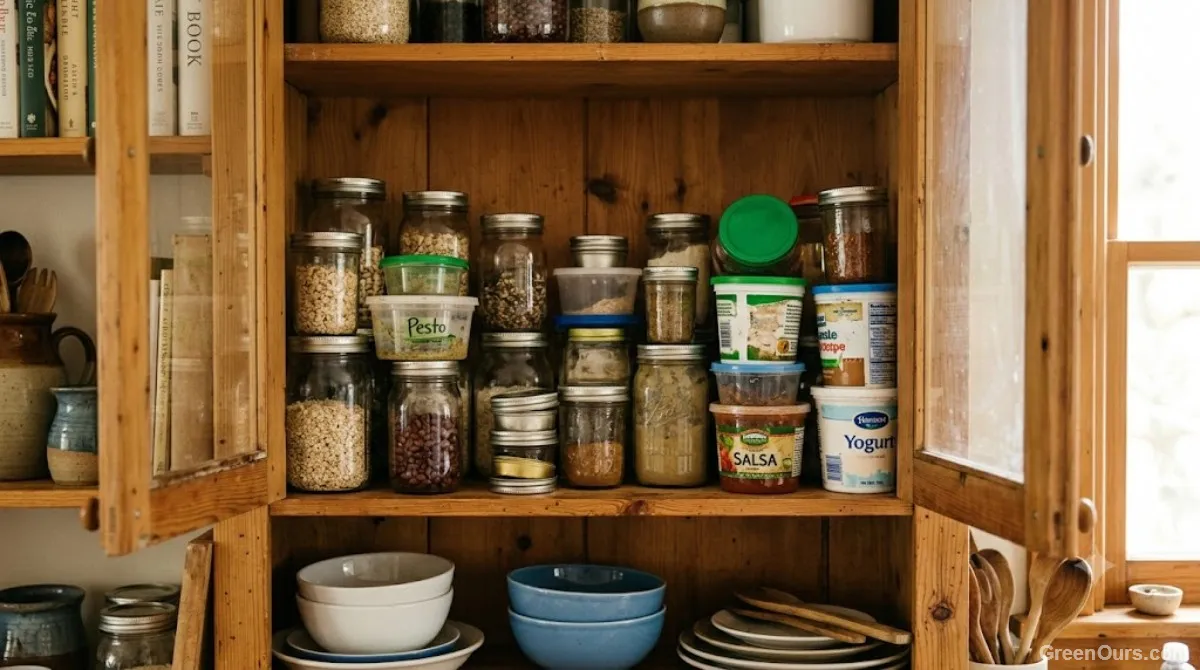
Most pantries fail for one boring reason: everything gets pushed backward. You buy a new jar of peanut butter, and instead of moving the half-used one to the front, you set the new one down first because it's in your hand. Multiply that by every grocery trip for a year and you end up with three jars of the same thing, two of them expired, one of them still perfectly fine and buried behind a bag of rice.
I used to think this was a me problem — some personal failure of tidiness. It's not. It's a layout problem. Pantries with deep shelves and no system will always do this, no matter how organized you are as a person, because the physical setup rewards adding to the front and punishes digging in the back.
Canned goods are the worst offender in my kitchen. They don't show visible decay the way produce does, so a can of black beans can sit two rows deep for years without ever announcing it's there. I didn't realize how bad it had gotten until I did a full inventory one weekend and found four cans of the exact same crushed tomatoes, three of them past their date, hiding behind cans I'd bought more recently. None of that food went to waste because I didn't need it. It went to waste because I couldn't see it.
Set Up Zones Before You Buy a Single Container
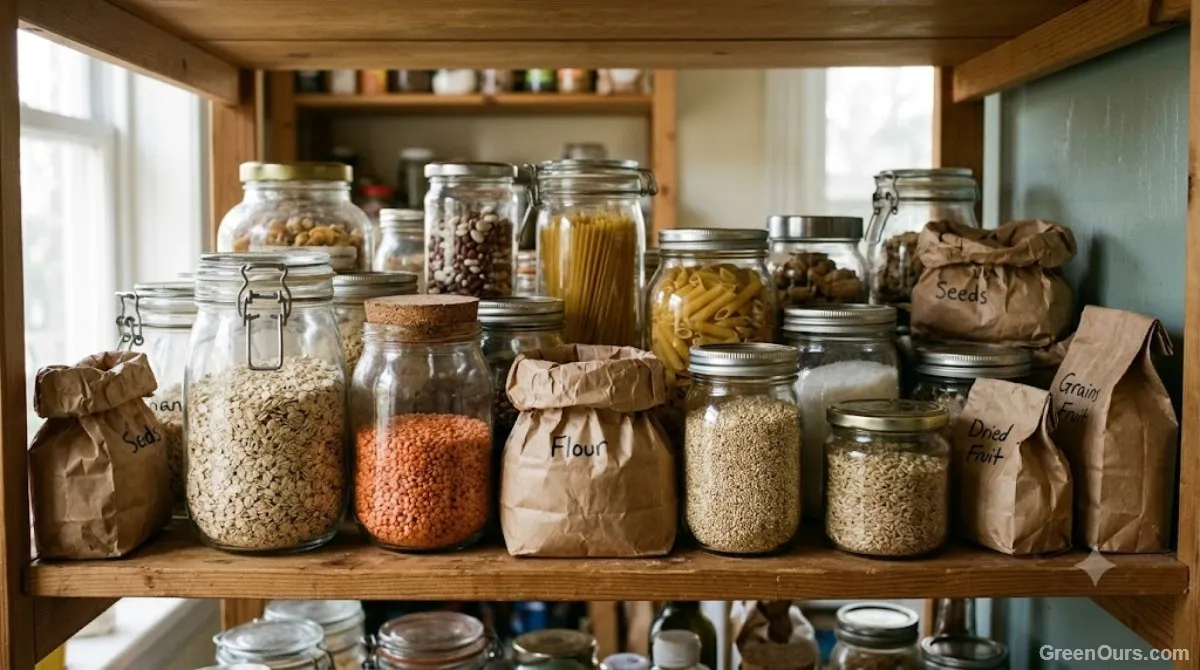
Before you touch a label maker, walk your kitchen and figure out how you actually cook. I group mine into four zones: breakfast and snacks, baking and grains, canned and jarred staples, and a small "use this soon" zone at eye level. That last one does more work than the other three combined — it's where anything close to its use-by date, or anything I opened and forgot to finish, lives until it's gone. These pantry organization tips work because they map to how you already move through the kitchen, not to what looks tidy on a shelf.
The zones don't need to be big, and they definitely don't need matching containers to work — mine are just sections of an ordinary wire shelf with a sticky note marking each one. What matters is that similar things live together, so your eye has fewer places to search when you're deciding what to cook. If baking supplies are split across two shelves and a drawer, you'll buy a duplicate bag of flour before you ever track down the one you already own.
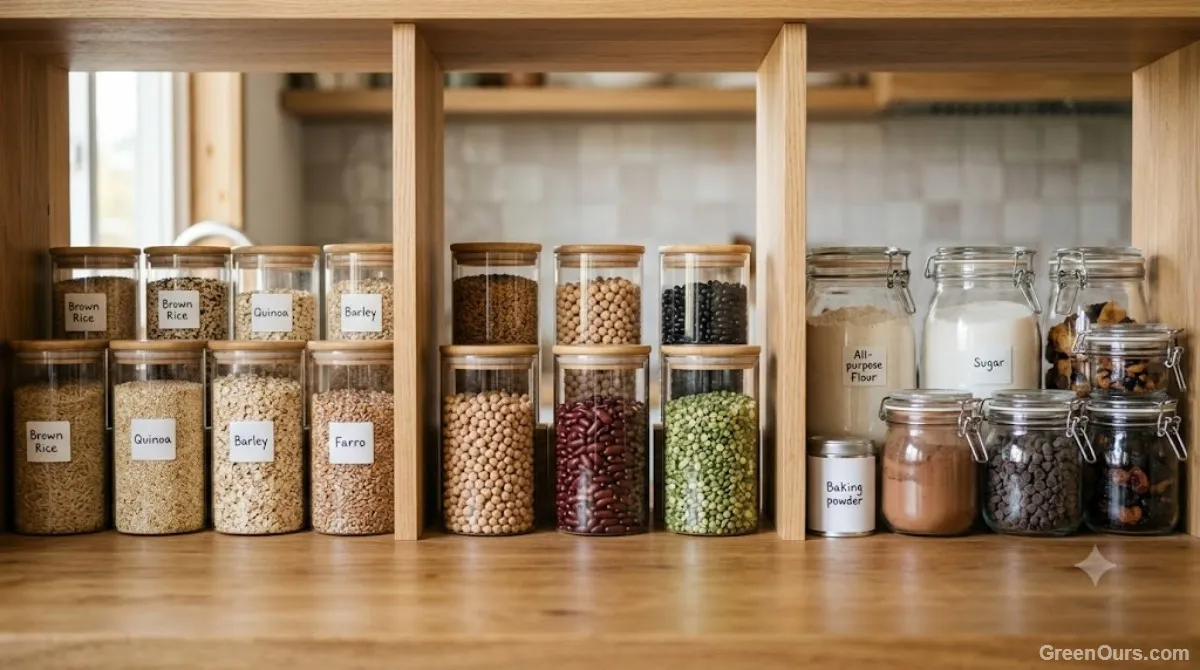
The eye-level "use this soon" shelf is the single highest-impact change you can make. Nothing goes in your cart if it can't earn a spot there first — or at least that's the goal on a good week.
The Rotation Habit That Actually Sticks: FIFO
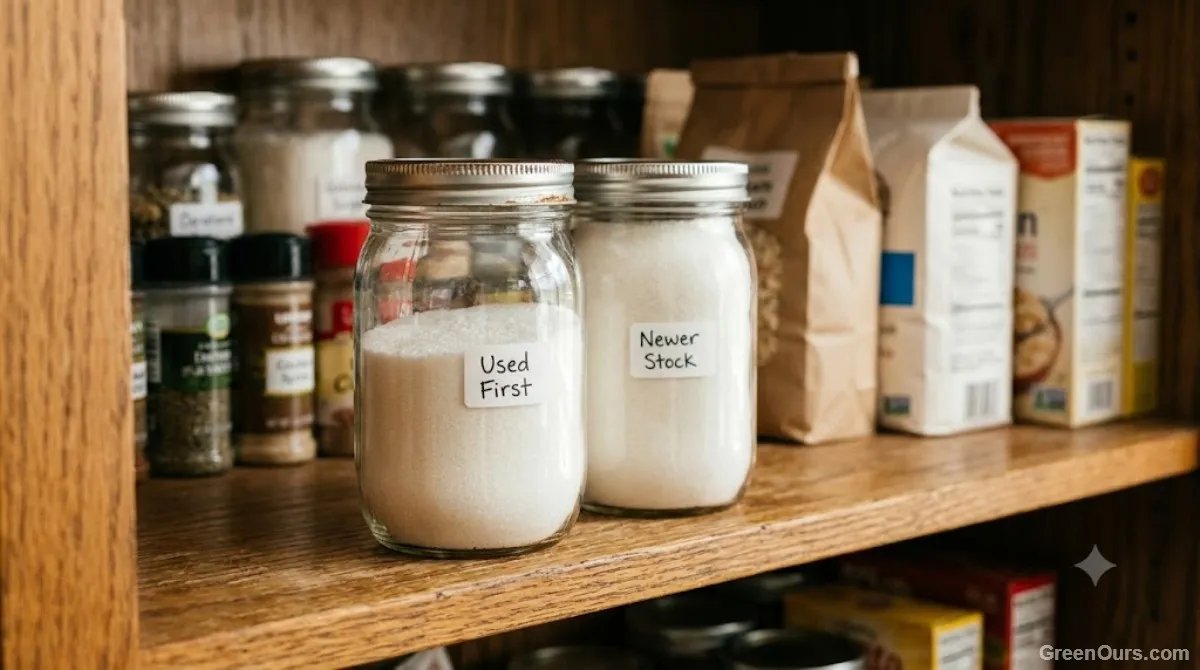
Restaurants call it first in, first out, and it sounds more clinical than it is. In practice it just means new groceries go to the back of the shelf, and whatever was already there moves to the front. It takes maybe fifteen extra seconds when you're putting groceries away, and it's the reason I haven't found an expired can of anything in over a year.
Doing It Without Overthinking It
You don't need a spreadsheet. When you unpack groceries, glance at what's already on the shelf, push it forward, and slot the new stuff behind it. If a shelf is too deep to see the back easily, that's a sign the shelf itself is the problem, not your memory.
I learned this the embarrassing way with olive oil. I had a full bottle pushed to the back of a cabinet and a nearly empty one sitting at the front, and because I always reached for whatever was closest, that full bottle sat untouched for the better part of a year while I kept buying replacements. Now anything I open goes straight to the front of its zone, no exceptions, and the newest bottle gets tucked in behind it, wherever it fits.
Rotating Things You Can't See Into
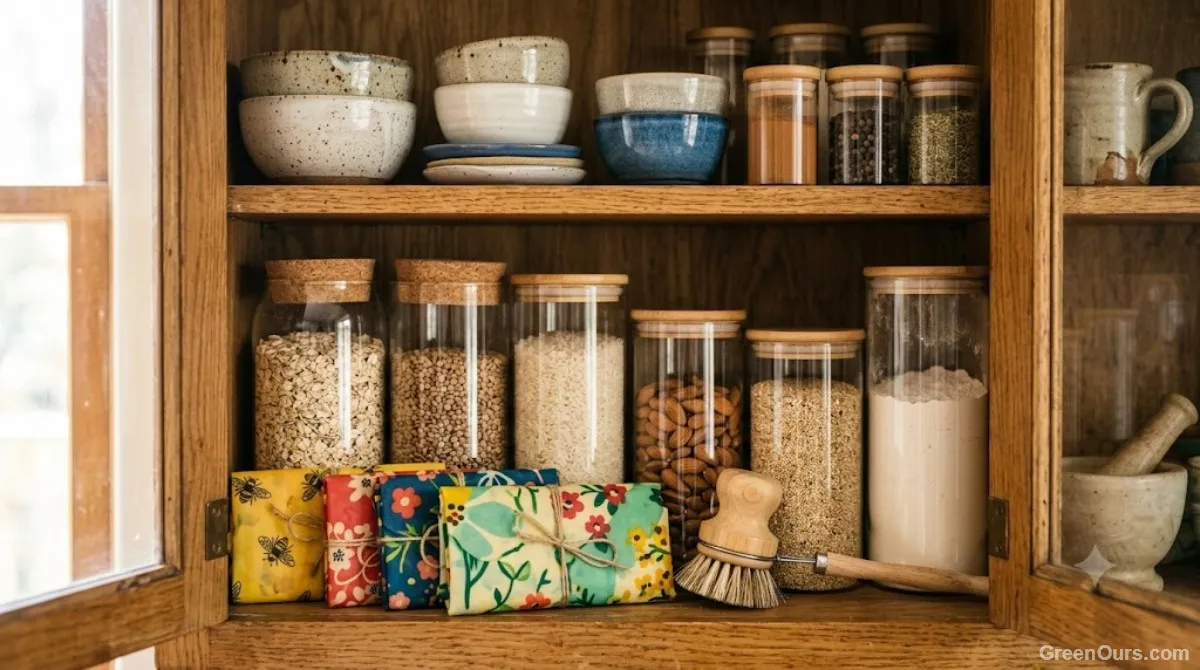
Flour bins, tall canisters, anything opaque — these are where FIFO breaks down, because you can't eyeball what's underneath. I switched my flour and rice to clear containers with the fill date written on painter's tape stuck to the lid. Painter's tape peels off clean, which matters more than it sounds like it would once you've fought a label off a jar with a butter knife.
Labeling Without Making It a Second Job
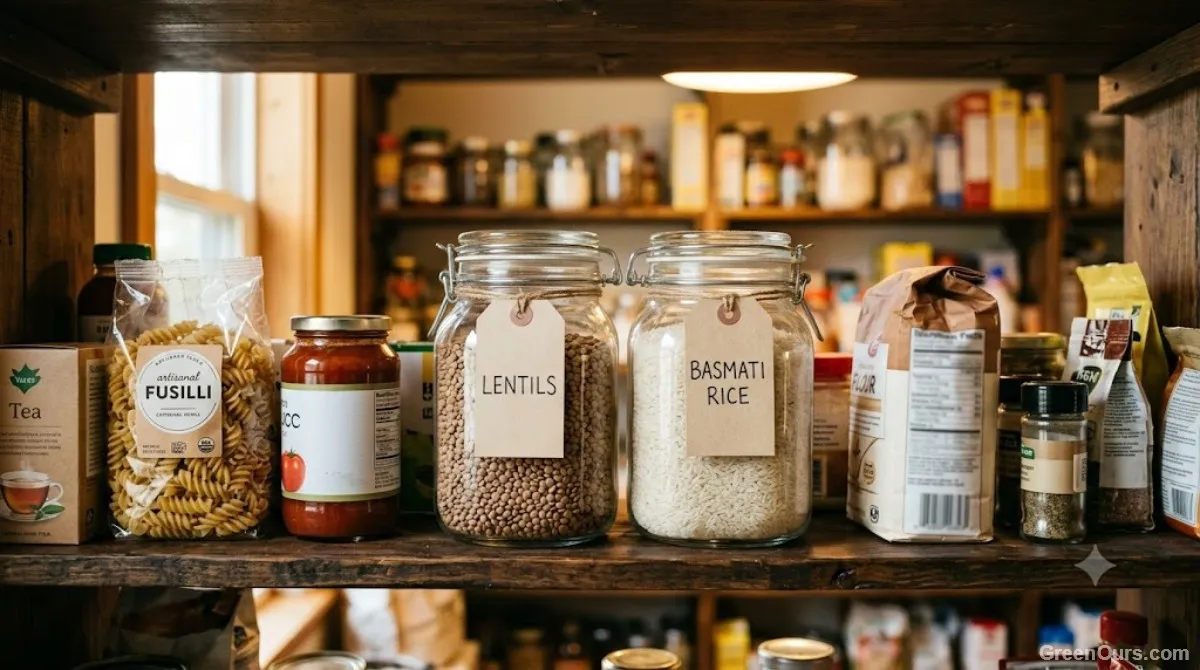
I went through a phase of labeling everything with a fancy label maker and burned out on it within a month. What actually lasted: labeling only the bins and containers I refill regularly, not every individual item. A basket of snack packets doesn't need a label. The bulk oats bin does, because otherwise it looks identical to three other beige things on the same shelf.
The same logic applies to anything you buy in a size bigger than you'll use in a week or two — bulk nuts, dried beans, pasta you've decanted into jars. If it's a container you'll refill more than once, it earns a label and a fill date. If it's a single-use item that'll be gone in a couple of meals, leave it alone. That one distinction cut my actual labeling time down to about ten minutes a month, instead of an entire weekend.
The Categories That Waste the Most Food
In my experience, three categories cause almost all the silent waste: opened bags of grains and legumes that get resealed with a binder clip and forgotten, spice jars bought for one recipe and never used again, and snack food bought in bulk that gets split across cabinets so nobody remembers how much is actually left. Grouping duplicates together — literally putting every open bag of rice in one spot — makes it obvious within a week which ones need using up.
Spices are the sneakiest of the three. A jar of ground cumin bought for one recipe can sit unopened for two years and still look identical to the jar you use every week, because nothing about its appearance signals that it's been forgotten. I started keeping my most-used spices in the front row of the shelf and pushing anything used less than once a month to the back, which at least means the front row tells the truth about what I actually cook, instead of what I meant to cook someday.
If You Only Do One Thing
Skip the full overhaul. Just carve out one eye-level shelf as your "use this soon" zone and commit to checking it before every grocery trip. That single habit does more to stop food from expiring unnoticed than color-coded bins or a perfectly labeled spice rack ever will. Everything else in this guide is optional polish on top of that one shelf.
A pantry that actually gets used isn't the tidiest one — it's the one where you can see what you already own before you buy more of it. Give it a season, not a weekend, and you'll notice the difference less in how it looks and more in how little ends up in the trash.
Ready for the next honest, low-effort swap?
Read about the habit that stopped my duplicate-buying for good