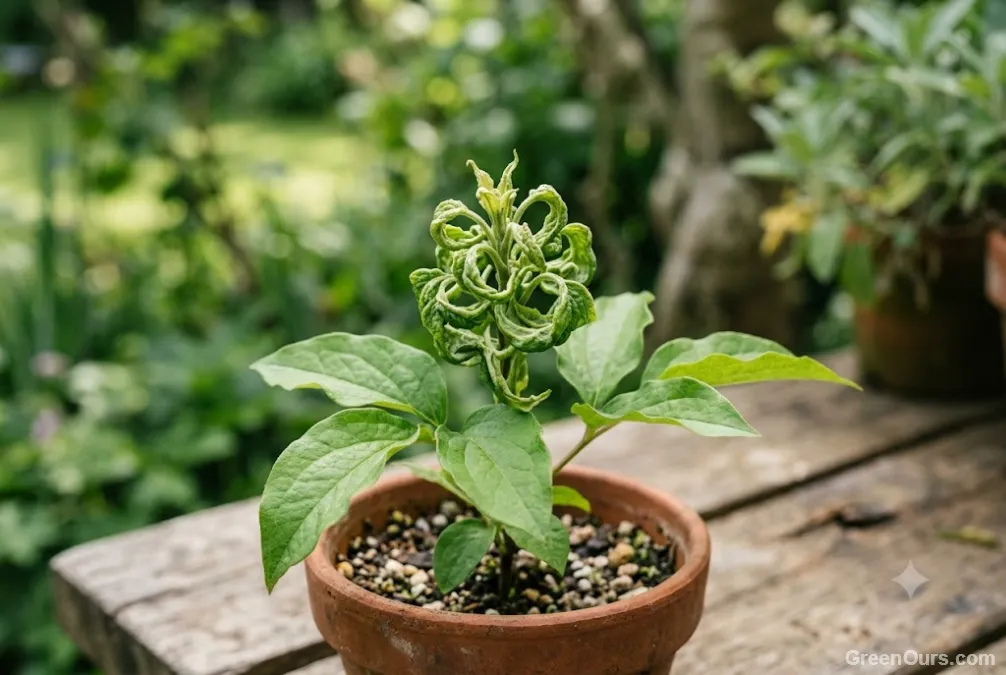

What to Know First
Do these four things before you buy anything:
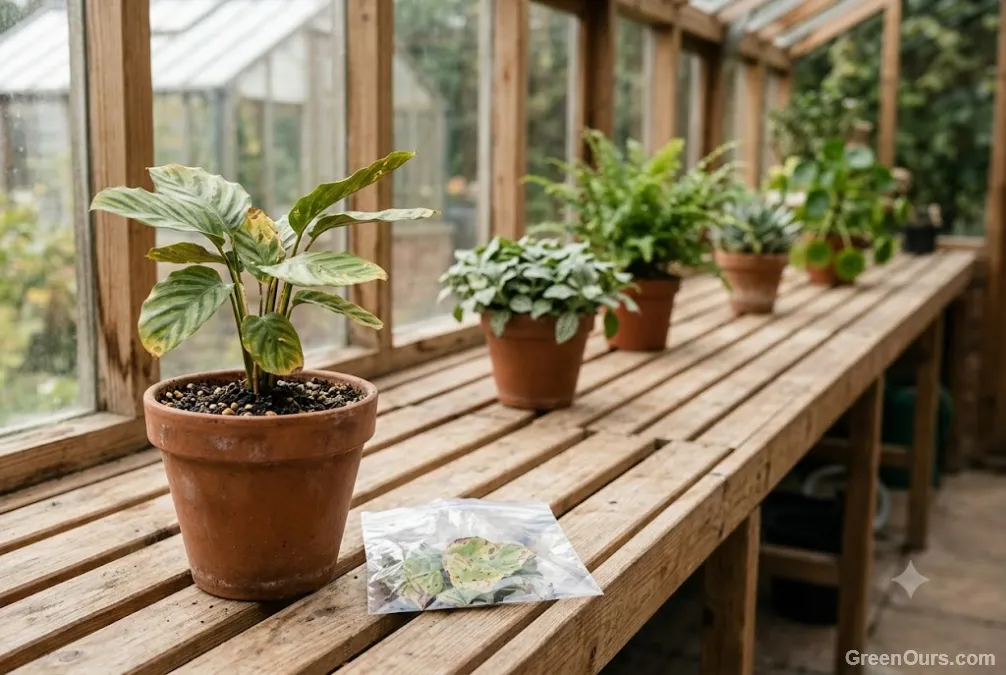
- Check the newest leaves, growing tips and buds for distortion.
- Isolate the suspect plant from its neighbors while you investigate.
- Look under magnification, or ask a local extension service or plant diagnostic lab.
- Treat only with a product labeled for broad mites and your plant type.
Important: Distorted leaves don't prove broad mites. Confirming the cause keeps you from spraying a plant that has a different problem.
What Are Broad Mites?
Broad mites (Polyphagotarsonemus latus) are thread-footed mites in the family Tarsonemidae. Adult females measure about 0.25 mm (0.01 in.), too small to identify by eye. Treat that figure as an extension-source estimate, not a fixed size for every life stage.
They feed on tender tissue: developing leaves, shoots and buds. UC IPM discusses them extensively as greenhouse and nursery pests of herbaceous ornamentals, but they can also affect plants in home gardens and collections. Their eggs carry rows of tiny pale pegs. That detail helps experienced scouts examining specimens under suitable magnification. It is not something to expect to recognize at home.
Why you may not see them
- Size. They're too small to spot reliably by eye.
- Location. They feed in buds and within distorted tissue.
- Timing. Damage doesn't show until some time after feeding, when the affected tissue expands and grows. A distorted leaf can carry few mites or none.
Seeing nothing doesn't rule broad mites out. It doesn't confirm them either.
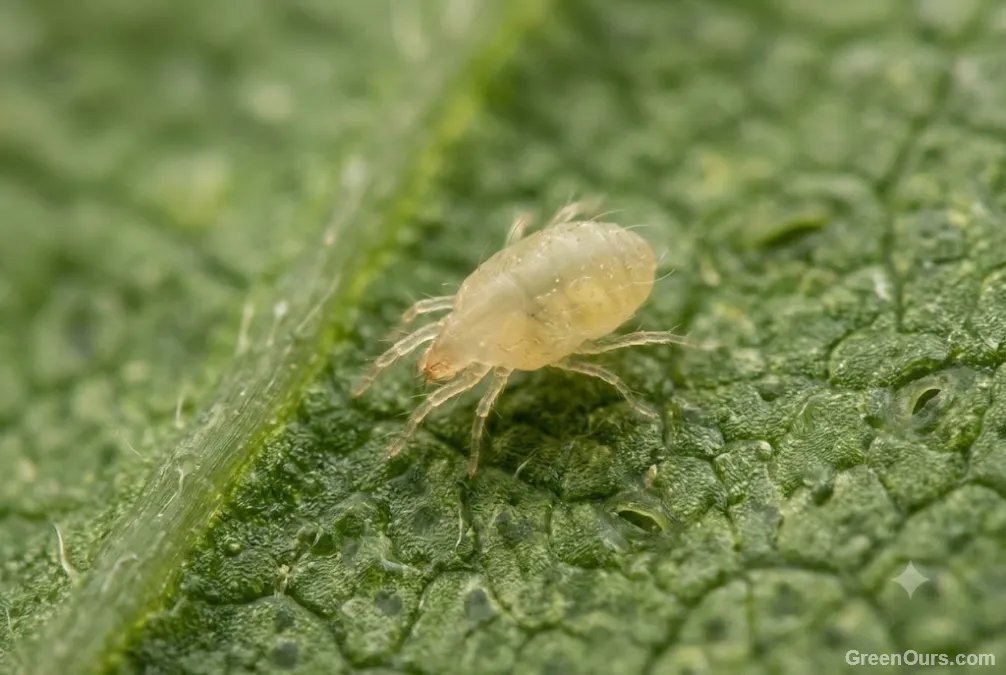
Signs and Symptoms
You'll notice the damage before you ever see a mite. Compare the newest growth with the older leaves below it, and look for several signs together, not one. Distortion concentrated in the newest growth is the pattern to look for. It's a clue, not a confirmed diagnosis.
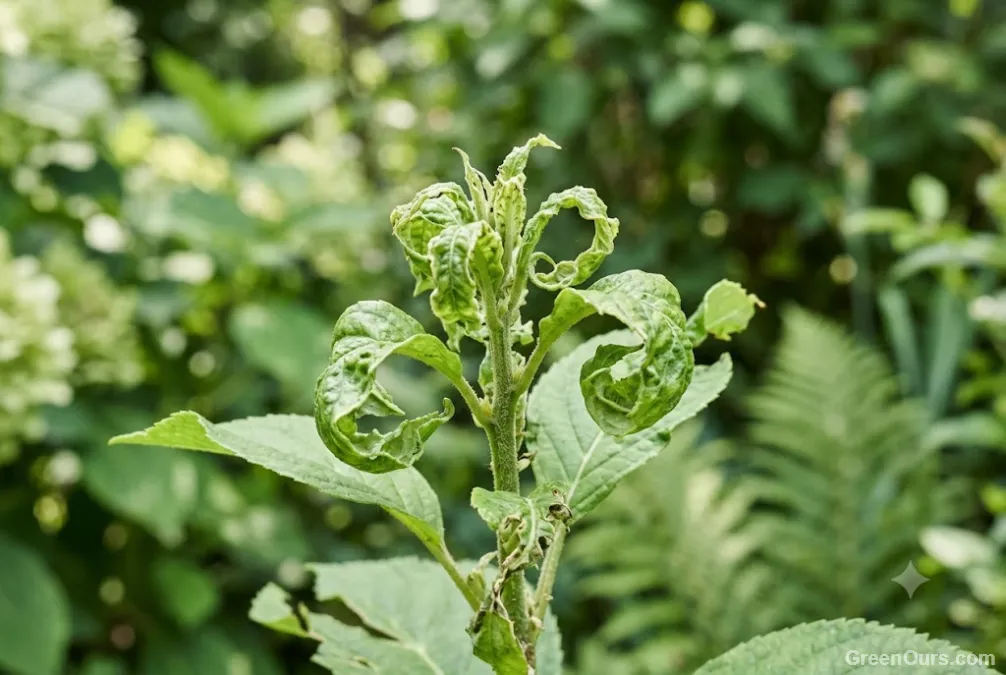
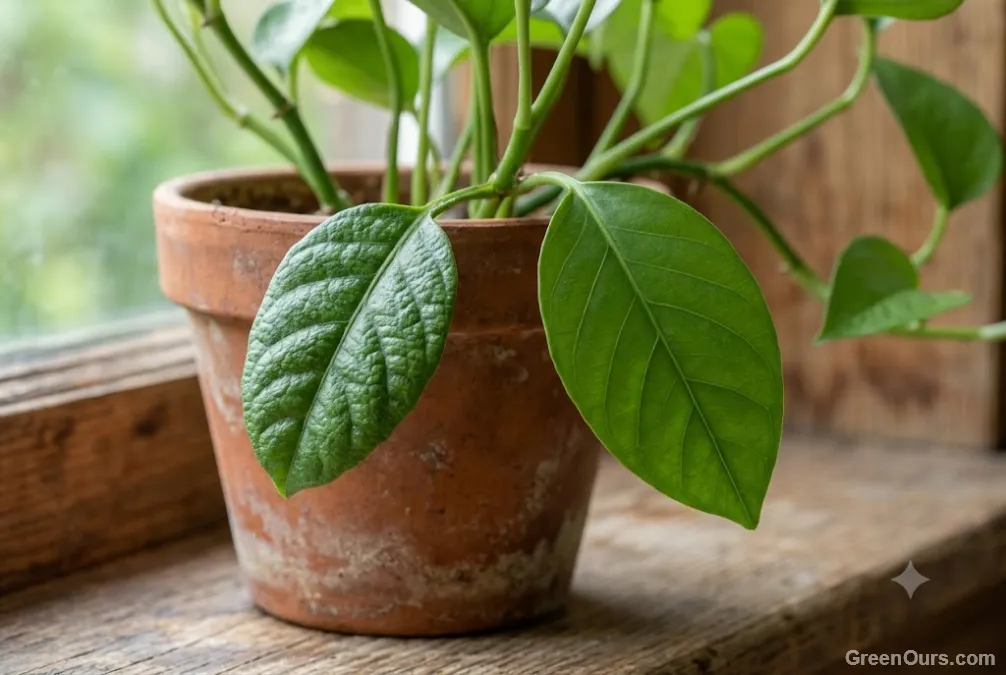
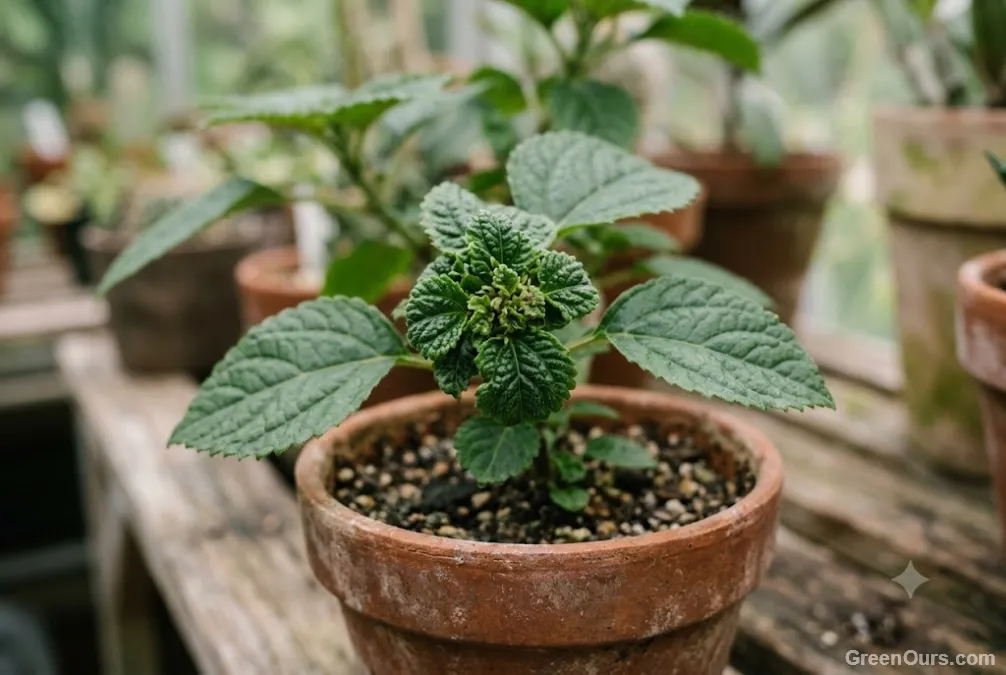
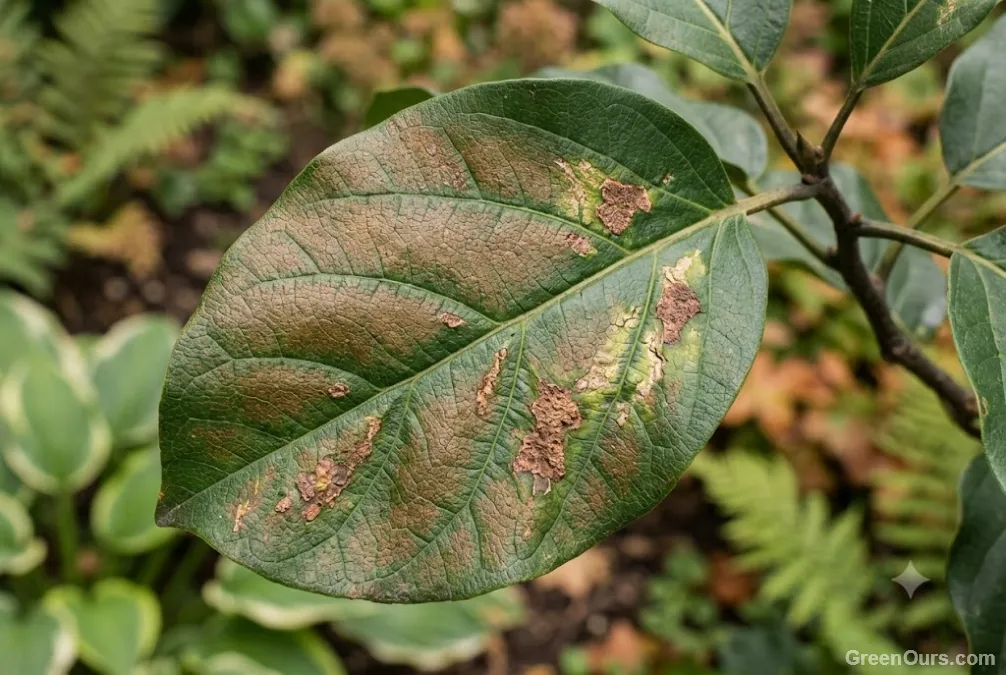
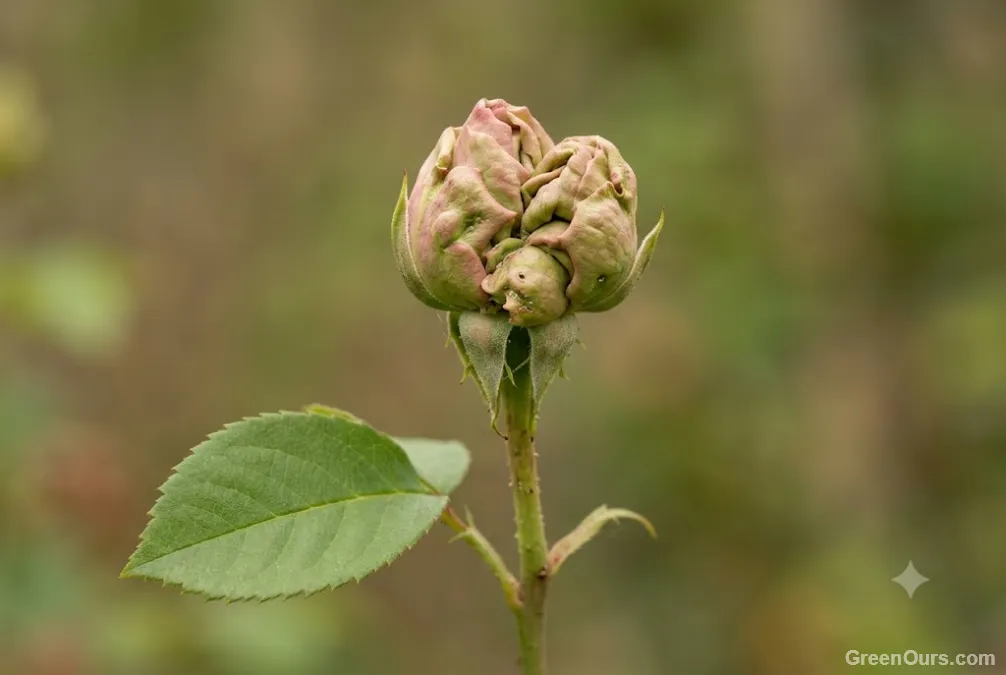
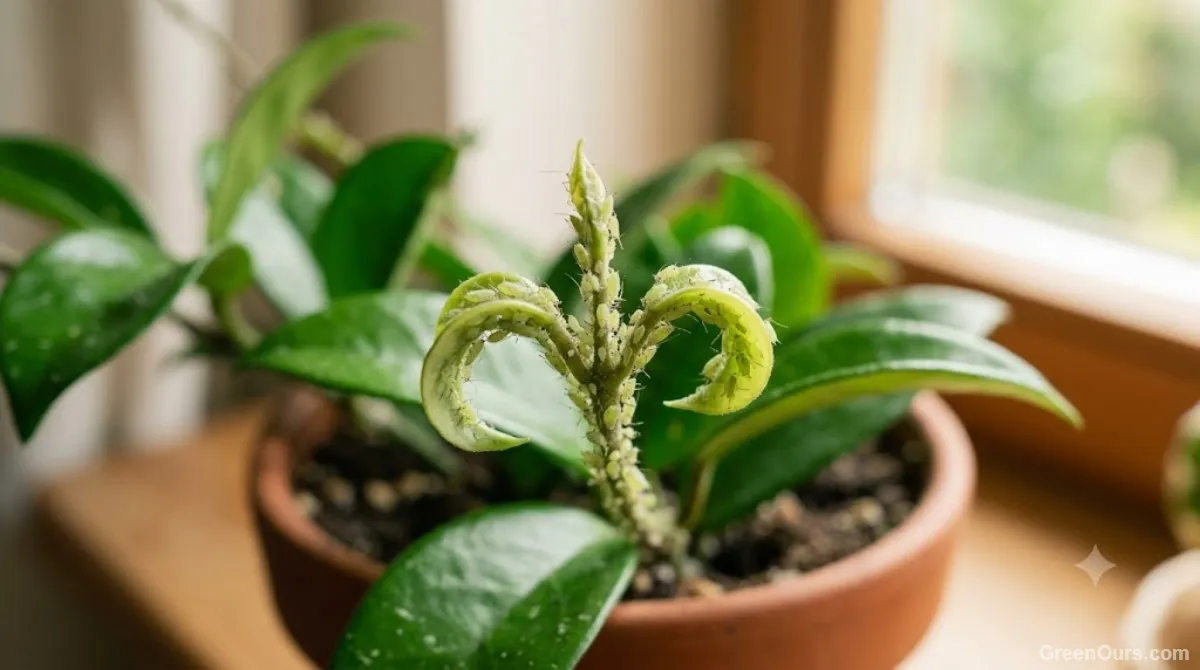
- Curled or twisted new leaves. Young leaves unfold cupped, puckered or curled downward along the edges, and the growing tip looks cramped. Several successive leaves with the same distortion is the pattern that matters.
- Thickened or stiff foliage. Affected leaves feel thicker and stiffer than healthy ones and stay smaller than they should. Water stress and chemical injury can do the same.
- Stunted new growth. Leaves stay dwarfed and crowd at the tip. In heavy infestations, young terminal buds can be killed.
- Bronzing or brown patches. Some plants develop a bronze cast, rough corky patches or dead tissue. Corky damage can accompany broad mites, but it isn't diagnostic.
- Distorted buds and flowers. Flower buds can take on a warped, hardened look or fail to develop normally. Bud damage alone doesn't establish the cause.
One symptom proves nothing. Curling, thickening and corky patches all have other causes. Weight the combination and the location: newest growth first.
Affected Plants
Broad mites have a wide host range. Extension sources list the plants below among many others, so a plant's presence here isn't evidence of an infestation.
Bedding and border flowers
Begonia, impatiens, marigold, snapdragon, verbena, ageratum
Cut and daisy-type flowers
Chrysanthemum, gerbera daisy, dahlia
Houseplants and climbers
Cyclamen, gloxinia, English ivy, jasmine
Shrubs
Hibiscus, lantana
Broad Mites vs. Other Problems
Compare the pattern before you pick a treatment.
| Possible cause | What to check |
|---|---|
| Broad mites | Distorted, thickened, curled or stunted new growth, sometimes bronzing. Confirm with magnification, an extension service or a diagnostic lab. |
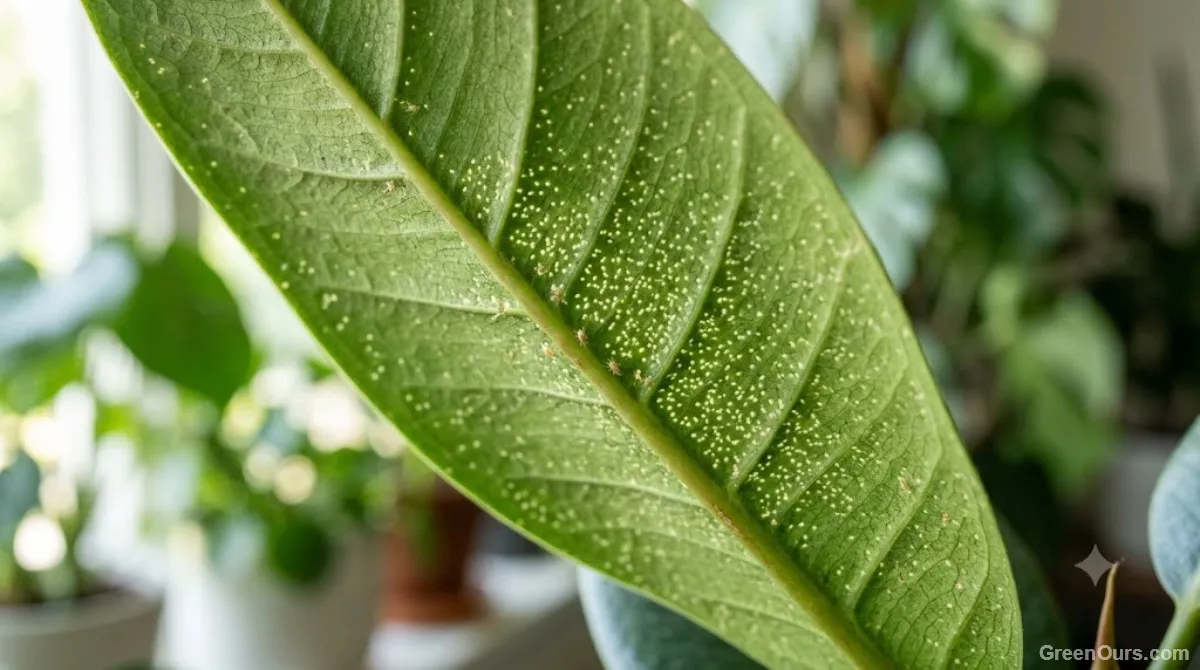
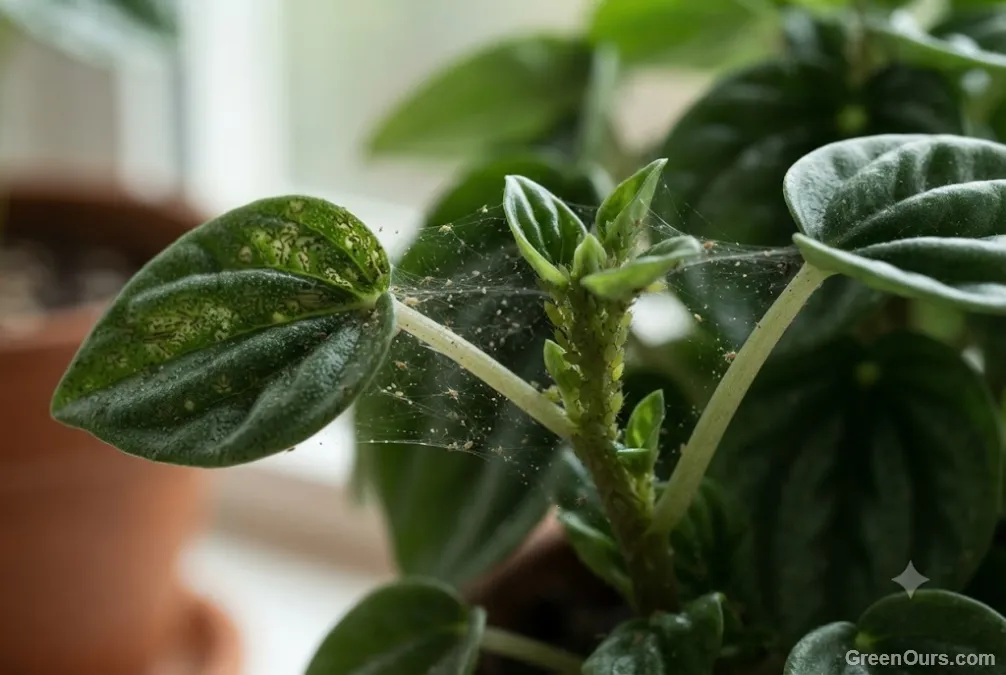
| Spider mites | Fine pale stippling, and webbing in heavier infestations. Often visible with a hand lens as moving specks on leaf undersides. |
| Aphids | Insects clustered on tender shoots, with sticky honeydew. Visible without magnification. |
| Nutrient problems | Discoloration or poor growth. Extension sources list boron and calcium deficiency as look-alikes. Check feeding history, growing medium and roots. |
| Herbicide or chemical injury | Distorted leaves or damaged tips after herbicide, spray drift or other chemicals. Check exposure history and nearby plants. |
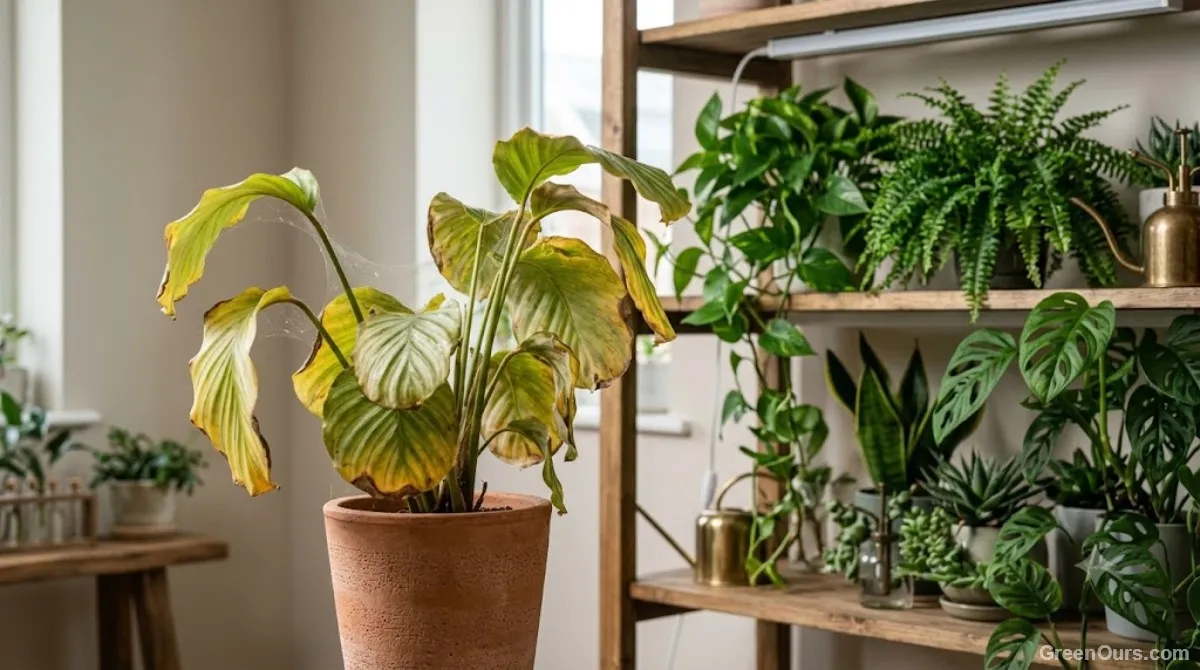
| Cold, water or root problems | A recent cold snap, or wilting, yellowing and poor growth. Check temperatures, moisture level and root health. |
UConn Extension notes that broad mite injury can resemble herbicide injury, certain nutrient deficiencies and cold injury. No single symptom separates broad mites from all of them, and missing webbing or stippling doesn't rule them out.
Suspect a nutrient problem? Check watering, medium and roots before adding fertilizer. Extra feeding creates new problems.
How to Check for Broad Mites
A glance at the leaves won't confirm anything. Work through these steps in order.
- Inspect the newest growth
Check developing leaves, folded tissue, flower buds and growing tips. Look at neighboring plants too.
- Look for a repeated pattern
Is the newest growth worse than the old? Are several tips affected? Has anything changed recently: pesticide, herbicide, fertilizer, temperature?
- Use magnification as a screening step
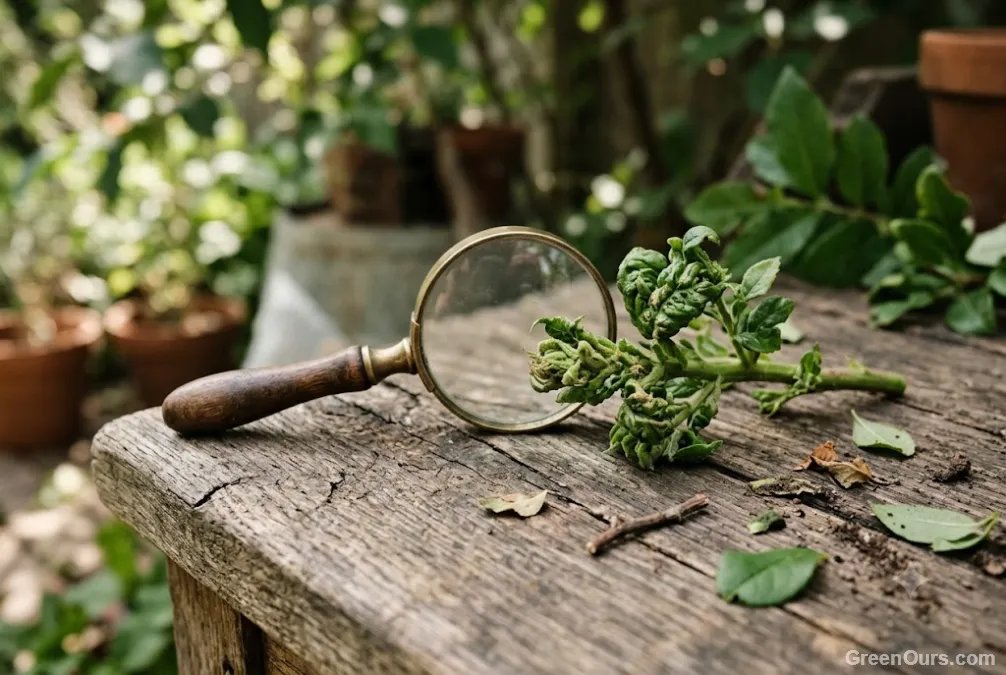
Phone zoom won't resolve a mite. A 20x hand lens may help reveal the characteristic bumpy eggs with practice, but it is a screening aid only. Reliable identification can require a microscope and an experienced examiner.
- Get confirmation when unsure
Send a sample to a local extension service or plant diagnostic lab, especially for valuable plants, severe damage or failed treatments.
How to Control Broad Mites
UC IPM describes broad mites as difficult to control with pesticides, because they shelter in buds and distorted tissue. Start with the non-chemical steps.
1. Isolate
Keep the plant away from healthy ones.
2. Remove
Cut off badly damaged growth when appropriate.
3. Choose
Use a product labeled for broad mites and your plant.
4. Apply
Reach growing tips and follow the label.
5. Consider
Predatory mites may help in some settings.
- Isolate
Move the plant away from healthy ones and keep foliage from touching neighbors. Wash your hands and clean tools after handling it. Extension sources report that mites spread on hands, clothing and tools.
- Remove badly damaged growth
If only a little foliage is affected, cut off the worst leaves and shoots. Bag them and dispose of them away from healthy plants. Pruning won't clear mites from remaining buds, and stripping healthy foliage only stresses the plant.
- Choose a product labeled for broad mites and your plant
UC IPM lists horticultural oil and insecticidal soap among options home gardeners may consider, but use only products labeled for broad mites and for your specific plant and setting. Some miticides are limited to professional applicators. A product that controls spider mites isn't automatically labeled for broad mites. Confirm broad mites are a listed target, your plant is covered and indoor use is allowed if needed. For edible crops, the crop and use must be explicitly listed. Registrations vary by region, so check local rules and availability.
- Apply according to the label
Follow the label for coverage, protective equipment, plant restrictions and repeat applications. Where sprays are used, UC IPM suggests targeting the terminals as new growth develops. Don't mix products or raise concentrations, and test tolerance where the label recommends it.
- Consider predatory mites
UC IPM lists Amblyseius and Neoseiulus predatory mites as biological control in some situations. Suitability depends on the pest, plant, environment and availability, and pesticide residues can harm them. Not every Amblyseius or Neoseiulus product is suited to broad mites, so ask a supplier for species-specific guidance first.
- Know when discarding may be practical
If a plant is heavily damaged, keeps declining or threatens a valuable collection, discarding may be the practical call. Seal the plant and debris, then inspect the neighbors. Don't discard a curled-leaf plant before you've confirmed the cause.
The label is the rule. If broad mites aren't listed for your plant and setting, don't use the product. Neem oil is no exception: some products may be labeled, and results depend on the formulation and use.
Why Treatment Sometimes Fails
- Wrong diagnosis. Chemical injury, nutrient issues and other pests look similar.
- Wrong product. It isn't labeled for broad mites or for your plant.
- Poor coverage. The spray missed buds, folds and growing points.
- Label not followed. Application method or repeat directions were ignored.
- Old damage misread. Distorted leaves stay distorted, so judging by them makes a working treatment look like a failure.
Before repeating anything, reassess the diagnosis, reread the label and check the newest growth.
Will a Plant Recover?
Damaged leaves generally don't return to normal. Healthy new growth is the signal. Compare each newly emerging leaf with the one below it. Leaves that open flatter and more flexible suggest the cause is under control. Healthy new growth is encouraging, but keep monitoring emerging leaves and nearby plants.
If tip distortion continues or new symptoms appear, reassess the diagnosis. No fixed number of days or weeks applies to every plant, so watch the growth, not the calendar.
How to Prevent Broad Mites
- Inspect incoming plants. Check growing tips, buds and leaf undersides before a plant joins your collection.
- Keep new or suspect plants separate. A clean look doesn't guarantee a pest-free plant, but separation lowers the risk.
- Clean tools and hands. Do it after handling any suspect plant.
- Check new growth weekly. Look at emerging leaves, not just mature foliage.
- Use pesticides only after identification. Broad-spectrum products also harm beneficial organisms.
Healthy plants, fewer surprises. Regular inspection and keeping new plants apart catch problems before they spread.
FAQs
Can you see broad mites with the naked eye?
Not reliably. Broad mites are about 0.25 mm long. A hand lens may help with screening, but reliable identification can require a microscope or an experienced examiner.
Do broad mites make leaves curl?
They can. Feeding on developing tissue can leave new leaves curled, thickened or stunted. Other problems cause the same look, so confirm the cause before you treat.
Are broad mites the same as spider mites?
No. They're different kinds of mites that cause different damage. Spider mites typically cause stippling and sometimes webbing. Broad mites more often distort and thicken new growth.
Does neem oil kill broad mites?
Some neem products may be labeled for broad mites on particular plants. Results depend on the formulation, coverage and conditions. Check the label and don't treat it as a guaranteed fix.
Can hot water kill broad mites on plants?
Don't use it as a home remedy. The extension sources reviewed here give no home method, and a temperature error can injure the plant. Ask a local extension service before trying it.
How long does broad mite damage take to disappear?
Damaged leaves generally stay distorted. Judge progress by new growth instead, and expect no fixed timeline: it varies by plant and conditions.
How do broad mites spread between plants?
Extension sources describe mites walking between plants and moving on air currents, whiteflies, contaminated tools and water, and on workers' hands and clothing. Those reports come mostly from greenhouses and nurseries. At home, isolate the suspect plant and clean your hands and tools after handling it.
Sources
These extension and IPM pages informed the identification, symptom and management advice above.
What to Do Next
Start with the newest growth on the affected plant. Isolate it, inspect it with a hand lens, and rule out chemical exposure and watering errors before you buy anything. If the cause stays unclear, send a sample to your local extension service.
Treat only with a product labeled for broad mites on your plant, then judge the result by new growth. Check the newest leaf against the one below it. Is the distortion stopping, or getting worse?
Inspect new growth once a week. Catching distortion early is the simplest control you have.