
Why Potting Soil Wears Out in the First Place
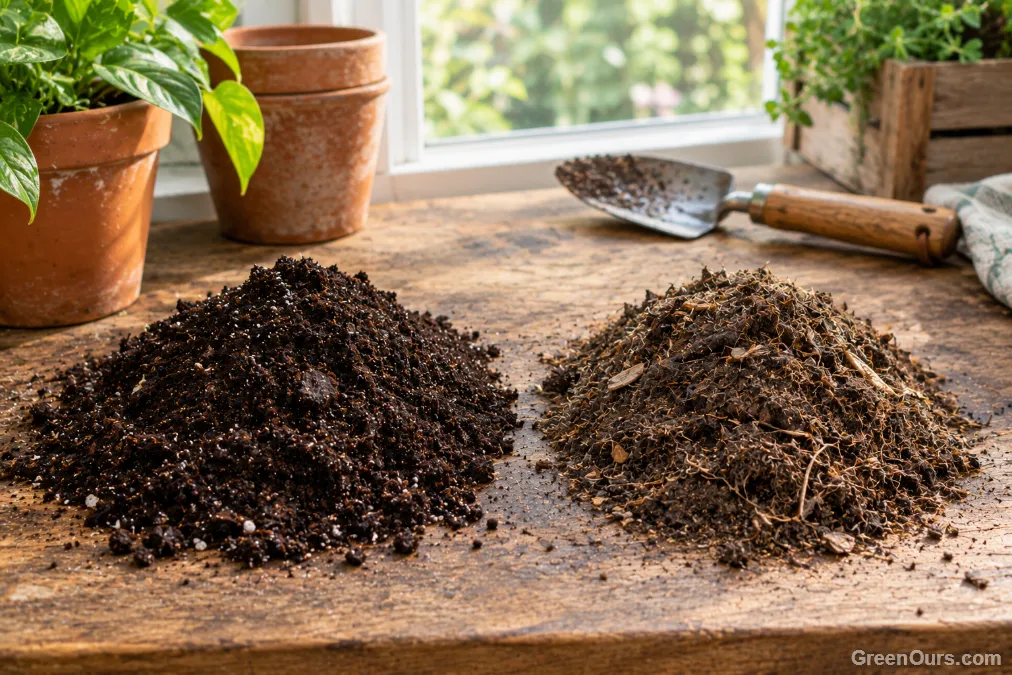
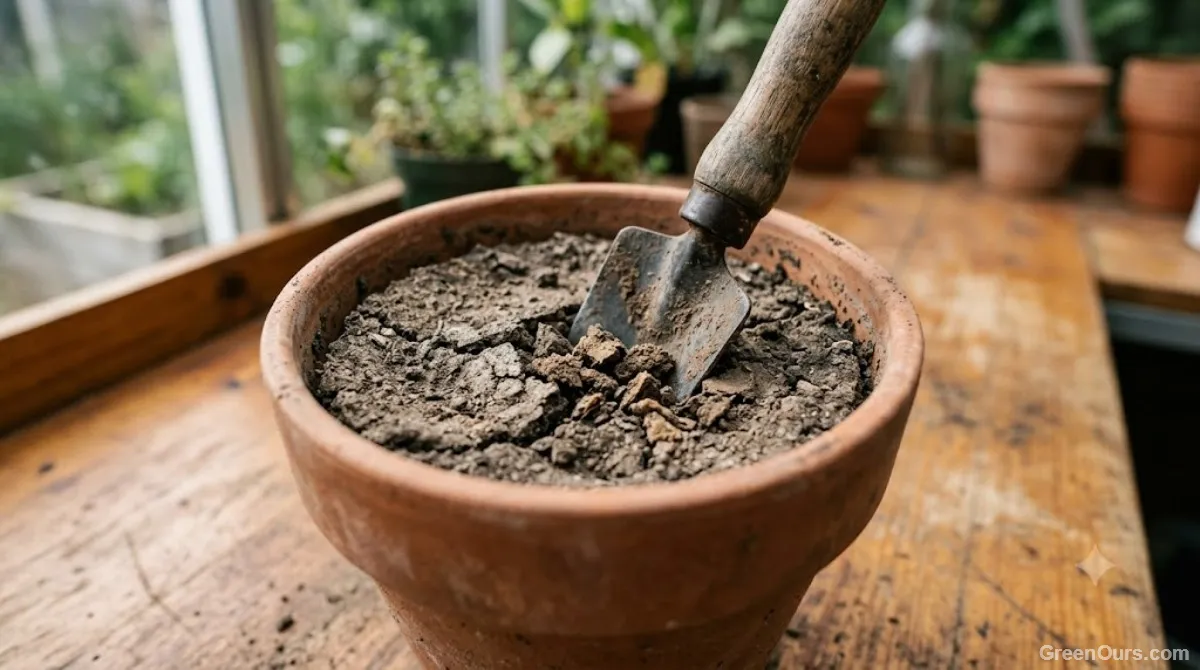
Over months of watering, the organic matter in a mix gradually breaks down. Bark chips can soften and crumble, peat and coir can compact into finer particles that pack together, and the tiny air pockets roots rely on can shrink. Fertilizer and hard-water salts may collect near the surface, and the nutrients in the original mix are often used up or washed out through the drainage holes after several months.
None of this happens overnight, which is exactly why it's easy to miss. You may notice the plant seems thirstier than it used to be, or that water runs straight through the pot and out the bottom without appearing to soak in. Both can be signs the soil's structure has changed, not necessarily signs that your watering routine is wrong. Growth can also slow, even in a plant that's getting plenty of light, when there's little left in the mix to feed it.
Which Soil Problem Are You Seeing?
Different symptoms point to different problems, so check what the water is doing before you reach for a trowel. This table lists common triggers rather than guarantees, and more than one can overlap.
| What you see | More likely cause | What to try |
|---|---|---|
| Water runs straight through and out the bottom, and the soil pulls away from the pot's edge | Dried-out mix that repels water, or water channeling around the root ball | Soak the pot thoroughly first, then reassess |
| Water pools on top and drains slowly | A compacted or crusted upper layer | A top refresh |
| Soil stays wet for days after watering | Poor drainage, a dense mix, or a deeper problem | Check the drainage holes; if it persists, consider a full repot |
| Growth has slowed but water soaks in normally | Used-up nutrients | A top refresh, then feed according to the label in the growing season |
| Roots circling the inside of the pot, with little visible soil | Root-bound plant | Repot |
| White crust on the surface or the pot rim | Mineral or fertilizer salts | Flush the soil with plain water, then refresh the top layer if needed |
If the mix is bone dry and shrinking away from the pot's edge, soak the pot first. Dry mix can repel water, so a refresh on top won't help until the whole root ball can take up moisture again.
The Top-Refresh Method, Step by Step
A top refresh works on a simple principle: you're not disturbing the roots, just improving the conditions right around them. It's the method I reach for first with an established plant that's still growing reasonably well but looking a little flat, and it often takes under ten minutes once you've done it a time or two.
Loosen the Top Layer
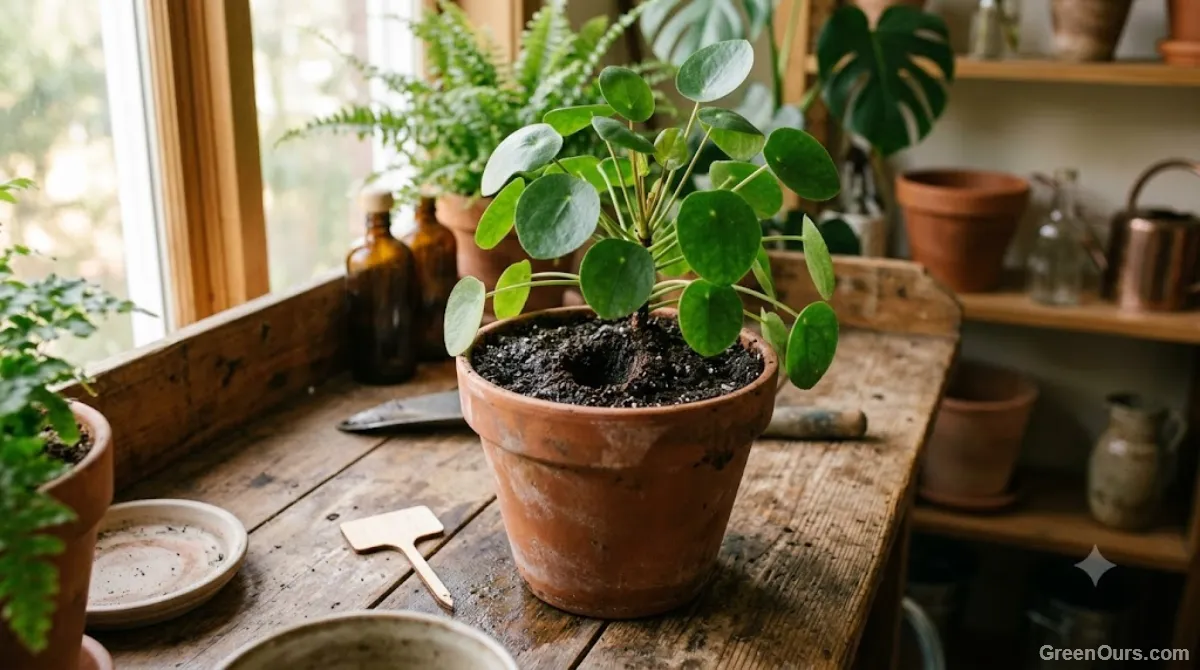
Using a small hand fork, a chopstick, or an old kitchen fork, gently loosen the top inch or two (2.5 to 5 cm) of soil around the base of the plant. Work slowly and stay well away from the stem and the visible root crown. You're breaking up compaction, not digging a trench. If the soil crumbles into fine, dusty particles rather than holding any shape, that suggests it has broken down.
Remove What You Can Without Disturbing Roots
Scoop out the loosened top layer with your fingers or a small spoon. In a six-inch (15 cm) pot, that's often roughly a quarter cup to a cup of old mix, depending on how compacted things have gotten. You may see a few fine roots near the surface. If you uncover some, don't worry, but cover them again promptly so they aren't left exposed longer than necessary.
Replace With a Fresh, Well-Draining Mix
Fill the gap with fresh potting mix suited to the plant. For most foliage plants, a blend with perlite, pumice, or orchid bark mixed through is a better choice than a dense all-purpose mix straight from the bag. Settle it lightly with your fingertips rather than packing it down.
Then water. If the plant is due for a drink, water thoroughly until it runs from the drainage holes, so the fresh mix settles and bonds with the soil beneath, and let the pot drain fully before returning it to its spot. For plants that prefer to dry between waterings, such as snake plants, ZZ plants, and succulents, wait until their normal watering point instead.
When a Refresh Isn't Enough
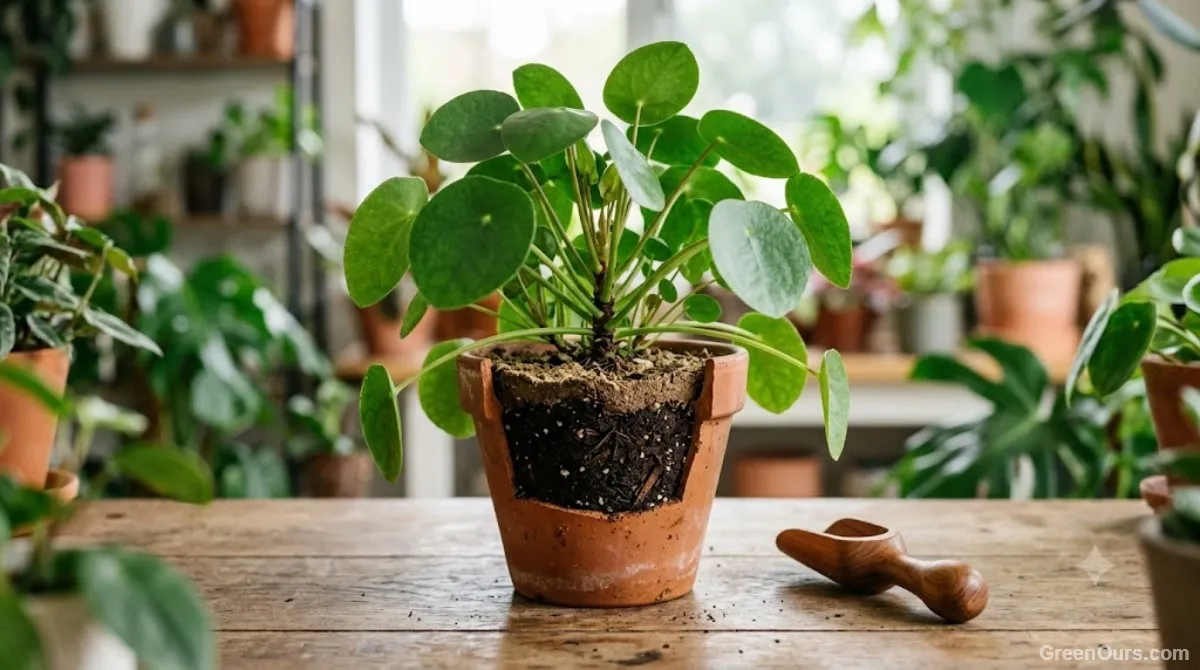
A top refresh solves surface-level problems, but it can't fix everything, and knowing where that line sits saves you from under- or over-correcting. If you slide the plant gently out of its pot and find roots circling tightly around the inside edge, or a solid mass of roots with barely any visible soil between them, the plant has outgrown its container. No amount of top-dressing changes that.
Persistent fungus gnats no matter how long you let the topsoil dry, a sour or swampy smell coming from the pot, or soil that stays wet for days after a normal watering can also point toward a full repot rather than a refresh. In those cases, the trouble often lives deeper in the pot than a surface treatment can reach, and ignoring it just delays a problem that's already underway.
Mistakes That Quietly Undo a Good Refresh
A few habits can undo the benefits of a good soil refresh, even when the technique itself was done right:
- Packing the new soil in too tightly. It recreates the compaction you just fixed, so let the fresh mix sit loosely around the plant.
- Using a mismatched mix. A dense, moisture-retentive blend on top of a fast-draining one, or the other way around, can create layers that drain unevenly and hold water at the root zone.
- Only misting the surface. Fresh mix generally needs a proper watering, when the plant is due for one, to settle and make contact with the moisture lower in the pot.
- Doing this too often. Once or twice a year is often plenty for actively growing plants, and more frequent refreshes risk disturbing roots you never meant to touch.
Timing matters too. Spring and early summer, when most houseplants are putting out new growth, are the easiest windows for a refresh, because the plant can recover from minor root disturbance quickly and use the improved conditions right away. In the depths of winter, when growth has slowed or stopped, the results tend to be slower and harder to notice.
Where to Start
If you only do one thing this week, watch what your plant's water does. Does it run straight through, pool on top, or soak in normally? That one check tells you whether a top refresh is likely to help, and if the roots look crowded, you'll know to skip ahead to repotting.
You don't have to choose between neglecting your soil for years and repotting on a strict yearly schedule. Most houseplants just need you to notice when the mix underneath has stopped working, and a little attention at the surface can often buy them another good season right where they already are.
Ready to give a tired plant a lift? A small fork, a scoop of fresh mix, and a few quiet minutes are all you need.