
The Fear Is Normal (But Usually Manageable)
Almost every beginner pictures the same worst-case scenario: you pull the plant out, a few roots snap, and suddenly your favorite prayer plant is wilting into oblivion. It's a vivid fear, and it keeps a lot of people repotting later than they should. But many houseplants tolerate a little root disturbance better than you'd expect, and a few broken fine roots during a careful repot are usually a minor setback rather than a crisis.
What tends to cause more trouble is waiting until the plant is badly root-bound, or jumping to a pot that's much bigger than it needs. Once you let go of the idea that repotting has to be perfect, the whole process gets a lot less intimidating.
Repot Now, or Wait?
Not every plant that looks big needs a bigger pot. Some are happiest a little snug, and repotting one that doesn't need it just adds stress. Check the roots and the pot rather than the calendar.
Signs It's Time
- Roots circling densely around the root ball, or growing out of the drainage holes
- Water running straight through, or the pot drying out unusually fast because roots fill most of it
- Growth that has stalled even though light and care haven't changed
- A top-heavy plant that tips over easily
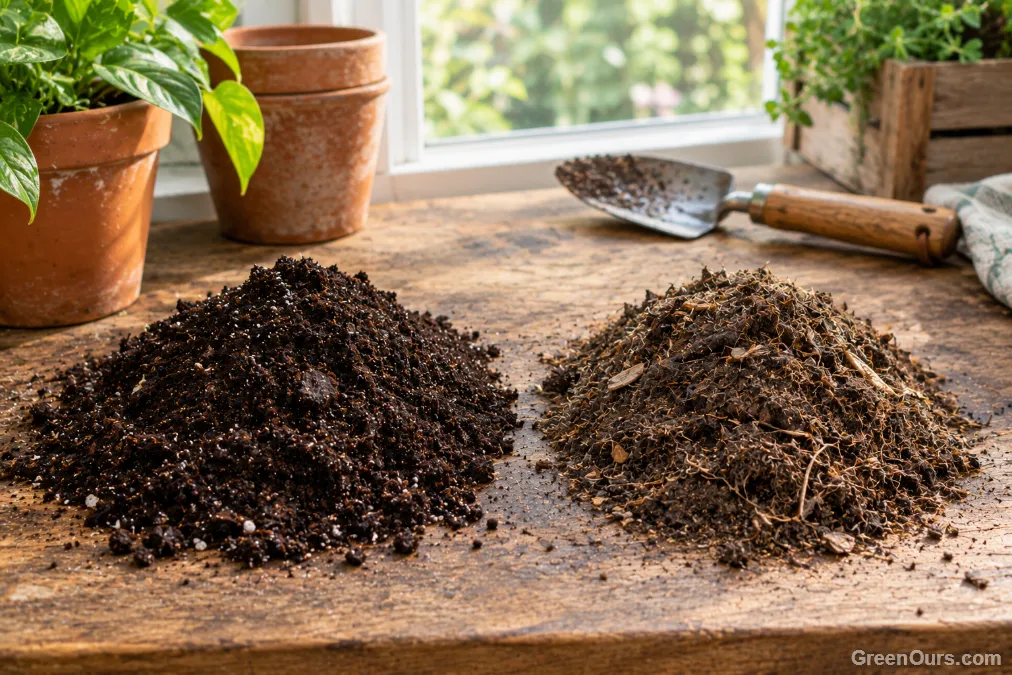
- Potting mix that has broken down, stays soggy, or drains poorly
Signs It Can Wait
- The plant is healthy and growing steadily
- Roots aren't crowded when you check
- The soil still drains normally
- The only reason is that the plant "looks big"
The quickest way to know is to slide the plant out and look at the roots. If they're crowded and circling, repot. If there's plenty of loose soil, put it back and check again later.
Timing: Why Spring and Summer Give You an Edge
If you can choose when to repot, aim for the start of the growing season. In temperate climates that's spring or early summer, when fresh roots recover and settle into new soil faster. In a warm, tropical climate the growing season may run much longer, so watch how actively the plant is growing rather than the calendar.
Repotting during the slower months isn't dangerous, exactly, but it asks more of a plant that's running on a lower gear. If your plant is showing urgent signs, such as roots packed tightly or water rushing straight through, necessity wins over timing.
Gather What You Need and Choose the Pot
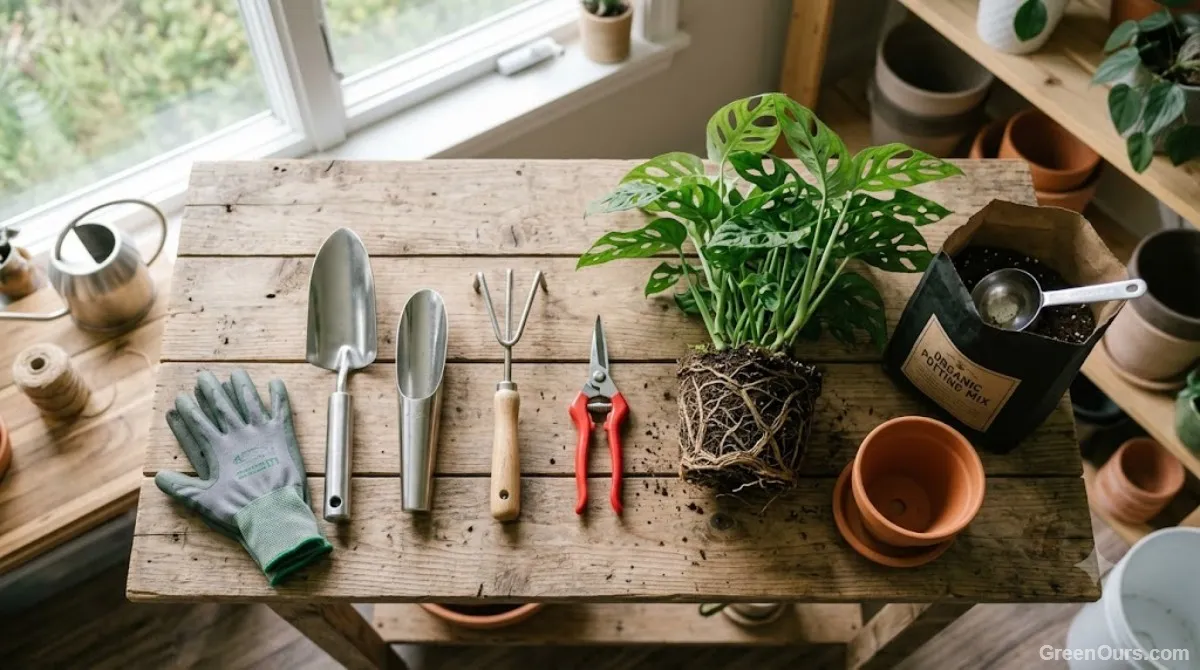
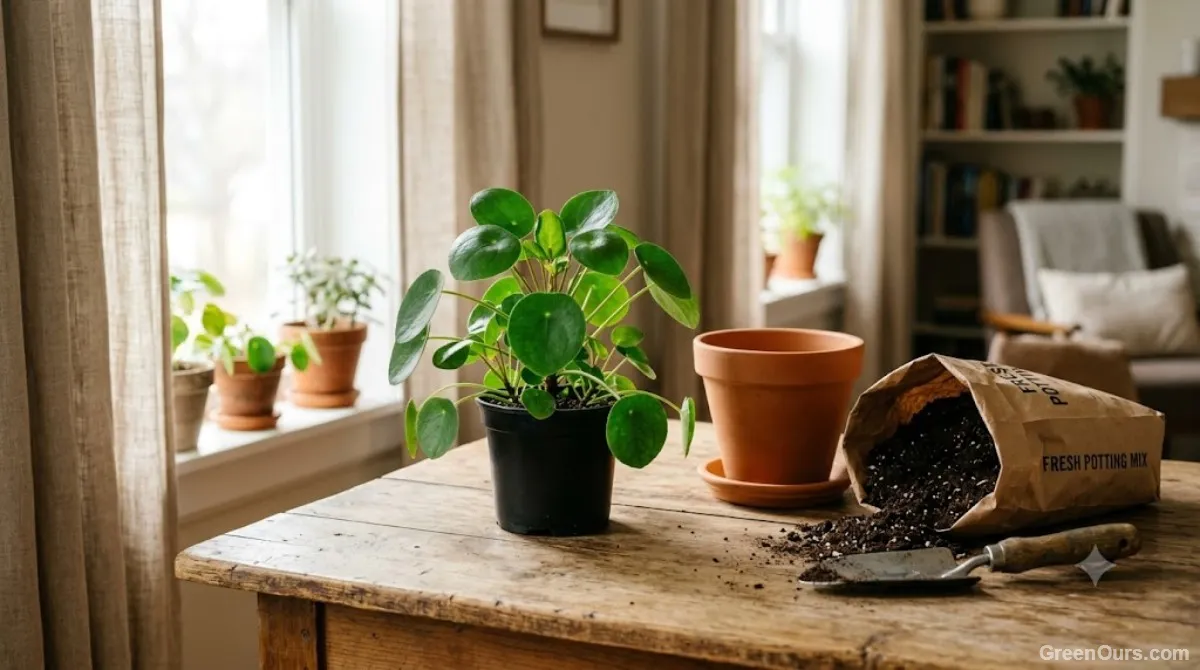
You don't need a shed full of tools for this:
- A new pot with drainage holes
- Fresh potting mix suited to your plant type
- A small trowel, or just your hands
- Clean scissors or snips
- A tray or newspaper to catch the mess
When it comes to pot size, move up about 1 to 2 inches (2.5 to 5 cm) in diameter, not double. A big volume of unused soil holds extra moisture and can invite root rot long after the transplant is done. And if the roots aren't crowded, you may not need a bigger pot at all.
The Gentle Repotting Process
Loosening the Root Ball
Water the plant a day or two beforehand if it's due. Damp, not soggy, soil releases from the pot far more easily than bone-dry soil, which tends to cling and tear roots on the way out. Tip the pot on its side, gently squeeze the sides if it's plastic, and ease the plant out by supporting the base rather than pulling on the stem.
Once it's free, loosen the outer roots with your fingers. You're not trying to strip the root ball bare, just encouraging the roots to spread outward instead of continuing to circle in the same tight pattern.
Check the Roots
Take a quick look while the plant is out. Healthy roots are usually firm and light-colored, though the exact shade varies by plant. Roots that are soft, mushy, dark, or foul-smelling are likely damaged or rotting, so trim clearly dead or rotten material with clean snips.
Don't prune healthy roots just to make the root ball look tidy.
Settling Into the New Pot
Add a layer of fresh mix to the bottom of the new pot, set the plant in so the base sits at roughly the same depth it was before, and fill in around the sides with more mix. Press gently to remove large air pockets, but resist the urge to pack it down hard. Roots need room to breathe, not a compacted block to fight through.
Helping Your Plant Settle In
Once the plant is in its new home, give it a spot with bright, indirect light rather than direct sun for the first week or two.
For most plants, water thoroughly after repotting so the fresh mix settles around the roots and air pockets close, then let the pot drain fully. There are a few exceptions. If you repotted into mix that was already damp, if the roots were badly damaged or trimmed, or if the plant prefers to dry out between waterings, like a succulent, snake plant, or ZZ plant, wait a few days to a week before the first watering. After that, go back to checking the soil before each watering.
Hold off on fertilizer for several weeks, or until you see new growth. A freshly repotted plant is focused on establishing itself, and fresh potting mix often contains some nutrients already.
If Your Plant Sulks Afterward
Don't panic if a leaf or two droops or yellows in the days after repotting. That's often mild transplant shock rather than a sign you did something wrong, and it commonly eases within a week or two, though some plants take longer.
What's worth watching is a plant that keeps declining well past that window. Check that the pot wasn't sized too far up, that the drainage holes weren't blocked during the move, and that the soil isn't staying wet.
Where to Start
If you're not sure whether to repot, gently slide the plant out and look at the roots. Crowded and circling means it's time. Loose, with plenty of soil, means you can put it back and check again later.
Repotting will never feel like nothing, and that's okay. Once you've done it once with steady hands and a little patience, the fear that kept you circling the potting mix aisle tends to fade, and your plant, roots stretched out in fresh soil, will be the one thanking you for it.
Ready to give a plant more room? Gather a pot, some fresh mix, and a quiet half hour this weekend.