
Evaluating the Base Footprint and Stability
In a small room, every square centimeter of floor contact matters. When evaluating an indoor plant stand for small spaces, your first priority is the ratio between the footprint at the floor and the surface area at the top. Wide, splayed wooden legs might look mid-century modern and stylish, but if their span is wider than the pot itself, they create a tripping hazard in narrow hallways or tight bedroom corners.
Stability is directly linked to this base geometry. A tall, slender vertical stand with a lightweight base will inevitably tip if a heavy plant shifts its center of gravity or if someone bumps into it. Look for stands featuring weighted bases, adjustable leveling feet, or designs that allow you to anchor or balance the weight distribution effectively.
Measure before you buy. A tripod base with three 12-inch legs needs roughly two feet of clearance to sit safely away from foot traffic, while a single-column pedestal base can tuck into an 8-inch gap next to a couch or bookshelf. Corner-facing rooms benefit from a triangular base that hugs two walls, since the walls themselves act as a passive stop against tipping. If your space is genuinely tight, prioritize a narrow base over a wide, decorative one, even if it means sacrificing some visual flair.
A four-legged X-frame base sacrifices some floor clearance but resists tipping better than a single pedestal, since the load spreads across a wider footprint. If your room sees regular foot traffic, that trade-off is usually worth it.
For added security in high-traffic apartments, a small dab of museum putty under each foot or a corner placement against two walls reduces tip risk without any visible hardware. Neither option replaces a properly weighted base, but both help close the gap between a merely stable stand and one that stays put through a rambunctious pet or a crowded moving day.
The stability rule: Keep the combined weight of your pot, wet soil, and mature plant comfortably under the stand's tested weight capacity, not right up against it, especially if the stand features a tall, narrow vertical profile. Manufacturers typically build in a safety margin, but that margin shrinks fast once foliage grows heavy and lopsided.
Height and Vertical Tiering Strategies
When horizontal floor space is completely exhausted, the only direction left to grow is upward. Vertical plant stands and multi-tiered étagères let you stack three or four plants within the exact same floor footprint previously occupied by a single nursery pot. However, vertical height introduces distinct mechanical and horticultural trade-offs that you need to calculate before purchasing.
Staggered versus stacked shelving
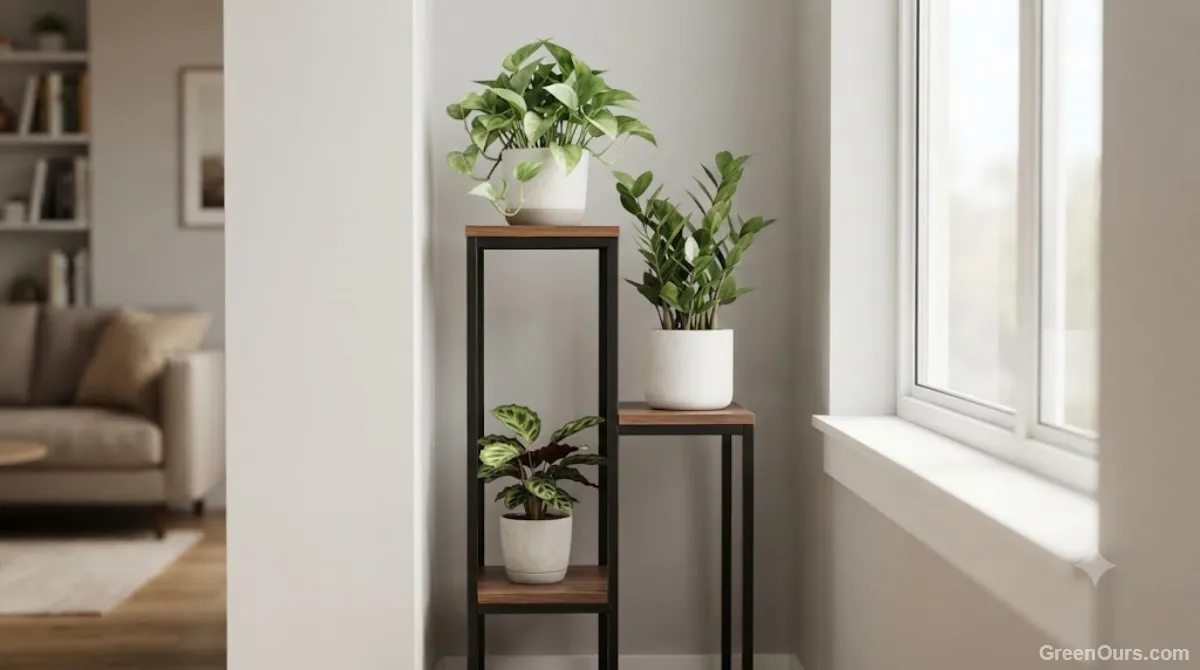
Staggered ladder-style shelves project outward from the wall at varying depths, which helps prevent upper plants from completely blocking light to lower tiers. Straight vertical columns keep a smaller profile but often create deep shade zones on the lower levels. If your plants require high light intensity, tiered stands with offset or cascading arms outperform rigid, boxed shelving units.
Standard rooms with 8-foot ceilings comfortably fit a four-tier stand topping out around 60 inches, leaving headroom for trailing vines without brushing the ceiling. Below that, a three-tier stand around 40 inches keeps the visual weight lower and works better in rooms with lower sightlines, like a reading nook or a bedroom corner. Whichever height you choose, leave at least 6 inches between tiers so you can water and rotate pots without disturbing the shelf above.
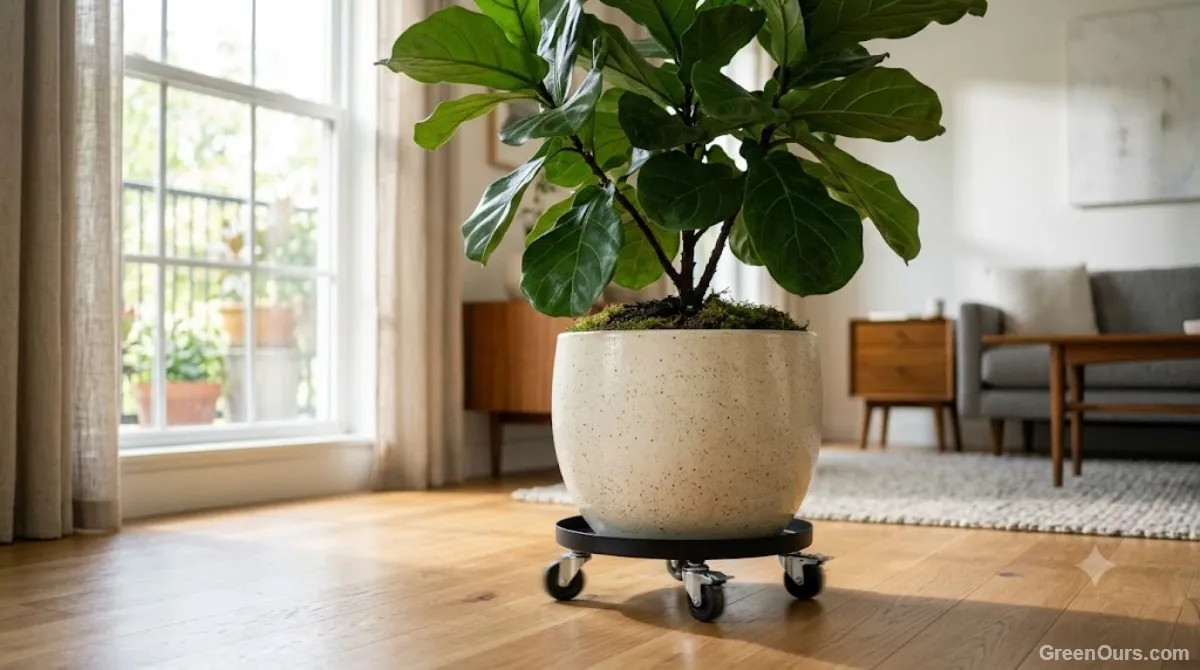
Taller specimens like a fiddle-leaf fig or a mature dracaena need more than 6 inches of headroom per tier. Reserve the bottom shelf for anything over 24 inches tall, and keep upper tiers for compact rosettes and trailing varieties that won't hit the shelf above.
Protecting Light Access and Airflow
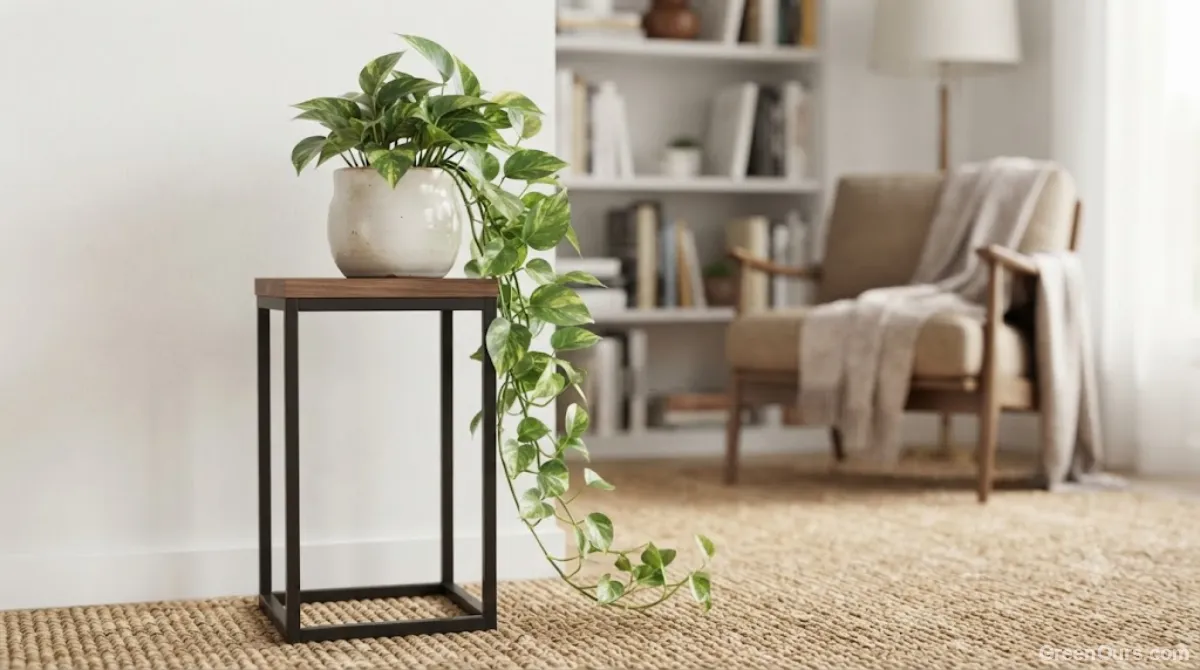
The most common functional failure of multi-tier plant stands in small spaces is light restriction. When you cluster several pots together on a dense shelving unit, foliage on the upper shelves frequently casts deep shadows over the plants below. Unless your stand sits directly inside an intensely bright south-facing window, lower-tier plants often experience chronic light starvation within a few weeks.
Air circulation is the other hidden casualty of cramped plant setups. Stagnant air pockets trapped between tightly packed pots create ideal microclimates for pests like fungus gnats and spider mites. Open-wire frames, slim metal rods, and staggered basket designs maintain natural cross-ventilation around the stems and soil surface, keeping humidity levels stable and discouraging pest outbreaks.
A gap of at least 3 inches between individual pots on the same shelf keeps leaves from overlapping and trapping moisture against neighboring foliage. That small buffer matters more in humid bathrooms and kitchens than in drier living rooms.
Run a quick light check before you commit to a layout. Hold your hand about a foot above where the lowest shelf will sit around midday; a sharp, well-defined shadow signals bright indirect light, while a faint, blurry shadow means the spot is too dim for anything beyond a low-light species like pothos or ZZ plant. If the lower tier fails that test, reserve it for shade-tolerant foliage and save the top shelf for anything that needs brighter conditions.
Weight Capacities and Material Durability
Water changes everything when calculating weight. A ceramic pot filled with damp soil can easily weigh three to four times more than it does when completely dry. Always check the manufacturer's weight limit per shelf, not just the total aggregate load, to ensure the frame won't warp or buckle over time.
The math adds up quickly. A 10-inch terracotta pot filled with saturated potting mix typically weighs 12 to 15 pounds on its own, and a mature pothos or philodendron in that pot can push the total past 18 pounds. Multiply that across three or four shelves, and a stand rated for 40 pounds total, rather than per shelf, can be maxed out with plants most people would call modest in size.
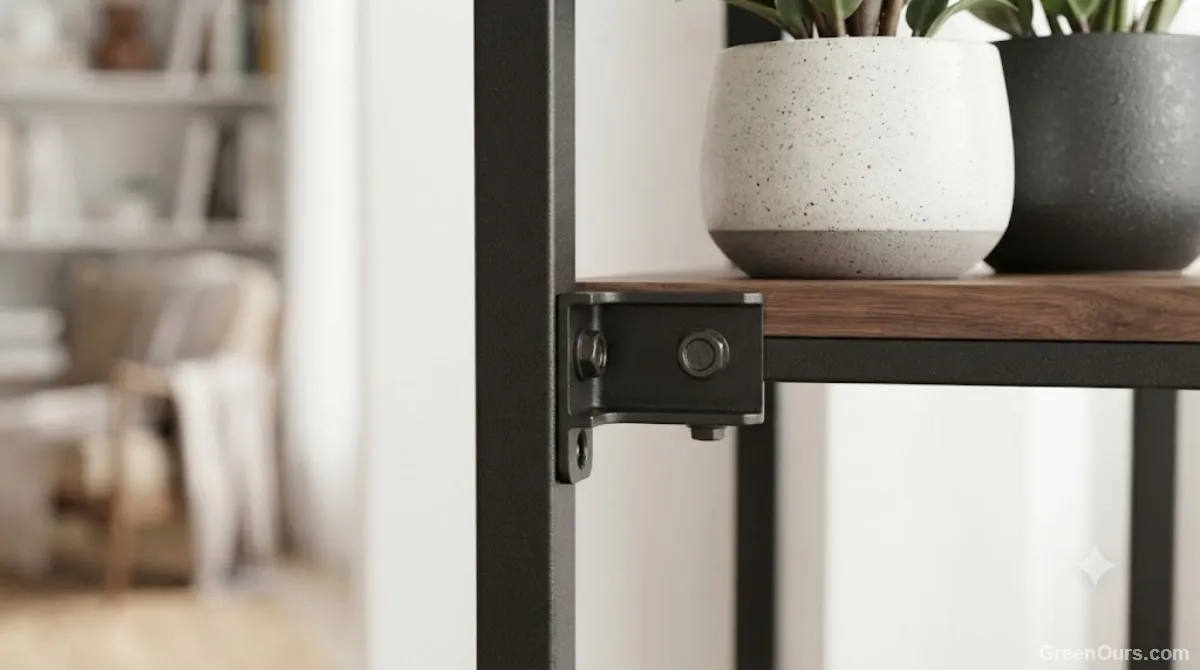
Steel stands generally hold up better under heavy, saturated pots than comparable wood designs at the same price point, which matters if you're mixing large ceramic pots with smaller plastic nursery containers on the same unit. Whatever the material, check the manufacturer's per-shelf rating directly rather than assuming based on how sturdy the frame looks.
- Powder-coated steel frames resist moisture corrosion from accidental watering spills.
- Solid hardwoods offer exceptional compressive strength but require protective sealant.
- Bamboo provides a lightweight, water-resistant alternative with a high strength-to-weight ratio.
- Wrought iron provides maximum stability for heavy terracotta specimens but increases overall room visual weight.
What to Do Next
Before selecting a stand, measure your available floor space and evaluate the exact light levels near your windows. Prioritize stands that match your heaviest pot's saturated weight and keep your plants accessible for daily watering and maintenance.
This article focuses on choosing hardware for compact footprints, but managing your containers effectively is equally important for long-term health.
Bring a tape measure and a bathroom scale with you if you're buying in person. Weigh your heaviest pot once it's watered, and compare that number against the stand's rated capacity before you commit.